In Short (TL;DR)The 2026 Nobel Prize in Physics has been awarded to Belgian-born physicist Francis Halzen for his "decisive contributions to the IceCube Neutrino Observatory and the discovery of high-energy neutrinos of astrophysical origin." Halzen, 82, based at the University of Wisconsin–Madison, first proposed using the Antarctic ice sheet as a giant particle detector in 1988 and led an international collaboration of more than 450 researchers from 58 institutions across 14 countries to build it. IceCube's thousands of sensors, frozen into a cubic kilometre of ice, capture the faint flashes produced when cosmic neutrinos — almost massless "ghost particles" that pass through planets and stars untouched — collide with atoms. The Royal Swedish Academy of Sciences said his tenacity and vision had "paved the way for a new kind of astronomy." It is the second Nobel announced this year, following Monday's medicine prize; chemistry follows on Wednesday.
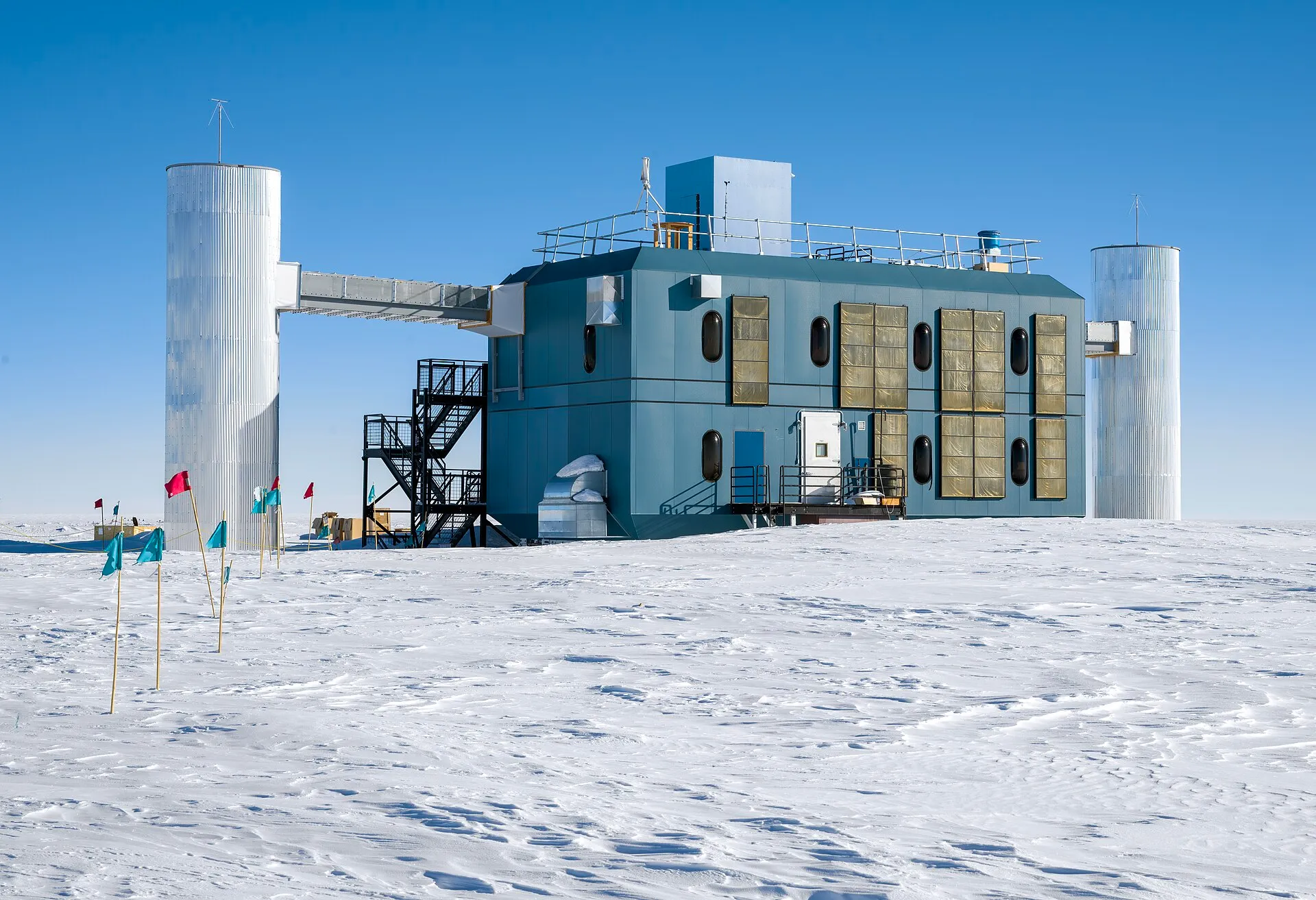
Some prizes reward a single eureka moment. The 2026 Nobel Prize in Physics rewards nearly four decades of stubbornness. On Tuesday, the Royal Swedish Academy of Sciences awarded the prize to Francis Halzen, the Belgian-born physicist at the University of Wisconsin–Madison who dreamed up — and then willed into existence — the IceCube Neutrino Observatory, a detector the size of a small mountain buried beneath the South Pole.
Halzen, 82, first presented his vision for an Antarctic neutrino observatory in 1988 — at a time when, as he admitted to the Nobel news conference by phone from Italy, almost nobody believed it could work. "When we started this project, everybody realized this was maybe a good idea but very few thought it would work, including myself," he said. "So this was kind of an adventure where success wasn't guaranteed."
Born in Tienen, Belgium, in 1944, Halzen earned his physics degrees from the Catholic University of Leuven, worked at CERN, and has been at Wisconsin–Madison since 1972, serving as the principal investigator of the AMANDA and IceCube projects. The Nobel committee honoured him for "decisive contributions to the IceCube Neutrino Observatory and the discovery of high-energy neutrinos of astrophysical origin" — a formal way of saying he saw the universe's quietest messengers and built the instrument that finally heard them.
Nobel committee chair Mark Pearce was effusive: "Francis Halzen has led an international team of researchers and engineers who have provided us with a fantastic instrument. His tenacity and scientific vision has paved the way for a new kind of astronomy."
Neutrinos are the universe's ultimate introverts. They are subatomic particles with almost no mass and no electric charge, and they interact with matter so rarely that they can pass through stars, planets and entire galaxies unchanged. Billions stream through your body every second — mostly from the Sun. But Halzen was after something far rarer: high-energy neutrinos born in the most violent processes in the cosmos, particles that carry information about exploding stars and distant galaxies that no telescope can see.
The trick is that when one of these rare cosmic neutrinos does collide with an atomic nucleus, it produces a flash of light — known as Cherenkov radiation, a faint blue glow. Halzen's insight was that the clearest medium on Earth in which to spot those flashes was the Antarctic ice sheet itself: more than a kilometre of it, drilled with hot water and threaded with thousands of light sensors frozen into place, waiting in the dark for a single blue spark.
!Schematic diagram of the IceCube detector showing sensors buried in Antarctic ice
A schematic of the IceCube detector and its deep-ice sensor array. Diagram: IceCube Science Team, via Wikimedia Commons (CC BY 3.0).
By tracking the light across the sensor network, researchers can trace a neutrino's trajectory backwards through space and time to its origin — turning a particle that passes through everything into a messenger from the edge of the visible universe. "Francis Halzen has led an international team... who have provided us with a fantastic instrument," Pearce said, calling neutrinos "ghost-like messengers from the cosmos" that bring information "we're unable to acquire in other ways."
The road to IceCube was long. The first attempt, a smaller detector called AMANDA, was completed in 2000 but proved too small for the task. Undeterred, Halzen spearheaded an international collaboration that grew to more than 450 people from 58 institutions in 14 countries, and the expanded IceCube — a full cubic kilometre of instrumented ice — was completed by the end of 2010. It has been operational ever since, quietly collecting the most energetic particles ever detected from beyond our solar system.
The observatory's story is one of the great long-game victories in experimental science: a proposal from 1988, a too-small prototype, and then a decade-scale construction project in the most hostile environment on the planet, all in pursuit of particles that barely exist as far as most matter is concerned.
Traditional astronomy is the astronomy of light — and light has limits. It is blocked by dust, bent by gravity, and absorbed across cosmic distances. Neutrinos, precisely because they interact with almost nothing, travel in straight lines from their sources across billions of light-years, carrying an unfiltered record of the universe's most extreme accelerators.
For cosmologists, IceCube opened a new sense: alongside gravitational-wave detectors and conventional telescopes, neutrino astronomy gives humanity a third way of listening to the cosmos. It is, in the Academy's phrase, "an entirely new type of astronomy" — one born not from a bigger lens, but from a physicist's refusal to accept that the quietest particles in nature were beyond our reach.
The prize follows Monday's Nobel announcement in medicine — awarded for the optogenetics technique that lets scientists switch brain cells on and off with light — and comes with a prize sum of 12 million Swedish crowns (about $1.2m). Last year's physics prize went to US-based scientists John Clarke, Michel Devoret and John Martinis for experiments demonstrating quantum physics in action. CNN's report noted the win had been "a great surprise" to Halzen himself, while Physics World traced the near four-decade journey from his 1988 proposal to the prize. The chemistry prize will be announced on Wednesday.
There is a poetry in the timing. Halzen was 44 when he first pitched the idea; he is 82 now, and the instrument he championed has been running for a decade and a half. The Nobel does not just honour a detector — it honours the proposition that some scientific questions are worth a career, a continent, and a cubic kilometre of ice.
For the wider scientific community, the message is equally clear: the era of single-messenger astronomy is over. From NASA's next-generation space telescopes to quantum communication research and vaccine trials saving newborns, the instruments and discoveries of the coming decades will listen to the universe — and the human body — in every channel available. Halzen heard the ghosts first. Now the rest of us can listen too. Find more science stories on Verity.