The signature at the rally
The scene was pure campaign theatre. Midway through a raucous midterm rally at the Pinnacle Bank Expo Center in Grand Island, Nebraska, on 5 October, Donald Trump summoned a White House aide to the podium, took the executive order she carried on stage, and signed it in front of the cheering crowd — tossing the Sharpie into the audience for good measure. The order, he declared, was "an unprecedented step to bring down costs": a waiver letting every American driver buy tax-free red-dye diesel, previously reserved for tractors and construction equipment.
The pitch was sweeping. The average trucker, Trump said, would "save over $100 every time they fill up". Farmers would save "millions and millions of dollars". And because cheaper diesel means cheaper freight, "this order will also drive down the cost of all goods, including grocery prices, very substantially." Turning to the state's Republican senator and governor, both on the ballot, he added: "This should absolutely ensure your election, I guarantee you that."
It was, as the BBC's analysis notes, a president reaching for every lever he has as fuel costs bite and the midterms loom. The question is whether any of those levers actually move the price at the pump.
What the order does — and does not — do
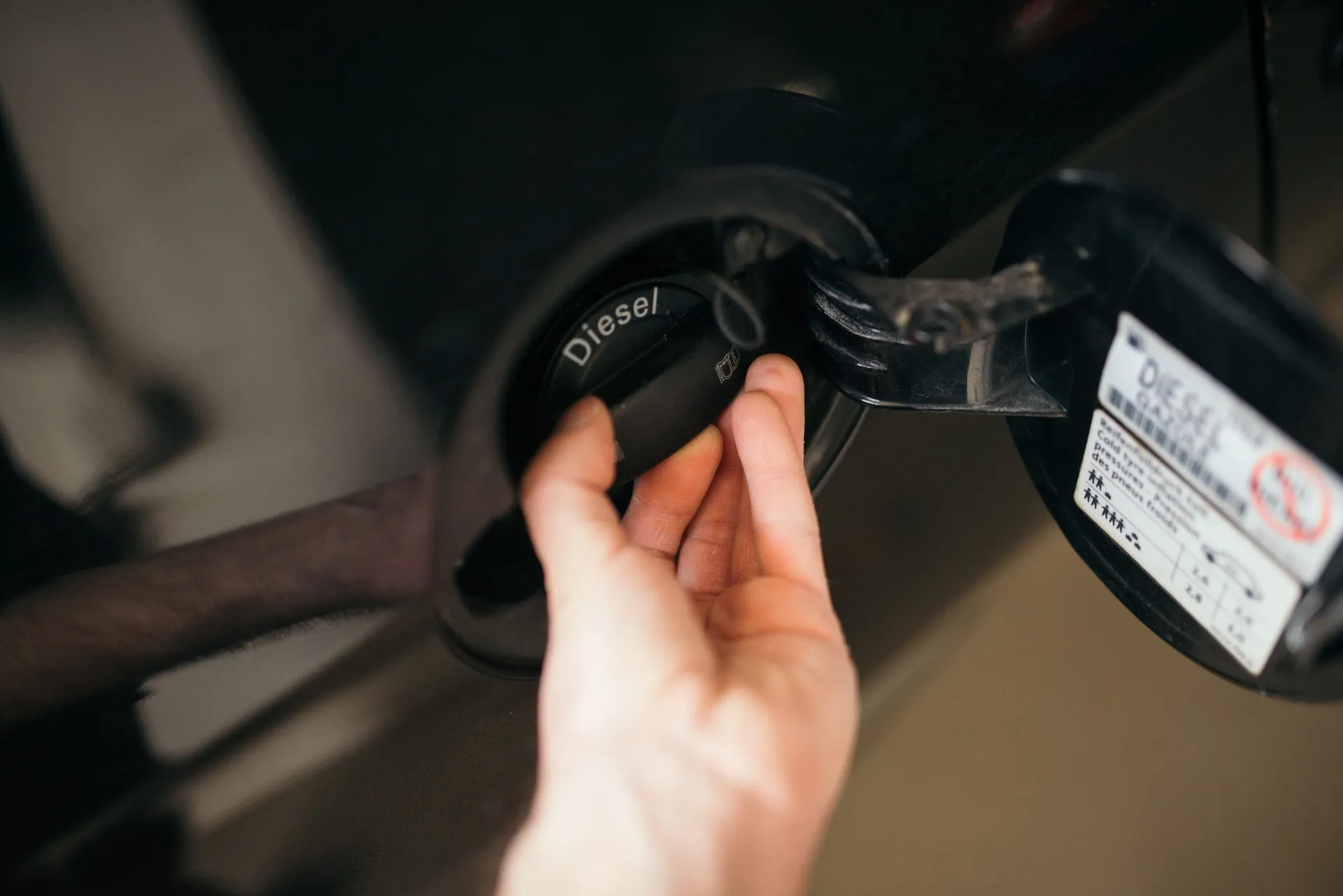
Start with the mechanics, because they matter more than the rhetoric. Red-dye diesel is chemically the same fuel as the clear diesel sold at truck stops; the red dye is simply the marker that the federal highway tax of about 24 cents a gallon has not been paid. Until now, using it on public roads was illegal. The order waives that restriction and defers collection of the federal excise tax through 31 December, with the IRS instructed to stop writing penalties.
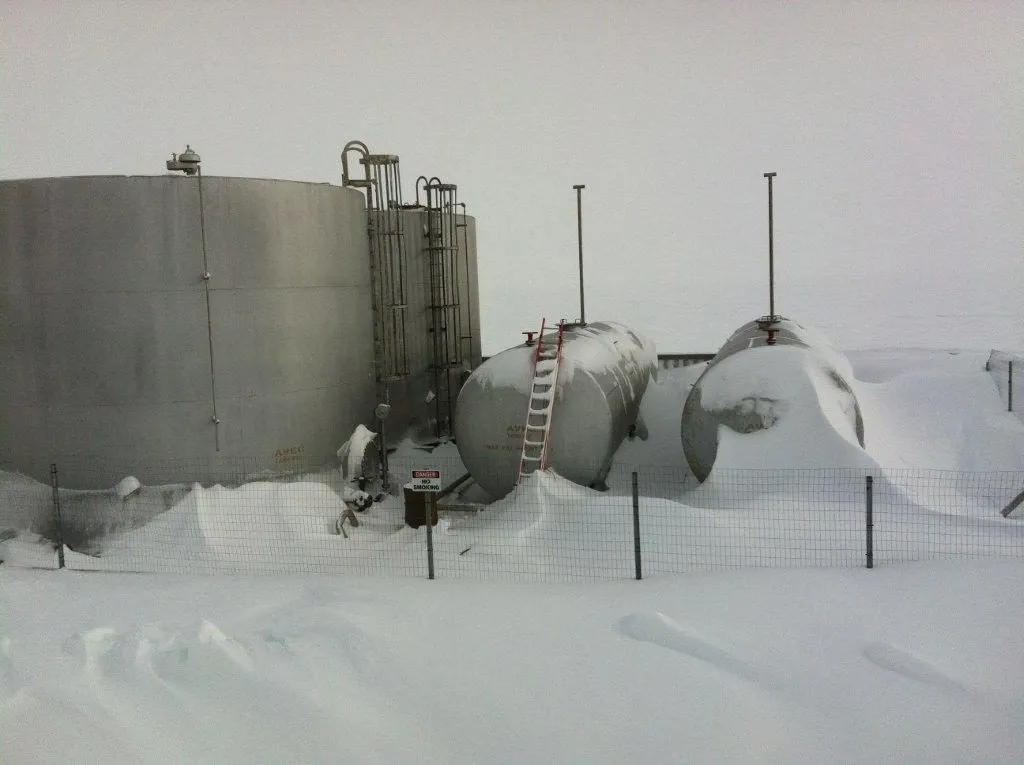 A diesel fuel bulk storage facility with large tanks.
Credit: Public domain, via Wikimedia Commons.
Note the word defer. The federal tax is postponed, not abolished — and the distinction is not academic. As analysts at InvestingLive have pointed out, if the tax eventually falls due, drivers who switched fuels could face a bill. A cut makes a cost smaller; a deferral makes it later.
Then there is the small matter of the states. An executive order cannot override state law, and in most states running dyed diesel on public roads remains illegal. Around 14 states — including Alabama, Arkansas, Indiana, Iowa, Louisiana, Mississippi, Missouri, Nebraska, North Carolina, North Dakota, South Dakota, Oklahoma, Tennessee and Texas — have relaxed some of their own rules, but the picture is a patchwork. State diesel taxes averaging about 35.5 cents a gallon, according to US Energy Information Administration data cited by CQ Roll Call, are untouched by the federal order, and several states levy sales tax on dyed diesel in place of fuel tax. As ThePrint's reporting summarised, supporters promise immediate tax relief, but analysts caution the practical effect may be limited.
The analysts' verdict: limited and lumpy
The scepticism from energy analysts has been unusually blunt. Patrick De Haan, head of petroleum analysis at GasBuddy and one of the most widely followed US fuel-price analysts, wrote that while the order "sounds big", most drivers will not benefit because "states still enforce their own rules, it's not truly tax-free, and it doesn't add a single gallon of supply." His fuller assessment: the current price spike is about a lack of global supply, driven by continued Middle East disruptions, strikes on Russian refineries and declining global inventories — and against that, "the impact at the pump is likely to be limited and flat-out lumpy."
Tom Kloza, chief energy adviser at Gulf Oil, told Reuters the measure "really doesn't shift the amount of overall diesel manufactured for domestic purposes". Preben Sørli of Rystad Energy said it "would not change the underlying wholesale diesel price" and would mainly reduce federal tax revenues rather than alter supply or market fundamentals. Gregg Ibendahl, an agricultural economics professor at Kansas State University, said it "would help less than it sounds like".
The trucking industry itself is unconvinced. Todd Spencer, president of the Owner-Operator Independent Drivers Association, sees only "minimal relief", arguing that market stability — not tax tinkering — is what brings down costs for the long haul. There is a practical obstacle, too: most truck stops across the country do not stock red diesel, and it is unclear how quickly, or at what cost, they could acquire it. Large interstate fleets, facing a patchwork of state rules and tax complications, are expected to stay on the sidelines — while the surge in demand could tighten availability for farmers in the middle of harvest, the very people the order is meant to help.
A supply crisis dressed as a tax problem
Here is the deeper problem with the order: it treats a supply crisis as a tax problem. Diesel averaged $6.32 a gallon on 5 October, according to AAA — down about 20 cents from its late-September record, but still up roughly $2.50 a gallon since the Iran war broke out in February. Brent crude remains above $100 a barrel. The causes are geopolitical: the US-Israel war on Iran, Ukrainian strikes on Russian refineries, pared global refining capacity and shrinking inventories.
Against a 24-cent tax break on a $6.30 gallon — about four per cent of the price — the arithmetic is unforgiving. The tax was never the reason diesel costs what it does, so waiving it cannot be the reason it falls. That is why analysts keep returning to the same phrase: the order adds no supply. Off-road diesel already accounts for roughly 30 per cent of US distillate consumption; letting some of it onto highways changes who pays certain taxes, not how much fuel exists.
This is also why the parallel effort — the G7's emergency release of 100 million barrels of oil and diesel from strategic stockpiles, which Verity covered earlier this month — is arguably the more serious intervention: it at least touches supply. But even that is a stopgap against a market shaped by war.
The politics: affordability is the midterm
If the economics are thin, the politics are legible. USA Today noted that higher fuel prices have contributed to the president's low approval ratings ahead of the 3 November midterms, which will determine control of Congress — a contest where Republicans are already walking a tightrope. High energy costs, and affordability more broadly, have morphed into the defining voter concern of the cycle, alongside a slowing jobs market that has added just 29,000 jobs in September.
Seen in that light, the red-diesel order is best understood as a signal — a president visibly doing something about prices, at a rally, with a Sharpie, weeks before voting. Nile Elam of the National Asphalt Pavement Association offered the fiscal counterpoint: the federal diesel tax funds the Highway Trust Fund, which pays for roads and mass transit, and eroding that revenue "would undermine investment in the infrastructure Americans depend on."
So — will it work?
Weigh the evidence and the honest answer is: barely, and only for some. A subset of truckers, hauliers and diesel-pickup owners in states that have relaxed their rules may pocket real money — 24 cents a gallon is not nothing when margins are thin. Farmers buying fuel they already bought tax-free gain almost nothing.
But as a plan to tame fuel prices before the midterms, the order fails the basic test: it does not touch the supply disruption that caused the spike, it cannot override the state laws that govern most of the country, and it may not even be a genuine tax cut — merely a deferral past election day. The analysts' consensus, from GasBuddy to Rystad to Gulf Oil, is unusually unified: limited impact, lumpy distribution, no change to wholesale prices.
Trump is betting that voters will feel the gesture even if they cannot feel the saving. With diesel above $6 and groceries priced accordingly, that is a gamble — and on the evidence, the house odds favour the analysts.
This is an analysis piece. For Verity's opinion coverage and the latest business news, visit the homepage.