In Short (TL;DR)The G7 has agreed to immediately release 100 million barrels of oil and diesel from emergency reserves, including a substantial diesel release within 20 days, to bring down fuel prices. The move follows US President Donald Trump's threat to ban diesel exports to Europe. Britain is heavily exposed: over half its diesel is imported, nearly a third of it from the US, with pump prices topping £2 a litre.
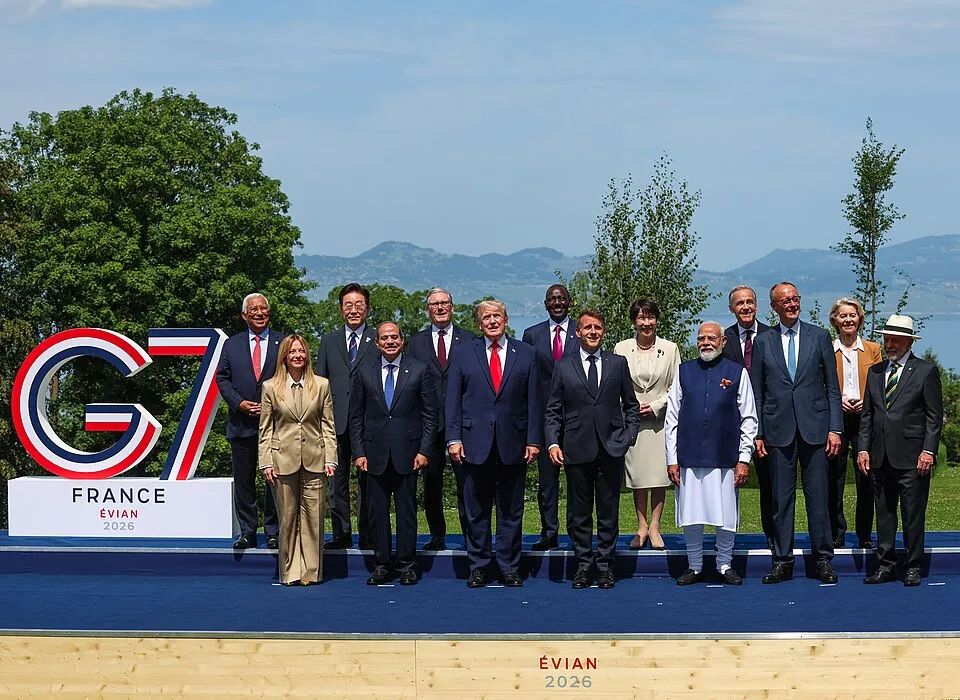
The G7 group of leading industrialised nations has agreed to release 100 million barrels of oil and diesel from emergency stockpiles in a coordinated attempt to steady global fuel markets, the BBC has reported.
The package includes what officials called a "substantial release" of diesel to be delivered within 20 days. The decision, the BBC said, takes effect immediately.
French President Emmanuel Macron, who chaired the talks, said the joint action would "bring down the prices of petroleum products."
Crucially, the G7 members also pledged to place no "export restrictions on energy and energy products" on each other — a commitment aimed squarely at defusing the dispute that forced the emergency meeting in the first place.
The agreement came after US President Donald Trump threatened to ban American diesel exports to Europe, a move the BBC described as an attempt to exert leverage.
The United States is one of Europe's most important diesel suppliers, and even the prospect of losing those barrels was enough to send ripples through European politics and energy trading desks. Diesel is not a niche product: it powers the trucks that move food and goods, heats homes, and fuels industry across the continent. A sudden shortfall would have been felt far beyond the forecourt.
The episode underlines how energy trade has become entangled with diplomacy. Europe spent the past several years trying to reduce its dependence on Russian energy; the row with Washington is a reminder that alternative suppliers come with their own political strings attached.
Few countries are as exposed to a diesel squeeze as the United Kingdom. More than half of the diesel burned in Britain is imported, and 31% of those imports arrive from the United States, according to the BBC.
That dependence collided with market reality on Friday, when UK diesel prices climbed above £2 a litre for the first time — a milestone that will feed directly into the cost of living. Haulage firms, already operating on thin margins, face higher operating costs that are typically passed down the supply chain into food and consumer goods prices.
The timing could hardly be worse for households. With winter approaching, demand for heating fuels rises just as supply chains face simultaneous pressure from conflict in the Middle East and restricted Russian exports.
The Trump threat landed on a market that was already tight. Russia, historically one of Europe's biggest diesel suppliers, has repeatedly restricted diesel exports in recent years to protect its domestic market — removing millions of barrels from the pool available to European buyers.
!Oil storage tanks at the Petroleumhaven terminal in Amsterdam
Credit: Marc Bos, CC BY-SA 3.0, via Wikimedia Commons
At the same time, conflict in the Middle East has kept a risk premium embedded in crude prices and periodically threatened Red Sea shipping disruptions, the vital artery for energy flows between the Gulf and Europe. Rerouting vessels around Africa adds weeks to voyages and millions of dollars in costs — expenses that eventually surface at the pump.
Refining capacity is the third constraint. Europe has closed a string of refineries in the past decade on environmental and economic grounds, leaving the continent structurally short of diesel and dependent on imports, above all from the US, the Middle East and Asia.
Strategic petroleum reserves exist precisely for moments like this. Governments hold tens of millions of barrels in salt caverns and tank farms, to be released when supply shocks threaten economic stability. The International Energy Agency coordinates collective action among its members so that releases are large enough to move markets rather than symbolic gestures.
The precedent is recent. In 2022, after Russia's invasion of Ukraine sent energy prices spiralling, IEA members agreed to release around 240 million barrels — the largest coordinated drawdown in the agency's history. The releases helped cap the price spike, though they also left stockpiles depleted and in need of refilling.
Releases are not without critics. Some analysts argue that drawing down reserves too aggressively leaves countries exposed if a larger shock follows, while others note that the market impact tends to fade within months unless the underlying supply problem is fixed. The agency itself stresses that stock releases are a bridge — not a substitute — for investment in supply and refining capacity.
Analysts will now watch two things: how fast the promised diesel actually reaches European terminals within the 20-day window, and whether physical barrels translate into lower wholesale prices. Futures markets often react to announcements before a single tanker moves — but sustained relief requires real supply, a point tracked closely by the U.S. Energy Information Administration in its weekly inventory data.
The immediate test is price. If the G7's barrels flow as promised, European wholesale diesel benchmarks should soften in the coming weeks, eventually filtering through to forecourts. The UK government will be watching pump prices closely given the political sensitivity of the £2-a-litre threshold.
The deeper question is whether the G7's pledge of no export restrictions holds. Energy has become a recurring instrument of statecraft — from Russia's pipeline politics to this week's transatlantic row — and traders will remain alert to the next disruption. The U.S. Department of Energy and its European counterparts face the delicate task of rebuilding the very reserves they are now drawing down.
For consumers, the episode is a reminder of how quickly geopolitics reaches the petrol station. For governments, it is a lesson in the cost of import dependence — one that European leaders have heard before, and may now finally be forced to act on.
*VERITY is an independent digital news platform covering world news, business, technology and more. Read about our editorial standards.*