In Short (TL;DR)Citroën unveiled the 2 CV Concept at the 2026 Paris Motor Show, previewing a production electric city car due by 2028 with a target starting price of around €15,000. The concept reinterprets the 1948 original — round headlamps, curved roof, roll-back fabric roof — as a 3.76-metre car weighing about one tonne, deliberately light to keep battery costs down. Citroën says the car will sit between the Ami and C3, be built in Europe, and comply with forthcoming EU E-Car regulations for small affordable EVs. The revival is a direct response to mounting competition from Chinese manufacturers in the budget electric segment.
Some cars are transportation. The Citroën 2CV was a national character — and now, 78 years after it first wobbled onto the stand at the Paris Motor Show, it is coming back. Citroën has used this year's Paris show to unveil the 2 CV Concept, an electric reinterpretation of the most beloved French car ever built, with a production version promised by 2028 and a target price of around €15,000.
The announcement, made in an official Stellantis press release issued from Poissy on 11 October, is one of the most significant product signals from a European manufacturer this year. It is also a calculated bet: that in an electric age increasingly dominated by Chinese brands, a little French icon with a big personality can do what the original did in 1948 — put affordable mobility within reach of ordinary people.
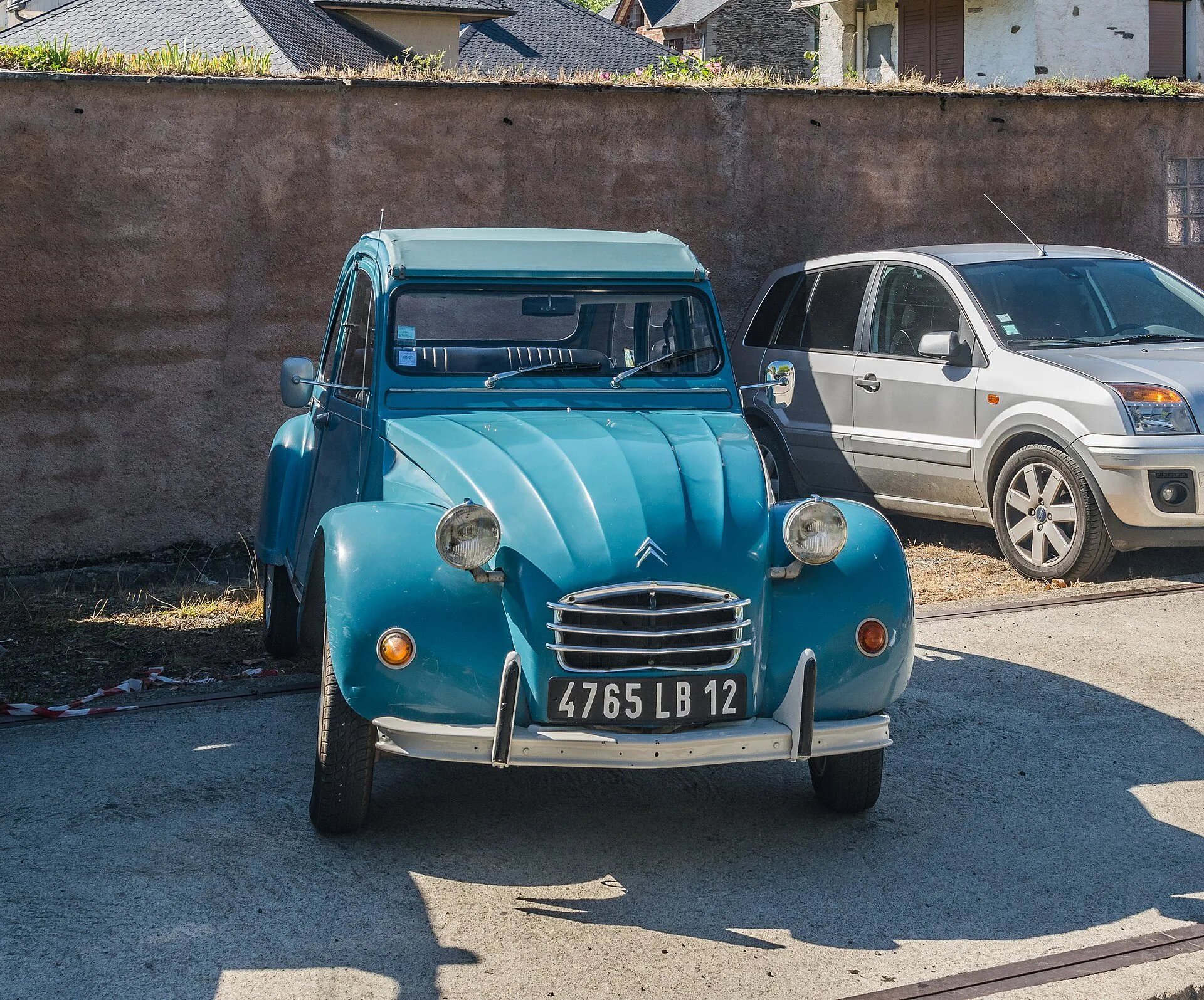
There is a pleasing symmetry to the venue. The original 2CV made its public debut at the Paris Motor Show in October 1948, exactly 78 years before its electric heir was revealed at the same event. The 1948 car was born from the "Toute Petite Voiture" brief — the "very small car" — a ruthlessly practical specification drawn up for post-war rural France: carry four people and 50 kilos of farm produce, be cheap to buy and run, and be simple enough for a farmer with no mechanical experience to maintain. Legend holds that it had to be able to carry a basket of eggs across a ploughed field without breaking a single one.
Citroën 2CV Charleston edition in burgundy and black two-tone paintwork
Credit: Lothar Spurzem / Wikimedia Commons, CC BY-SA 2.0 de
It worked. The 2CV stayed in production for more than four decades, selling around nine million examples and becoming as much a part of the French landscape as the baguette. It was never fast — early cars were nicknamed the "tin snail" — but it was cheap, cheerful and virtually unkillable, and generations of Europeans learned to drive in one. The BBC's reporting on the unveiling noted the concept previews a production car due by 2028.
Citroën's chief executive, Xavier Chardon, was careful to frame the revival as a philosophy rather than a pastiche. Reinventing the 2CV, he said, is not about replicating a car from the past but about reinventing what made it unique: its simplicity, its accessibility and the freedom it offered. The goal, in his words, is to make electric mobility "simpler, more human and more desirable".
Strip away the nostalgia and the concept is a serious engineering proposition. At 3.76 metres long it is actually slightly shorter than the original, and Citroën is targeting a kerb weight of about one tonne — remarkably light for an electric car in an era when many EVs weigh closer to two. That lightness is the whole point: a lighter car needs a smaller, cheaper battery to deliver usable city range, and the battery is the single most expensive component of any EV.
The design deliberately swims against the industry tide towards ever-larger, heavier vehicles. Body panels are broad, flat and simple to stamp; the bumpers are separate pieces that can be replaced independently of the bodywork, cutting repair costs; and the car rides on 18-inch steel wheels rather than fashionable alloys. Citroën is even working with Michelin on a "digital tyre twin" to monitor tyre health.
Inside, the concept is playful in a way modern car interiors rarely are. A removable basket replaces the traditional centre console — a nod to the car's market-garden heritage — while a detachable radio doubles as a portable speaker for picnics. The door pockets are sized to carry eggs, a wink at the original's most famous design requirement. There is a roll-back fabric roof like the original's, two bench seats, yellow tartan upholstery, and a square 8-inch touchscreen with comic-style graphics. Some trim elements will be 3D-printed, another cost-saving measure. Citroën is even working with Michelin on a digital tyre twin to monitor tyre health.
What Citroën has not said is equally telling: no battery capacity, no power output, no range figure. Those numbers will define whether the car can actually be built for €15,000 — and they will not be revealed until closer to production.
Forget the round headlamps and the egg holders. The €15,000 target is the single most important number attached to this car. The average new car in Europe now costs well over €35,000, and even the cheapest electric cars typically start above €17,000. A genuinely usable European-built EV at €15,000 would reset expectations across the industry — undercutting not just rivals like the Dacia Spring and Renault's Twingo, but the wave of Chinese budget EVs that European manufacturers fear most.
That fear is the real context for the 2CV's return. Chinese manufacturers have spent the past few years carving out the affordable end of Europe's electric market with cars that are cheap, well-equipped and increasingly well-regarded. European brands, saddled with higher labour and regulatory costs, have struggled to respond at the bottom of the market — retreating instead into larger, pricier models with fatter margins. The 2CV Concept is Citroën's answer to the Chinese budget EVs that European manufacturers fear most: fight lightness with lightness, simplicity with simplicity.
Citroën says the production car will be manufactured in Europe and engineered to comply with forthcoming EU E-Car regulations — a new category of rules intended to make small, affordable electric cars viable. It will slot into the range between the tiny Ami quadricycle and the C3, giving the brand a proper small-car ladder for the electric age.
Citroën is not the first to discover that nostalgia sells electrons. Renault's 5 E-Tech has been one of Europe's best-received recent EVs, trading shamelessly on memories of the 1970s supermini, while Volkswagen's ID.Buzz has done the same trick with the Microbus. Fiat's electric 500 showed the formula could work at the affordable end too.
The 2CV has arguably the strongest claim of all. Few cars are as emotionally loaded as the little Citroën, and few revivals feel as natural: the original was never about performance or prestige, so there is no sporting legacy to betray and no luxury image to dilute. It was about cheap, cheerful freedom — which is precisely what a €15,000 city EV promises.
There are risks, of course. Concept cars routinely lose their charm on the journey to the showroom, as safety regulations, cost engineering and marketing committees sand off the interesting edges. Citroën's promise that the production car will keep the concept's spirit will be tested the moment the accountants start their work. And the €15,000 target is just that — a target, in an industry where battery raw-material prices and tariff politics can move faster than product plans.
Step back, and the 2 CV Concept is really a statement about European industry. For a decade, the conventional wisdom has been that Europe cannot compete with China on affordable electric cars — that the future belongs to whoever makes the cheapest battery. Citroën is arguing the opposite: that clever, lightweight design can substitute for cheap cells, and that a car designed around a one-tonne target weight does not need a giant battery in the first place.
It is an appealing theory with an honest pedigree. The original 2CV succeeded not because Citroën had the best technology of 1948, but because it had the clearest idea of what ordinary people needed. If the electric 2CV reaches showrooms in 2028 at anything close to €15,000, it will be proof that the idea still works. For more on the industry's electric transition, see our business coverage and technology section. You can also read about recent European tech investment, or visit our homepage and about page.
The tin snail is back. This time, it hums.