The confidence, and why it feels familiar
Democrats go into Tuesday's midterm elections carrying something they have not always had in recent years: a run of encouraging numbers. Month after month, surveys have pointed in their direction. The president is a Republican with historically weak approval ratings. Voters are unhappy about the rising cost of food and household bills. On paper, the conditions point to a strong night for the opposition party.
That paper advantage is real, but it is also exactly the kind of advantage that has misled Democrats before. This is the central tension of the 2026 campaign's final days. The numbers say one thing. Recent history says to read them twice.
Polls suggest Democratic candidates are ahead in well over the 218 seats needed to win back the House of Representatives, while the party is level or narrowly ahead in the key Senate races. Some individual results are striking. A recent New York Times survey found the Senate contest in South Carolina tied, in a state Donald Trump won by 18 percentage points in 2024. Recent CNN surveys put Democrats ahead in Texas, Kansas and Maine. If even a fraction of those results hold, it would be a remarkable night.
Yet the same party has learned, repeatedly, that encouraging polls are not the same as votes counted. Recent American political history is full of surveys taken days before an election that turned out to be wrong, and the misses have a pattern that should worry anyone already planning a victory speech.
A record of misses that cannot be ignored
Trump beat expectations on his way to winning the White House in 2016 and again in 2024. His defeat in 2020 was far narrower than most surveys had suggested it would be for Democrat Joe Biden. In each case, the error was not enormous in most reputable surveys, only a few percentage points. But in the close races that decide Senate control, a few points are the difference between winning and losing, between a majority and another two years in the minority.
This year has already supplied fresh warnings, and they came from inside the Democratic Party's own contests. Earlier this year, polls pointed to Democrat Abdul El-Sayed winning Michigan's Democratic Senate primary by a double-digit margin. He won it by a single percentage point. In Wisconsin's Democratic primary for governor, a candidate holding a polling lead approaching 20 points lost by a fraction of a percent. Those were primaries, not general elections, and primaries are notoriously volatile. Still, they are a reminder that a comfortable lead on paper can evaporate when real voters make up their minds.
Readers can follow the wider campaign on the Politics page, the News page and the homepage, learn more about this site on the About page, and read recent coverage such as Serbia and Hungary analysis and Reeves and the UK's future inside the EU.
Why polling has become harder
According to Clifford Young, president of Ipsos Public Affairs, polling has become difficult in recent years because it is harder to reach Americans as they abandon their landlines and screen their calls. Many of those who pollsters do contact have become less willing to take part. That creates a problem that no amount of statistical adjustment can fully solve: if the people who refuse to answer differ systematically from those who do, the sample will be skewed before a single question is weighted.
Young points to a particular risk. Conservatives, especially those on the far right, are much more anti-establishment by nature, he says, and they do not participate in anything because they hate the system. If Republican voters are being undercounted in a systematic way, and polling companies do not take that into consideration when constructing their voting models, it could skew their data towards the Democrats. That is one of the reasons why it has become trickier for pollsters to predict what the electorate will look like.
There is another explanation for why Trump overperformed in previous presidential elections. His supporters, many of whom were not regular voters, flocked to the polls in higher than expected numbers. Turnout, in other words, is the wild card. A poll can measure opinion accurately among the people it reaches and still miss the election, because it must guess which of those people will actually vote, and how many less visible voters will show up.
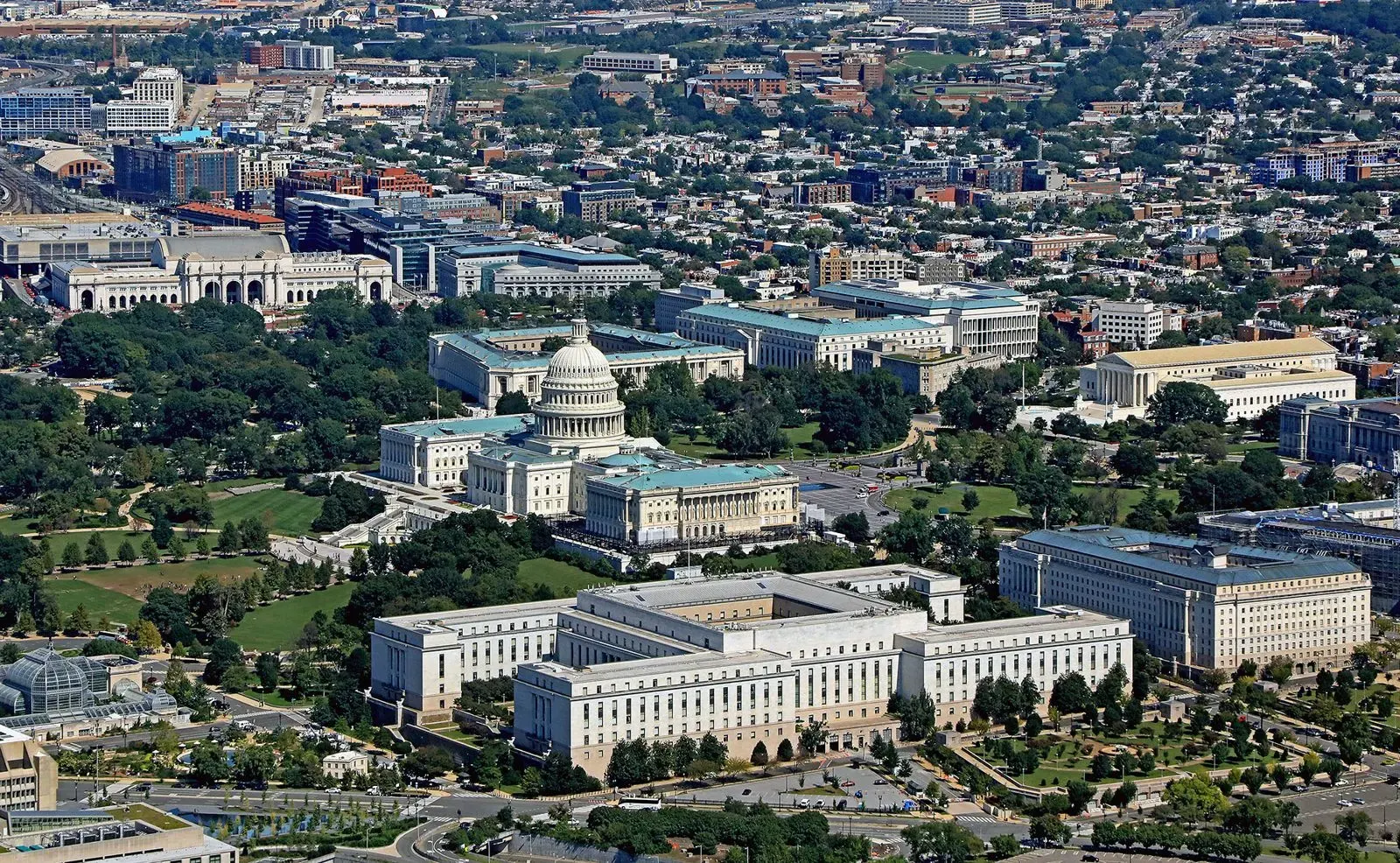 Capitol Hill in Washington, D.C.
Capitol Hill, Washington, D.C. Photograph by Duane Lempke, via Wikimedia Commons (CC0).
The case for trusting the numbers this time
There is a counterpoint that should reassure Democrats, at least partly. Midterm general election polls have been more reliable in recent years, in part because Trump himself, with his unusual pull on disaffected voters, was not on the ballot. In 2022, surveys correctly suggested Democrats would defy expectations of a wipe-out despite Biden's low approval ratings. The party lost the House by slim margins and held on to the Senate. The polls did not get everything right, but they got the shape of the night right, and that is more than could be said for several presidential cycles.
It is also worth remembering that nominating contests are a different beast from general elections. Young notes that primary races have historically been volatile, with voters more likely to make up their minds at the last minute. This year's primary surprises should not be seen as proof that the current crop of general election polls are off the mark. A voter choosing between two Democrats in August is not the same exercise as a voter choosing between a Democrat and a Republican in November, with the balance of Congress at stake.
History still offers Democrats reason for optimism, and reason for caution in equal measure. It is common for the party of the president to have a bad night in the midterms. One of the most notable examples in recent years came in 2010, when Republicans flipped more than 60 House seats and made gains in the Senate, off the back of an economy struggling to recover from the financial crash and conservative fears over President Barack Obama's healthcare reforms. A defeat had been predicted by the polls, but not quite on that scale.
The headwinds behind the headline numbers
The roles are reversed this time, with the Democrats in opposition and the economy on the minds of voters. But there are a number of reasons why Democrats may not have as good a night as history might suggest, or as some might expect given Trump's low approval rating.
Firstly, much of the territory in play in this election was won by Trump with ease in the presidential election just two years ago. It is, in effect, a home game for Republicans. Then there have been changes to House election boundaries over the years that have meant fewer seats switch between parties. Thirdly, there are fewer swing voters due to the deeper polarisation of the country. Some experts describe the electorate as calcified, meaning that most voters have made up their minds about the parties and are unlikely to move.
There is also the cash advantage Republicans have enjoyed, which has given them hundreds of millions of dollars to spend on attack ads in the final weeks. Money does not vote, but it shapes what voters hear in the closing days, and in tight races that can matter.
None of this cancels out the polling lead. It qualifies it. A lead built on a favourable national mood still has to survive district by district, state by state, in places where local candidates, local issues and local turnout operations decide the outcome. National polls measure a mood. Elections are won in places.
How to read the final polls
Polling, for all its flaws, still has tools for coping with uncertainty. The BBC source analysis sets out the same cautions, and prediction market coverage offers another, separate lens on the Senate races. Every individual survey carries a margin of error tied to its sample size, and averages across many polls tend to be more reliable than any single result. A well designed poll is built to anticipate issues that may make it less than reliable, and polling models try to capture shifting fundamentals. The art, as Young puts it, is managing uncertainty, because pollsters are dealing with humans, and humans are not easy.
Even allowing for the kind of polling lean seen in recent presidential elections, the current figures point to a good night for Democrats on 3 November. And polling inaccuracies can go both ways. In last year's state and special elections, Democrats outperformed most surveys as it was their voters who turned out in unexpectedly larger numbers. The sight of Trump holding rallies in the final days of the campaign in states he won comfortably in 2024 will have lifted Democrats' hopes that Republican internal polling has conservative candidates in trouble.
There is always the chance that voters change their minds right up until election day. Sometimes there are late shifts that can alter the dynamics of a race. Sometimes undecided voters, who still account for a key segment of the electorate in many of these races, all break the same way. In polling, there will always be some level of uncertainty, and managing that is the art that goes along with the science.
That is the honest answer to the question in the headline. Are the polls right? Probably, in broad outline. Almost certainly not, in every detail. Democrats have every reason to hope, and every reason to keep campaigning as if they are behind. The polls have let them down before. The surest way to make sure they do not do so again is to treat a lead as a reason to work harder, not as a result already banked.