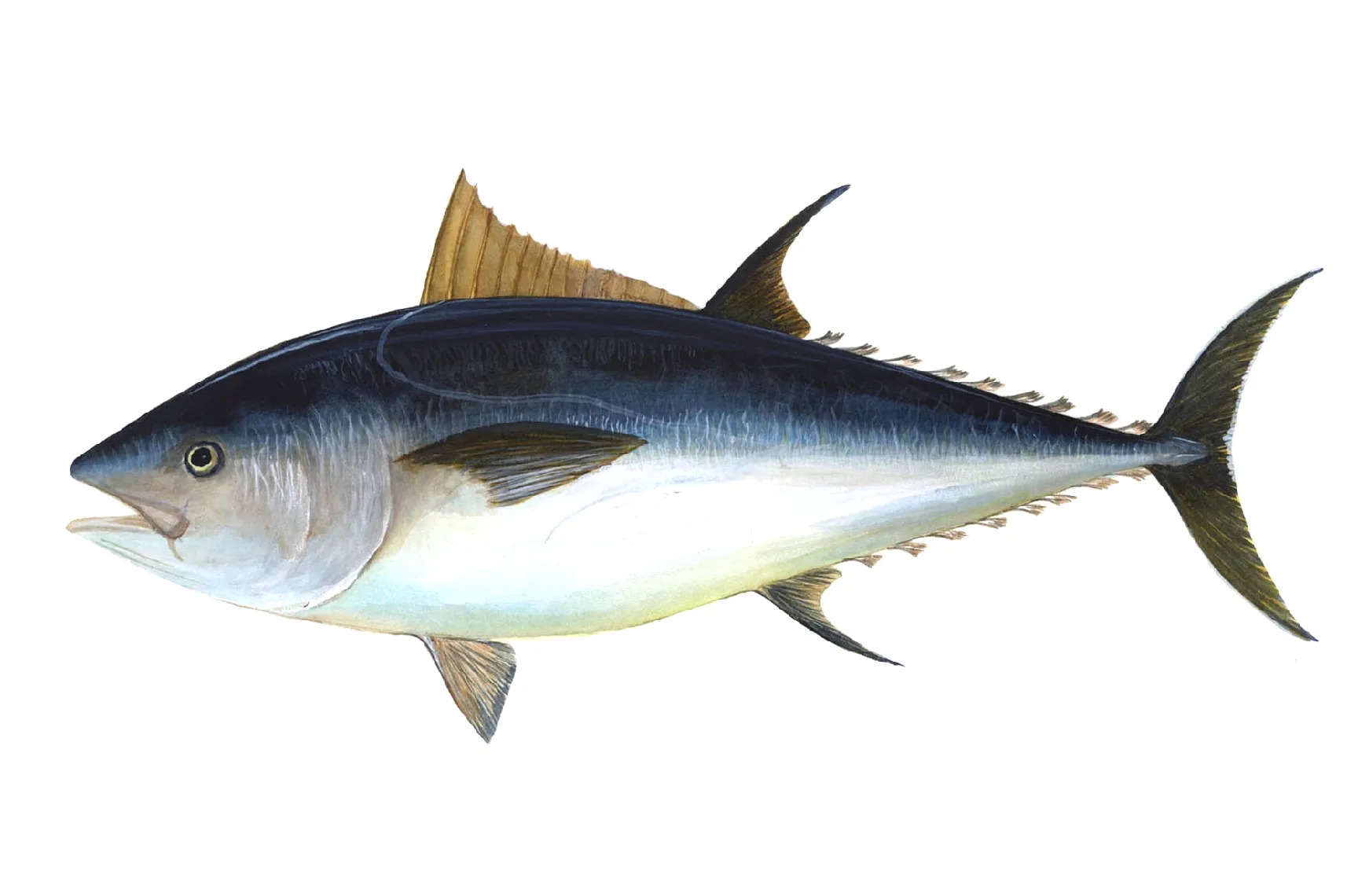
They had all but vanished from British seas. Now the giant predators are back. Bluefin tuna have returned to waters off Cornwall "in huge numbers," according to a major new report from WWF — a comeback the conservation group presents as proof that nature, given a chance, can recover from even the most severe damage humans inflict on it.
The return of the bluefin is the hopeful centrepiece of the Living Planet Report 2026, published this week. But the report's overall message is anything but comforting: monitored wildlife populations around the world have fallen by an average of 73 per cent since 1970. The tuna's return is offered as evidence that decline is not destiny — and that determined conservation can still turn the tide.
The Atlantic bluefin is an extraordinary animal: a warm-blooded fish that can weigh more than half a tonne, cross entire oceans and live for decades. British waters once teemed with them. But decades of overfishing — of the tuna themselves and of the prey fish they depend on — had largely wiped them from UK seas by the 1960s, reducing a once-common sight to a memory.
Their return follows years of tighter international management of Atlantic bluefin stocks. Catch limits, enforcement against illegal fishing and coordinated stock assessments have allowed populations to rebuild to the point where neither Atlantic nor Pacific bluefin tuna is now considered threatened. For British waters, the result is a spectacle few living observers have ever seen: huge, torpedo-shaped predators hunting once more off the Cornish coast.
The recovery is all the more striking for being visible. Much conservation success is measured in spreadsheets — population models and index values. The tuna are different: anglers, divers and wildlife watchers can see them with their own eyes, a living demonstration that the ocean can heal.
That hope is set against a stark statistical backdrop. The Living Planet Index, produced by the Zoological Society of London (ZSL), tracks 35,803 population trends across 5,790 species of mammals, birds, fish, amphibians and reptiles between 1970 and 2022. Over that 52-year period, the average size of monitored wildlife populations fell by 73 per cent — roughly 2.5 per cent a year, every year, for half a century.
The headline number needs careful interpretation. It does not mean that 73 per cent of wild animals have vanished. It is an average change across monitored populations, and it is particularly sensitive to populations that were already small. Around half of the populations in the index are stable or increasing. But the populations that declined did so far more severely than the recovering ones grew — the losses, in other words, outweigh the gains.
The breakdown by ecosystem is sobering. Freshwater species suffered the steepest collapse, with populations falling by an average of 85 per cent. Terrestrial species declined by 69 per cent; marine species by 59 per cent. Regionally, South America recorded the largest fall at 95 per cent, followed by Africa at 80 per cent.
"Monitored global populations continue to decline on average with no evidence yet of that global recovery," said Andrew Terry, ZSL's chief conservation officer — a reminder that the success stories, however inspiring, remain exceptions to a bleak rule.
Yet the exceptions are real, and the report gathers them as evidence for what it calls "the science of hope." Tigers are the clearest example: in 2010, only around 3,200 wild tigers remained, and the species appeared to be sliding toward extinction. By 2025, the population had grown to roughly 5,700 — an increase of more than 70 per cent — driven by anti-poaching efforts, habitat protection and work with local communities.
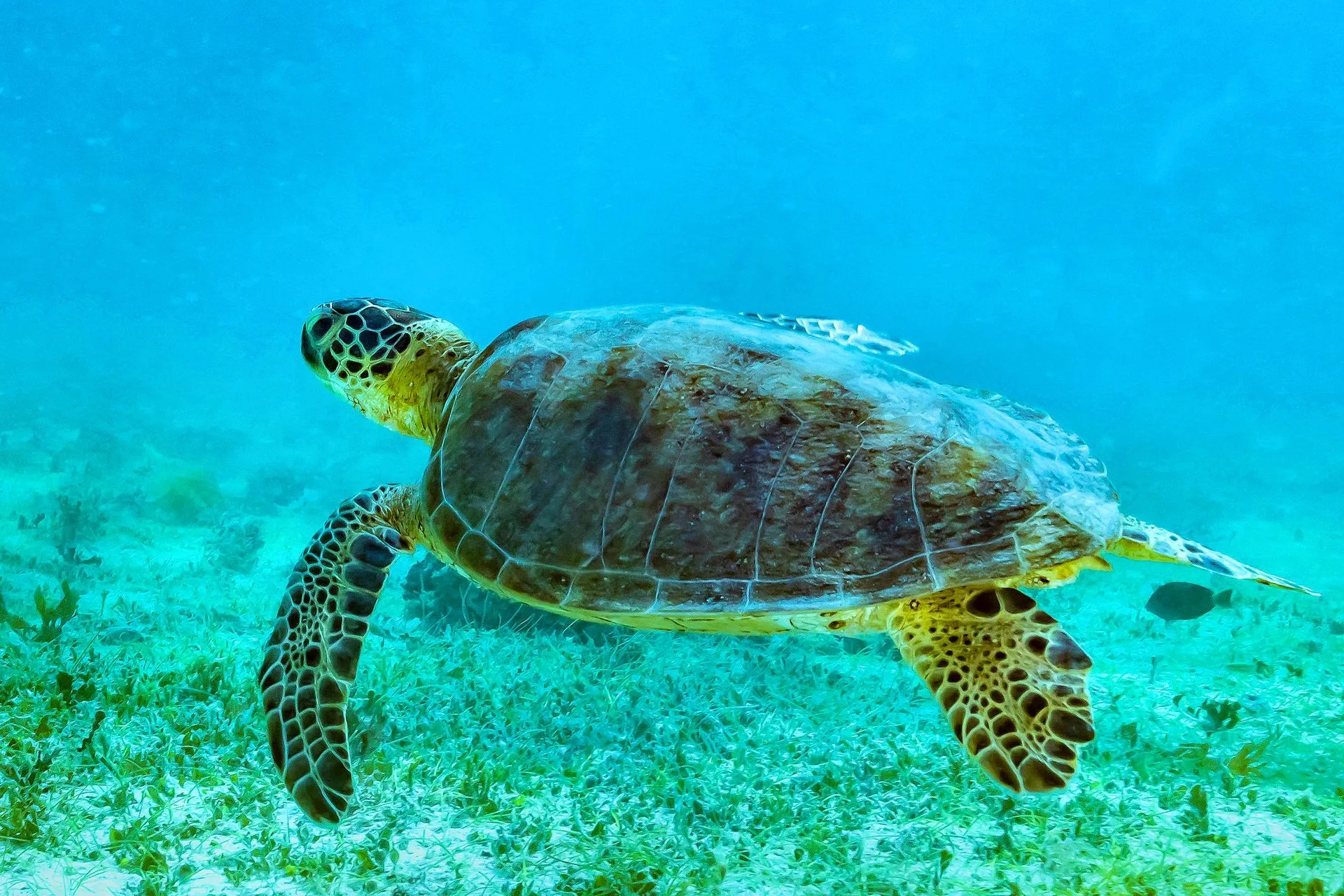
The green sea turtle's story is even more remarkable. In 2025, it became the first marine turtle ever to be downlisted from endangered to least concern, after 50 years of conservation work across more than 80 nesting countries. Southern African elephants, meanwhile, are stable or growing in many areas where local communities lead the management of the land they share with the animals.
Each recovery shares a pattern: sustained effort, cooperation across borders and communities, and time. None happened by accident, and none happened quickly. "Hope is not passive. Hope's about action," said Mike Barrett, WWF's chief scientific adviser — a line that captures the report's central argument that optimism must be earned through work.
Dr Louise McRae of ZSL's Institute of Zoology made a similar point: "Behind every global statistic is evidence of wildlife populations rebounding and habitats recovering, driven by people working together to reverse biodiversity loss."
!An Atlantic bluefin tuna swimming underwater
Credit: The Great Mule of Eupatoria, via Wikimedia Commons (CC BY-SA 4.0).
If the biology offers hope, the economics do not — yet. WWF identifies the current energy, food and finance systems as the root drivers of decline. The way food is produced destroys habitats and drives excessive resource use; burning coal, oil and gas accelerates climate change; and the flow of money works overwhelmingly against nature.
The numbers are striking. In 2023, activities with negative impacts on nature received about $7.3 trillion in funding, while spending on protecting or restoring nature amounted to only about $220 billion — a ratio of roughly 33 to 1. Habitat loss and degradation remain the most frequently reported threats to monitored populations, followed by overexploitation, climate change, pollution, invasive species and disease.
The report argues that reversing the decline requires triggering "positive tipping points" in those same three systems: transforming how food is grown, how energy is generated and where investment flows. Without addressing those drivers, WWF warns, conservation wins will not endure — a recovered species can slide back just as it climbed up.
The bluefin's story illustrates both the promise and the fragility. The tuna returned because nations agreed to manage a shared resource and stuck with it for decades — exactly the kind of long-term, cross-border cooperation the report prescribes. But tuna remain commercially valuable, and the same market pressures that nearly destroyed them are still there. Recovery, the report stresses, is not a finish line but a state that must be actively maintained.
The same applies closer to home. British waters have seen other signs of change in recent years — from great white sharks heading north as Atlantic waters warm to the rainbow sea slug found in Cornwall as a stark reminder of climate disruption. The ocean off the UK's coasts is in flux, and the tuna's return is part of a larger, still-unfolding story.
The Living Planet Report 2026 is subtitled "The Science of Hope," and its message is deliberately two-sided: the decline is real and accelerating, but it is not inevitable. "The window to secure that future is closing fast," as the report's framing puts it, "but successful conservation efforts from tuna to tigers show that we can succeed."
That success, the report argues, depends on governments, businesses and communities pulling together to transform food, energy and finance. The tuna off Cornwall cannot vote for better ocean management or redirect investment flows. People have to do that — and, as the giant fish circling in Cornish waters demonstrate, when people do, nature can answer with astonishing speed.
For a generation that has grown up hearing only about loss, the sight of a half-tonne predator back where it belongs is more than a wildlife story. It is a reminder that the graph can bend upward — if we choose to bend it.
Explore more of our science coverage and world news, including how changing oceans are reshaping marine life. Learn more about the site and our mission on our about page.