In Short (TL;DR)A rainbow sea slug (Babakina anadoni) was found at Porthpean Beach, Cornwall, in August during a Rock Pool Project community event — the first recorded sighting at that beach. The thumbnail-sized species normally lives in the warm Atlantic waters off Spain, Portugal and France. Scientists say its growing presence on UK shores is an important reminder of how climate change is reshaping marine life around Britain, and are urging continued monitoring of the shift.
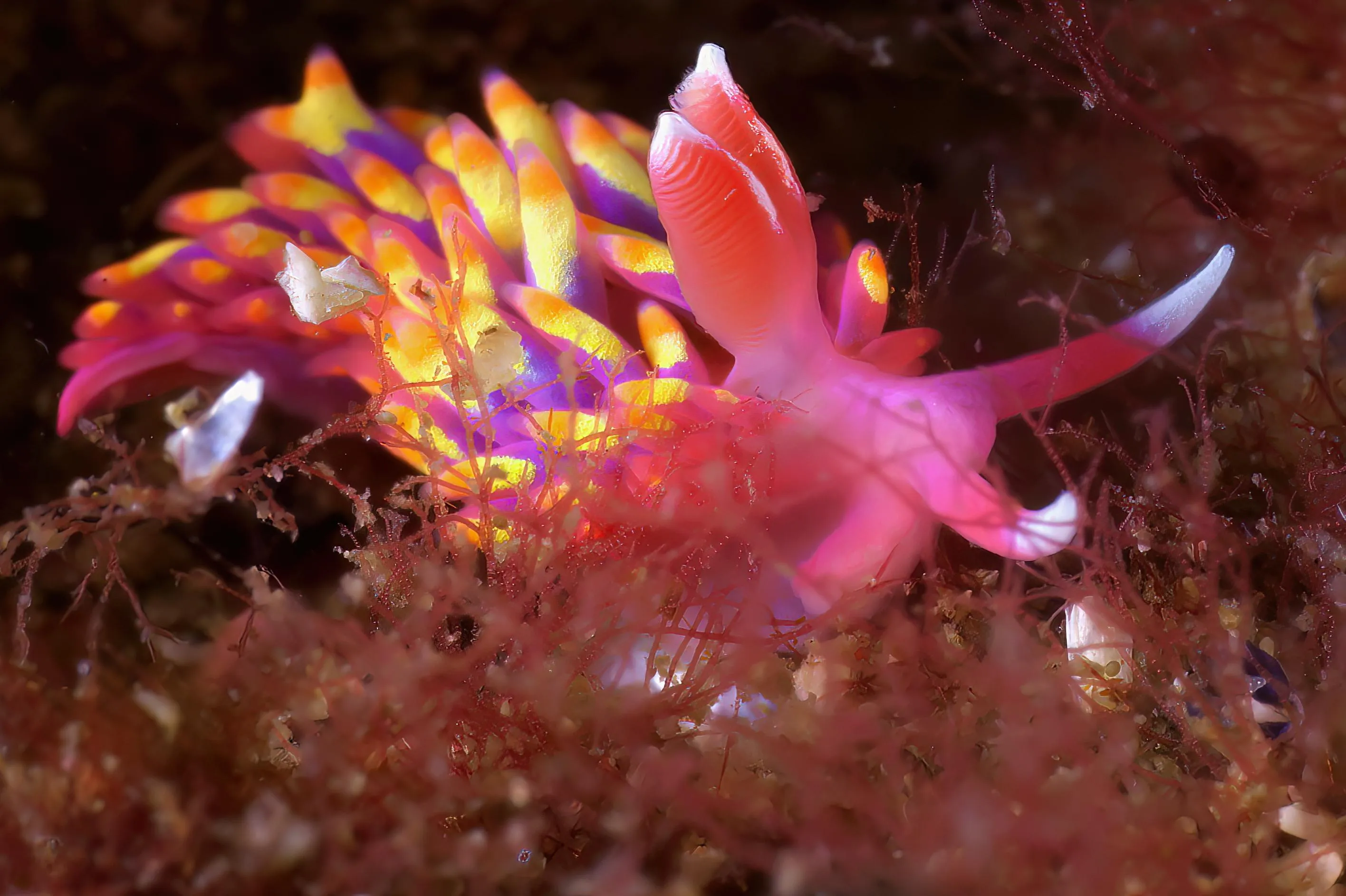
When Luke Galpin flipped over a rock in a Cornish rock pool in August, a flash of unmistakable colour stared back at him. The thumbnail-sized creature was a rainbow sea slug — Babakina anadoni — never before recorded at Porthpean Beach, and a species far more at home in the warm Atlantic waters off Spain, Portugal and France.
"It was tiny, about the size of my thumbnail, and in my excitement, I shouted for everyone else to come and have a look," Galpin told the BBC. "I hadn't seen many sea slugs at all over the summer, so I wasn't expecting to find one. But its unmistakable colour popped out at me the moment I flipped the rock over." What began as a quiet moment of rock-pooling became a small piece of scientific history — and, researchers say, a vivid warning about the state of Britain's seas.
The discovery was made during a community event run by The Rock Pool Project, the citizen-science group that organises public surveys of Cornwall's intertidal life. Galpin was taking part in one of the group's sessions at Porthpean Beach when he turned the rock and found the slug clinging beneath it.
Babakina anadoni belongs to the nudibranchs — shell-less marine molluscs renowned among divers and naturalists for their almost psychedelic colouring. The Porthpean individual, with its rainbow-bright cerata, was instantly recognisable to those who knew what they were looking at, and its identification was confirmed as the first recorded sighting of the species at that beach. For the volunteers gathered around the rock pool, it was the highlight of the day; for the scientists, it was something more significant.
!A colourful Hermissenda nudibranch photographed in a marine sanctuary
Credit: National Marine Sanctuaries, public domain, via Wikimedia Commons
In its normal range, Babakina anadoni haunts the warm Atlantic coasts of Iberia and France, grazing in shallow rocky habitats. Finding it in Cornwall is not a freak accident but part of a pattern marine biologists have been documenting for years: southern species creeping steadily northwards as sea temperatures rise.
Britain sits at a biogeographical crossroads, where cold-water northern species and warm-water southern species meet. As the climate warms, that boundary is sliding north — and the intertidal zone, the narrow ribbon of shore exposed at low tide, is where the change shows up first and fastest. A single slug under a single rock is anecdote; dozens of such records, logged year after year, become data. And the data, researchers say, all point the same way.
Dr Ben Holt, chief executive of The Rock Pool Project, was unequivocal about what the find means. "Whilst this is an exciting find, it's also an important reminder of how much our shores are changing," he said. "We must continue to track these changes to understand the effects of climate change on UK marine life."
The logic is straightforward. Species like Babakina anadoni are limited by temperature: waters that were once too cold for them to survive the winter are now just warm enough. Each new northern record is therefore a thermometer reading written in living tissue. And the concern runs deeper than one pretty slug — as warm-water species move in, cold-water natives can be squeezed out, rewiring entire shore ecosystems in ways scientists are only beginning to map.
What makes the Porthpean find particularly powerful is how it was made: not by a research vessel or a university expedition, but by a member of the public at a community event. The Rock Pool Project runs a citizen-science programme in which volunteers photograph and log the species they find in rock pools. Records are verified by the project's team and published as an open dataset through the Global Biodiversity Information Facility, where they feed research far beyond Cornwall.
The effort has scaled up nationally through the Big Rock Pool Challenge, run with the Marine Biological Association. A 24-hour community BioBlitz held at the Porthpean Outdoor Education Centre in September brought together families, experts and seasoned rock-poolers for a festival of discovery under the banner "Our Coast. Our Climate. Our Future" — recording 630 observations of 307 species in a single day and night, logged on the iNaturalist app.
Dr Holt has previously urged the public to help build "a vital national picture of what's living in our rock pools — and how that's changing", noting that the data captured is shared with UK, European and global agencies, where a single species record can contribute to international policy. The programme's leaders are equally alive to the threats: alongside warming, Cornwall's rock pools face pressure from invasive species, making systematic monitoring more urgent still.
It is part of a wider scientific moment. Researchers are probing how memory survives hibernation in mice, what we eat may protect the good bacteria in our mouths, and how wildfire smoke threatens health across the globe — while engineers launch crews to the International Space Station and prepare NASA's next great space telescope. The rainbow slug is a reminder that some of the most telling science happens not in orbit but at the water's edge, at low tide, under a rock.
The Rock Pool Project's surveys continue year-round, and with autumn's big tides exposing new stretches of shore, more surprises are likely — more southern species turning up where the guidebooks say they should not be. The question for researchers is no longer whether warm-water migrants will keep arriving on British shores, but how quickly, in what numbers, and what their arrival means for the creatures already here. Every flipped rock, carefully replaced, adds another data point. Galpin's slug may be small, but the signal it carries is enormous.
*VERITY is an independent digital news platform covering science, world news, business and more. Read about our editorial standards.