The record that still stuns American politics
In 2024, something happened in Texas that rewrote the political playbook. Donald Trump won roughly 55 per cent of the Hispanic vote in the state — a record for a Republican presidential candidate, and the engine of his largest ever margin of victory in Texas, as the BBC has reported. The result was built largely on a single promise: to shut down illegal border crossings.
The promise was kept. Crossings have since fallen to their lowest level in decades — a success that even many of the president's critics in the Rio Grande Valley acknowledge. Under the previous administration, more than two and a half million apprehensions were recorded in a single year; the contrast is undeniable.
But winning the border argument, it turns out, is not the same as keeping the voters who rewarded it. Two years on, with the midterm elections on 3 November, the bloc that powered Trump's Texas triumph appears to be walking away.
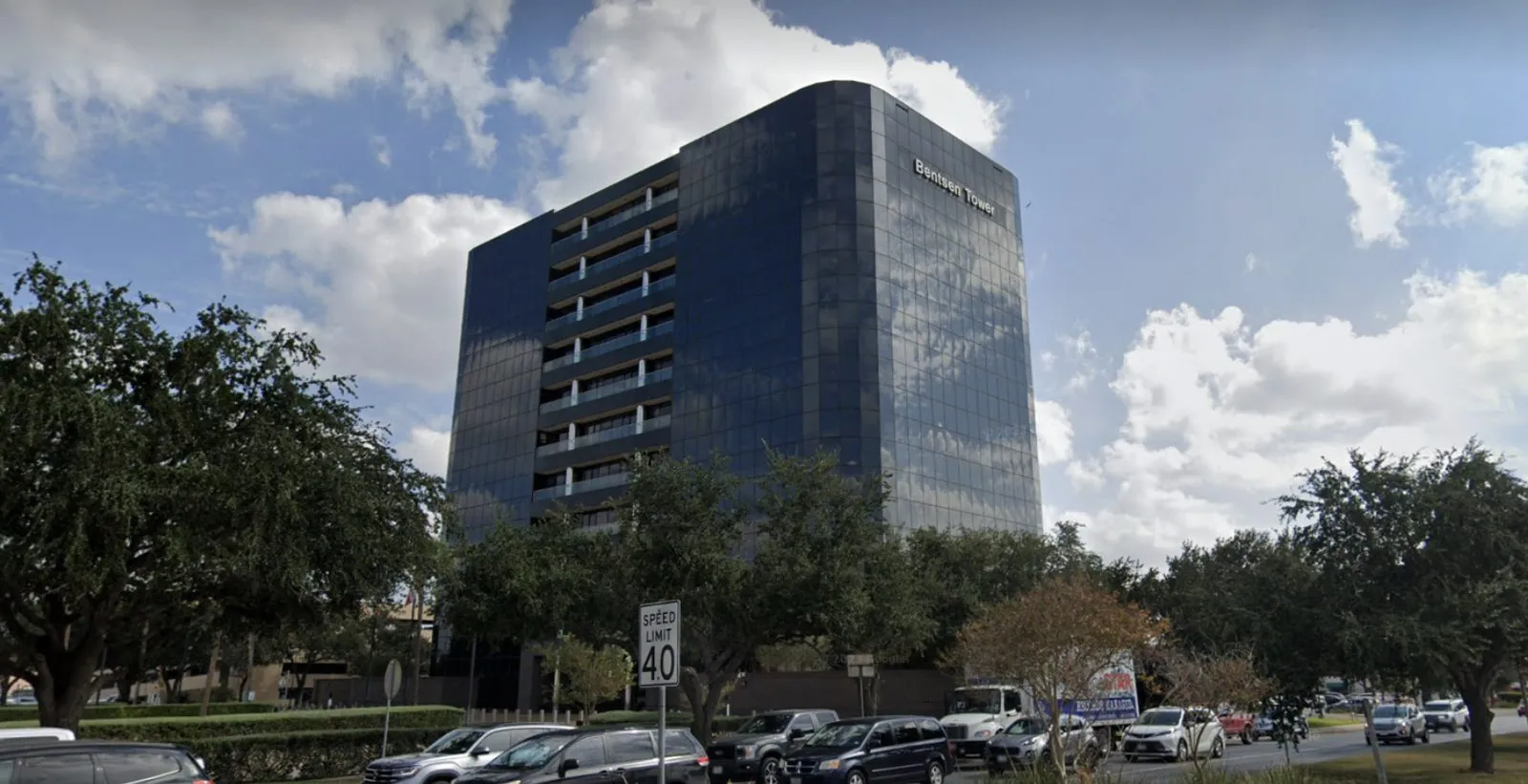 Bentsen Tower in downtown McAllen, Texas
What the new numbers actually show
The polling is striking. An exclusive Cook Political Report and TelevisaUnivision survey of Texas Hispanic likely voters, conducted from late August to early September, found Democratic statewide candidates winning the bloc by a two-to-one margin — and Trump's job approval among Texas Hispanics at just 33 per cent. In the state's Senate race, Democrat James Talarico leads Republican Ken Paxton 63 to 30 among Hispanic voters, while Democrat Gina Hinojosa leads Governor Greg Abbott 60 to 33 in the governor's race.
A separate Fox News poll of Texas voters, conducted 15–19 October, found the Senate race a dead heat overall — with Hispanic voters backing Talarico over Paxton by 64 to 34, and preferring Democratic control of the US Senate by 29 points. The numbers suggest something deeper than a normal midterm swing: a genuine collapse of the coalition Trump assembled in 2024.
For context on how Republicans are reading their own position heading into the midterms, see Republicans walking the Trump tightrope ahead of the midterms.
It is the economy — that part is not ambiguous
The most important finding in the Cook/Univision data is not about immigration at all. It is about money. The economy remains the top issue for Hispanic voters by a two-to-one margin over immigration and ICE enforcement combined.
That matches what voters themselves say. Carlos Cancino, a Latino small-business owner in Edinburg who backed Trump in past elections, told the Texas Tribune he has made a political U-turn, driven by anger over high prices and the state of the economy. "Now I can't stand the guy," he said. "I can't stand the Republican Party." His complaint is the cost of living — the same affordability crisis shaping the national picture, as examined in how the US economy is really doing under Trump.
The lesson for both parties is blunt: 2024 was a transaction — border security for votes. Transactions come up for renewal, and the price of groceries is now on the invoice.
Deportations are where it gets personal
Still, immigration cannot be wished away. According to figures obtained by the Deportation Data Project, Texas accounted for roughly one-third of all ICE arrests nationwide in July 2026 — a larger share than any other state. And along the Rio Grande, voters increasingly draw a hard line between securing the border and the administration's enforcement drive — a distinction recapped in recent reporting on the trend.
At the tiny La Lomita Catholic Chapel, where Father Roy Snipes has preached for almost half a century, the Friday sermon has focused on the actions of Immigration and Customs Enforcement. Snipes — known locally as the Cowboy Priest after resisting attempts to seize the chapel's land for Trump's border wall — told his congregation that ordinary neighbours should not be swept up in the enforcement drive. Two members of the congregation, both educators, said they have students who have had to leave school because their parents were deported. "The cruelty that we're seeing – I think that's turning the tide, at least I hope so," one said.
Mario Guerrero, a three-time Trump voter from South Texas who now plans to vote Democratic, was blunter still: "We're tired of this shit. We're not your puppets, and that's what they have us as right now."
Do not call it a blue wave just yet
Here is the caution every serious strategist keeps repeating: the swing is anti-incumbent, not pro-Democrat. The Texas Tribune, which spoke with more than two dozen Latino strategists, organisers, candidates and voters across the state, found the drift is driven by anger at those in power and hinges on individual candidates — and may not last.
Nearly two-thirds of Hispanic voters say they would be less likely to back a candidate who supports the deportation policy — but that is a verdict on Trump's coalition, not a marriage to the Democratic Party. Eighteen per cent of Texas Hispanics who voted for Trump in 2024 now disapprove of his job performance: a crack in the coalition, not yet its collapse. Democrats who assume this constituency is "coming home" are making the same mistake Republicans made in 2024, when they assumed the realignment was permanent.
More analysis of the shifting political landscape can be found in our Opinion and Politics sections.
The Senate race that will test everything
Texas suddenly has a genuinely competitive Senate contest after decades of Republican control — a tossup that will test every theory about the Latino vote. Paxton, the Republican nominee, has been holding rallies in McAllen; Talarico has been working crowds in places like Del Rio.
The Fox News poll found the race a dead heat overall, with revealing undercurrents: Talarico draws 98 per cent Democratic support against Paxton's 90 per cent of Republicans, and nearly three in ten non-MAGA Republicans are crossing party lines. The Republican mayor of McAllen, Javier Villalobos, concedes his party faces a tough cycle — even as he credits the administration with fixing the border problem. Latino voters, in other words, have become the decisive swing population in a race that could decide control of the US Senate. Our News desk will be tracking it closely.
The longer game both parties are playing
My reading of this moment: 2024 was never the end of a story. Trump kept his end of the bargain on border crossings, and voters noticed. But the economy and the spectacle of enforcement have reopened the account — and the terms of the original deal never included deportations at this scale, aimed this indiscriminately.
Democrats would be foolish to treat this as a constituency naturally returning home. The Tribune's reporting is a warning against exactly that complacency: Latino voters in Texas are not asking to be inherited; they are asking to be persuaded, on prices first and on enforcement second. The party that wins them in 2026 will be the one that talks about the cost of living before anything else, treats enforcement as a precision instrument rather than a spectacle, and fields candidates the Valley recognises as its own.
The tide may indeed be turning — but tides, as any Gulf fisherman could tell you, turn twice a day.