Three recordings, and a question that will not go away
Audio recordings published in Spanish media reveal conversations between train drivers and a railway control centre in the minutes leading up to a deadly train crash that killed at least 69 people and injured dozens. The recordings, published by outlets including El Pais and the public broadcaster RTVE, are short, technical and, in places, painfully ordinary. That ordinariness is what makes them so disturbing. They do not sound like a crisis unfolding. They sound like routine instructions being given and confirmed, while a disaster was already taking shape on the track ahead.
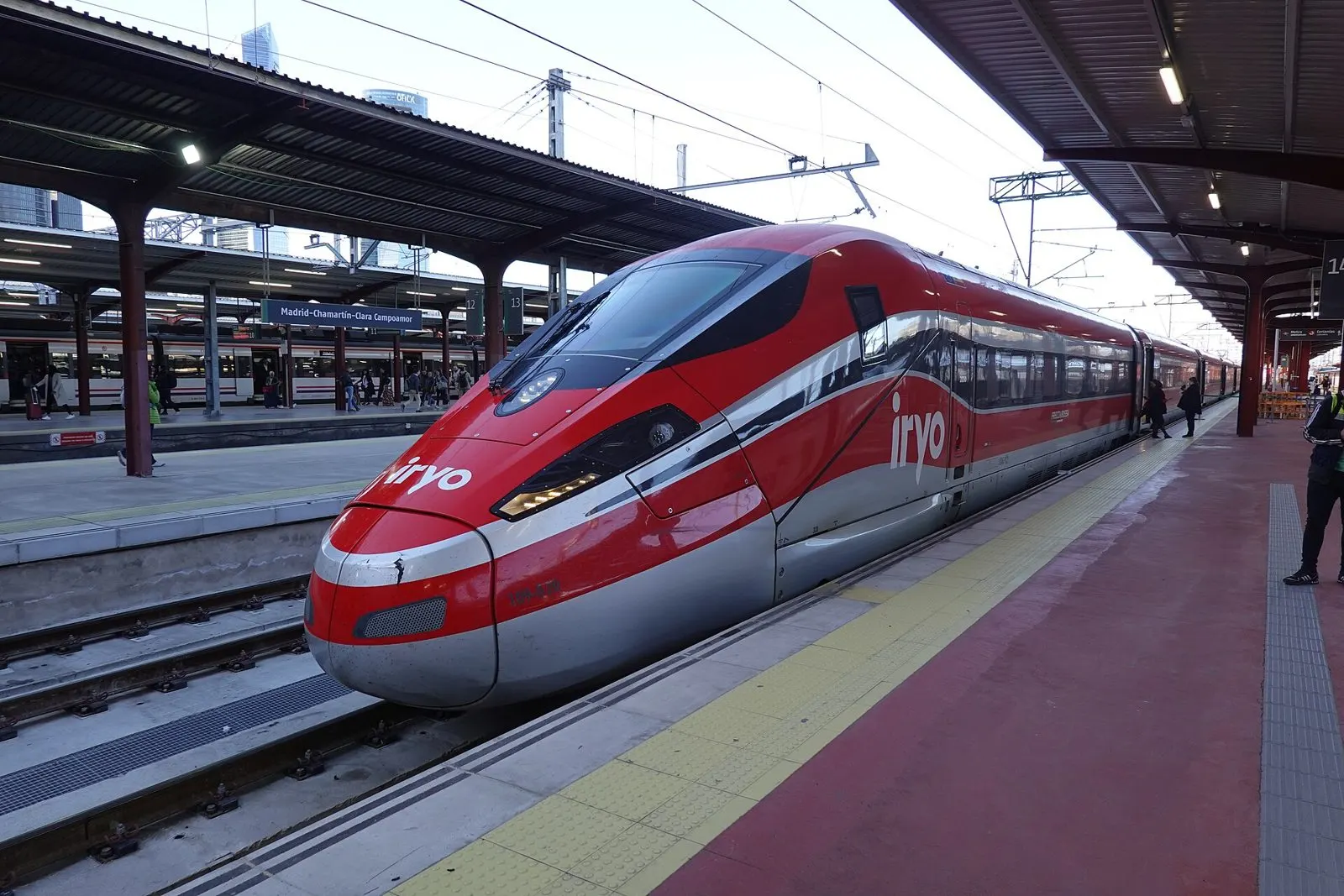
Officials are investigating the cause of the disaster, which occurred when a train travelling from Madrid to Seville barrelled into a stationary train on Wednesday morning. One train, run by state owned operator Renfe, had 397 passengers on board. Ahead of it on the same line was a train run by private operator Iryo, with 147 passengers. A reported issue with the automatic signalling system, a computer failure, had forced all trains to halt on the affected stretch. But later the Renfe train was ordered to proceed in error, according to Spain's transport minister. The audio is now at the centre of the investigation into how that order came to be given, and why it was not corrected in time.
Three audio recordings between the control centre in Madrid and two train drivers appear to show that one high speed train was given clearance to move even though another some 25 kilometres, about 15 miles, up ahead had stalled. That distance matters. Twenty five kilometres is not a near miss. It is a long stretch of track, and a long period of time, during which the error could in principle have been spotted and stopped. Transport Minister Oscar Puente has said the control centre had more than enough time to verify the error, and did not fix it. The recordings will help investigators test that claim minute by minute.
What the Renfe driver was told
In one recording, a control centre operator is speaking to the driver of the Renfe train, which was travelling behind the other train and was having some technical difficulties. After some exchanges, the control operator tells the driver: "Continue your journey and then proceed under [Lateral Signalling Block], at normal speed with normal operation."
The driver, understandably, seeks confirmation. He asks: "At normal speed?" The controller replies: "Yes."
That exchange is the heart of the story. Lateral Signalling Block is an alternative procedure used when the regular automatic signalling or data transmission system fails. It allows train movements to continue under a different operating arrangement. It is a backup, not a normal mode of running, and backups normally come with extra caution, including speed limits, because the usual automatic protections are not working. The ministry has since said trains should have been limited to 40 kilometres per hour under the circumstances. The Renfe train, according to reporting on the recordings, reached 200 kilometres per hour before the collision. The gap between the speed that should have applied and the speed the driver was told to use is the single most important fact investigators must explain.
It is worth pausing on the driver's question. "At normal speed?" is not a challenge. It is a professional checking that he has understood an instruction that, in context, must have seemed surprising. The controller's one word answer, "Yes", closed that check. Whether the controller misunderstood the situation, misjudged the risk, was working from wrong information, or was following a procedure that itself was flawed, cannot be determined from that exchange alone. But the exchange does show that the instruction was explicit, that it was queried, and that it was confirmed. That makes it much harder to describe what happened as a mere misunderstanding in passing.
What the Iryo driver reported
In other recordings, the driver of the Iryo train, about 25 kilometres ahead, reports that communication with the train control system has been lost and that the train is stationary in front of the entry signal at Urda. After being told to resume, the Iryo driver calls back with a warning that should have stopped everything: "The train won't allow me to control the [security] system. That's why I am still stopped in front of the entry signal."
That second call is crucial, because it suggests the controller had been told the Iryo train was still stationary as the Renfe train approached. The Iryo driver first reported the problem, was instructed to resume the journey normally, and then reported that he could not do so because the train's security system would not allow him to take control. In other words, the control centre appears to have received, in separate conversations, both halves of a lethal combination: a train that could not move, and a train behind it that had been told to move at normal speed.
Investigators will need to establish exactly how those conversations were logged, whether they were handled by the same controller or by different controllers, and whether any system existed to flag the conflict automatically. A control centre handling multiple trains during a signalling failure is under intense pressure, and human beings under pressure make mistakes. That does not excuse a mistake with such consequences, but it does mean the investigation must look beyond a single voice on a recording. It must examine staffing, workload, training, the design of the backup procedure, and whether controllers had a clear, real time picture of where every train on the affected stretch actually was.
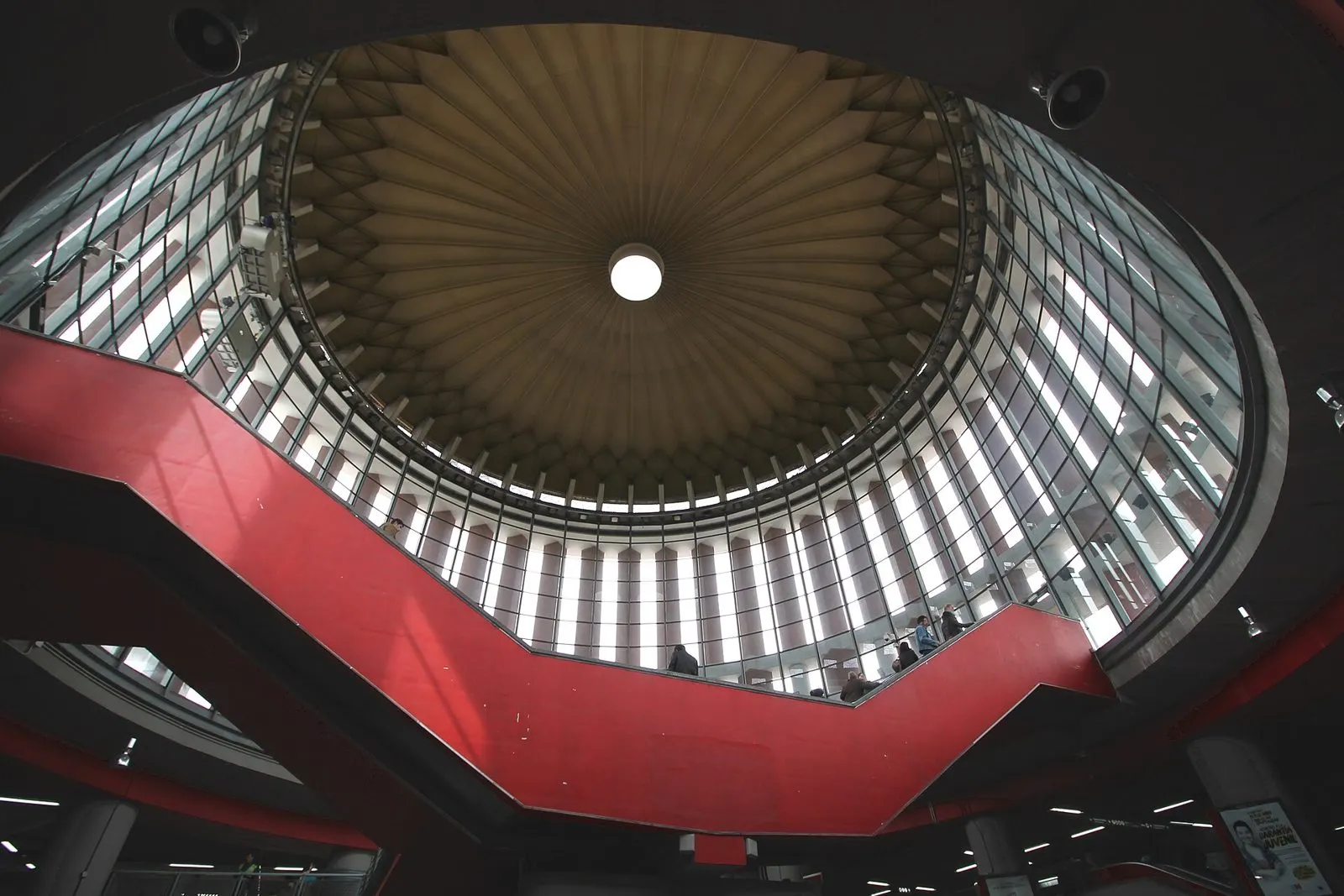 An entrance to Atocha railway station in Madrid
Credit: Wikimedia Commons, Luis Garcia (Zaqarbal), CC BY-SA 3.0 ES. The control centre that took charge after the system failure is based at Madrid Atocha, the station from which both trains had departed.
How a signalling failure became a collision
The sequence, as described by the transport minister and by reporting on the recordings, runs like this. A computer failure in the automatic signalling system forced all trains to halt on the affected stretch, reported as about 69 kilometres of track. Control was transferred to the 24 hour control centre in Madrid. The centre then decided to resume traffic, in circumstances Puente has called inexplicable, without imposing speed restrictions. The Renfe train travelled about 25 kilometres before striking the Iryo train from behind. Several carriages derailed, and some fell down an embankment.
Each step in that sequence raises its own question. Why did the signalling system fail, and had it shown warning signs before? What procedure governed the switch to backup working, and did it require a speed limit that was not applied? Who authorised the resumption of traffic, and on what information? Why was the Iryo driver's second warning not acted on before the Renfe train reached him? And why, after the January crash on the same line that killed 46 people near Cordoba, had the system not been changed in a way that would have prevented this one? The government has said the causes of the two crashes appeared to be unrelated, and the January crash involved a derailment rather than a rear end collision. Even so, two fatal high speed crashes in one year will force a wider examination of maintenance, investment and oversight, whether or not they share a direct cause.
Prime Minister Pedro Sanchez, who travelled to the area of the crash, said authorities were working day and night to get to the bottom of every last detail of this tragedy. He has also pledged to strengthen safety measures to ensure it never happens again. Those promises will be judged against what investigators actually publish: a full timeline, the complete recordings in context, and specific changes with funding and deadlines, rather than general reassurance.
Mourning, anger and a strike
The release of the recordings comes as Spain begins three days of national mourning for one of the worst rail disasters in Europe's modern history. Emergency crews worked through the night under floodlights to cut open carriages, and many of the dead have yet to be identified. Families are giving DNA samples at Civil Guard offices to help identification, a process that will take days and that leaves relatives in painful uncertainty in the meantime.
Public anger has already spilled onto the streets. About 1,500 people protested outside the Transport Ministry overnight, according to TVE, and police used tear gas to disperse some crowds. Most political parties suspended campaigning for the general election on 29 November, but the far right party Vox refused, with its leader Santiago Abascal accusing the government of trying to use mourning to silence criticism of the rail network. Train drivers went ahead with a previously planned strike to press for more investment in railway safety, arguing that the sector must have all the safety systems required to maintain the quality standards they have always had.
Those reactions are understandable, but they should not be allowed to prejudge the investigation. Protests express grief and anger. A strike expresses a workforce's demand for safer conditions. Neither, on its own, establishes what went wrong in the control centre. The recordings are stronger evidence than any slogan, precisely because they are specific: they name a procedure, a speed and a stationary train. But even they are only part of the record. The full investigation will need signalling logs, staffing records, training manuals and the complete set of communications, not just the excerpts that have reached the media so far.
For readers, the story to follow is therefore not just the audio itself, but what happens to it next. Will the government publish the full timeline? Will any controller or manager face disciplinary or criminal proceedings, and on what evidence? Will the backup procedure be rewritten, with enforceable speed limits and automatic conflict alerts? And will the families of the dead, who are still waiting for names to be confirmed, receive answers that are as clear and specific as the recordings themselves? Until those questions are answered, the words "at normal speed" will hang over Spain's rail network, a reminder that the most dangerous instruction is sometimes the most routine sounding one.
Readers can find our earlier coverage in our what we know report, and broader world coverage and news coverage on the Verity homepage, as well as our about page. Related world reporting and politics coverage are also available on this site.
External sources for this story include the BBC report on the audio recordings, a BBC carried report on the recordings and the death toll, reporting on the normal speed exchange and the 40 kilometres per hour limit, reporting on the Iryo driver's warning, a detailed account of the three recordings, and further reporting on the investigation and rail safety questions.