A local truce, widened across a region
A ceasefire intended to help civilians in the Russian occupied city of Oleshky has been extended across Ukraine's wider Kherson region, officials say. The truce, which began early on Tuesday 27 October, was holding for a second day on Wednesday, according to both sides, raising hopes that vital aid could finally reach residents who have faced food, water and medicine shortages for months.
The BBC source article reports the extension, and corroborating reporting from Ukrainian, international and wire sources fills in the timeline, the stated purpose and the limits of the deal. Those limits matter. This is a local, humanitarian ceasefire, not a general halt to the war between Russia and Ukraine. Fighting has continued elsewhere, and Russian strikes were reported in Kyiv on Tuesday, underscoring how narrow the agreement is in geographic terms, however important it may be for the people it covers.
Oleshky sits on the Russian occupied side of the Dnipro River, directly across from the Ukrainian controlled regional capital, Kherson city. It has been under Russian occupation since the early days of Russia's full scale invasion in February 2022. Its residents have been caught between front lines, with mined roads, drone attacks and a blockade that, according to Ukrainian officials and former residents, has prevented humanitarian aid from entering. For those residents, even a short, local pause in shelling can mean the difference between staying hidden and reaching help.
How the ceasefire began
The ceasefire took effect at 3 a.m. Kyiv time on Tuesday 27 October, according to Ukrainian officials, which corresponds to 4 a.m. Moscow time as announced by US First Lady Melania Trump. It was initially centred on Oleshky and surrounding areas linked to a humanitarian mission, coordinated, according to Ukrainian human rights commissioner Dmytro Lubinets, jointly with Russian human rights commissioner Yana Lantratova, with mediation and coordination by Trump.
Ukrainian lawmaker David Arakhamia, head of the Servant of the People faction in Ukraine's parliament, described the deal as the largest de-escalation since 2022, and said it was due to last until 10:59 p.m. on 1 November. That end time gives the operation a window of about five and a half days from its start, a short period in which to organise deliveries and, if possible, evacuations, but a significant pause in a region where shelling has been near constant.
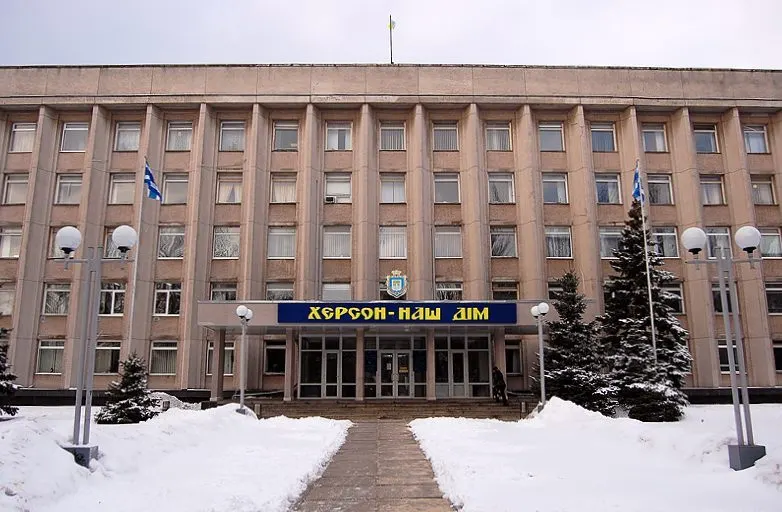
Trump said the timing had been accelerated by two days to protect civilians and to facilitate the delivery of humanitarian aid. She also said the ceasefire had been expanded within Kherson region to provide safe passage for humanitarian convoys. The precise extent of the expansion was not specified in her own announcement, but Tetiana Shelest, head of communications for Ukraine's human rights ombudsman, told reporters it now covered the entirety of Kherson region. Oleksandr Tolokonnikov, deputy head of the Kherson regional administration, said Russian shelling had stopped both in Kherson city, which is under Ukrainian control, and across the wider region.
That claim was echoed on Wednesday by the regional governor, Oleksandr Prokudin, who wrote on Telegram that no strikes or hits on civilian or critical infrastructure facilities had been recorded over the past 24 hours. Lubinets, for his part, said Kherson city, which had been under constant shelling, had literally come back to life, with more people on the streets, people walking without fear, fruit sellers trading under anti drone nets and municipal workers mowing lawns amid buildings reduced to rubble. Those images, posted by Lubinets on social media, are his account of the mood in the city, not an independent survey, but they give a sense of what a pause means after years of bombardment.
Thirty hours without an incident, both sides say
On Wednesday, both ombudsmen said the truce was still holding. Lubinets said 30 hours of the ceasefire in Oleshky had passed without a single incident. Lantratova used similarly worded language, saying no incidents had been recorded in the 30 hours of the ceasefire in Oleshky. Lubinets's office told journalists the ceasefire would be guaranteed by the physical presence of both ombudsmen on the ground, a form of monitoring that is unusual and, if it holds, may help both sides trust that the other is keeping to the deal.
Kremlin spokesperson Dmitry Peskov said the ceasefire was proceeding according to plan and praised US mediation, particularly representatives of Melania Trump. Ukrainian Foreign Minister Andrii Sybiha said a successful truce could pave the way for other steps in the peace process. Those two statements, from opposite sides of the war, do not amount to agreement on the wider conflict, but they do suggest that, at least in public, neither side wanted to be seen as the first to break a humanitarian pause.
Previous short lived truces in the war, such as those to mark Orthodox Easter, have seen drops in aerial attacks but have also been marred by accusations of widespread violations by both sides, according to reporting on Wednesday. That history is a reason for caution. A 30 hour record without incidents is encouraging, but it is not yet proof that a five day operation will hold, especially when the routes, the convoys and the evacuations themselves create new moments of risk.
Corroborating reports from The New Voice of Ukraine, the Kyiv Independent and Al Arabiya agree on the start time, the expansion and the 30 hour record without incidents, while Moneycontrol notes the limited geographic scope. Readers can follow politics coverage and news coverage on Verity for updates. For readers following world news, the key test will not be statements alone, but whether aid trucks actually enter Oleshky, whether civilians actually leave safely, and whether shelling stays stopped across the region for the full period to 1 November. Those are observable facts, and they will matter more than any announcement.
Who is still in Oleshky, and what they need
Estimates of how many people remain in Oleshky vary, but they point to the same picture: a small fraction of the pre war population, living in severe hardship. Ukrainian Foreign Minister Sybiha said on 17 October that about 1,700 people remained in the city, suffering shortages of food and medicine and with no safe route for evacuation. Other reporting puts the figure at 1,700 to 2,000 in the city itself, with a few thousand more in surrounding areas, out of a pre war population of about 24,000.
Former residents still in touch with people inside told the AFP news agency that some residents had resorted to hunting and eating pigeons, and that others had cooked garden weeds. Residents who spoke to the BBC before the ceasefire described extreme hunger and a wish to leave. The city has suffered severe shortages of food, water and electricity since the destruction of the Kakhovka dam in 2023, according to reporting on the humanitarian situation, and many of those who remain are elderly people who have been unable to leave amid continued fighting and dangerous conditions.
The stated purpose of the ceasefire is to change that, in two stages: first, humanitarian aid into Oleshky, and then evacuations for those who wish to leave. Reporting on the plan says evacuations were envisaged for later in the week, after deliveries, but the exact day, route and destination have not been confirmed in a single authoritative statement, and this article does not present a specific evacuation date as confirmed. Ukrainian President Volodymyr Zelenskyy urged residents not to trust unconfirmed news and to avoid spreading rumours about routes, times and areas where people and humanitarian convoys are being moved, a warning that reflects how dangerous leaked movement details can be in a front line area.
The practical obstacles are formidable. Crossing the front line, marked by the Dnipro River, is all but impossible under normal conditions, and Russian installed officials have indicated that evacuees could have to travel through Russian occupied Crimea, according to reporting on Wednesday. Roads out of Oleshky are mined, and civilians trying to flee on the only roads in and out have frequently been targeted by drones, according to Ukrainian officials and reporting. A senior Ukrainian official told AFP that many people in the city wanted to stay, so the operation was designed to allow humanitarian supplies into the city, not only to move people out. Russian officials, for their part, said most of those who wanted to flee had already done so. Those two accounts point to different expectations about how many evacuations will actually happen, even if the ceasefire holds.
What this does, and does not, mean for peace
It would be a mistake to read a local humanitarian truce as a step toward ending the war, and officials on both sides have not presented it that way. The agreement covers Oleshky and, by extension, Kherson region for a defined period to 1 November. It does not cover Kyiv, the eastern front, or other regions, and it does not address the underlying issues of territory, security guarantees or a wider ceasefire. Three way peace talks between Washington, Moscow and Kyiv are set to resume in November after a months long hiatus, according to reporting, but neither Russia, Ukraine nor the United States has said who would monitor a wider truce, or given details of the humanitarian operation beyond the Oleshky plan.
Sybiha's comment, that a successful truce could pave the way for other steps in the peace process, is best read as a hope, not a promise. A successful local operation could build a small amount of trust, show that coordination through ombudsmen and US mediation can work, and demonstrate that humanitarian pauses can be monitored. A failed operation, by contrast, could deepen distrust and make the next attempt harder. That is why both sides have an incentive to keep this pause intact, and why the next few days will be watched closely in Kyiv, Moscow and Washington.
For the people of Kherson city, the immediate benefit is already tangible, according to Lubinets and Prokudin: a day without strikes on civilian or critical infrastructure, streets busier than they have been, and a chance to walk outside without fear. For the people of Oleshky, the benefit is still prospective: aid that has not yet arrived, and a route out that has not yet been used. The difference between those two positions is the work of the coming days.
More background is available on the Verity about page. The Verity homepage will follow whether aid reaches Oleshky, whether evacuations take place, and whether the ceasefire holds until its stated end on 1 November, as well as what officials on all sides say happens next. For now, the confirmed position is this: a local ceasefire, extended across Kherson region, holding for its first 30 hours, with its humanitarian purpose still to be fulfilled.
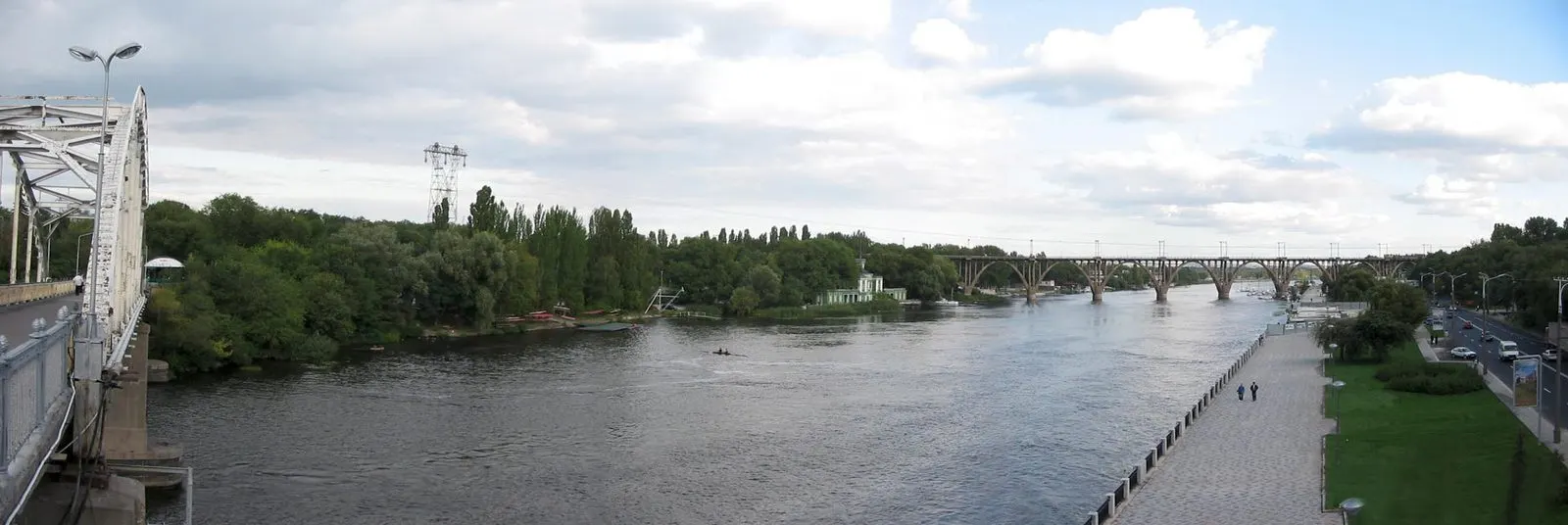 The Dnipro River flowing through a city in Ukraine.
Credit: Sergiy Klymenko, Wikimedia Commons, CC BY-SA 3.0.