Hungary has opened one of the darkest chapters of its modern history to public view. On Wednesday, the government published tens of thousands of communist-era secret police files in an online database, naming the informers who spied on their fellow citizens during four decades of one-party rule.
The release is, by any measure, a historic moment. For more than three decades after the end of communist rule, the files remained largely closed, debated by politicians and historians but out of reach of the ordinary Hungarians whose lives they describe. Now anyone can search the database for names linked to the former state security services, and confront a past that many families have only known through rumour.
A symbolic date
The timing was deliberate. On 4 November 1956, Soviet tanks rolled through Budapest and other cities to crush Hungary's short-lived revolution, ending a revolt that had briefly promised freedom from Soviet domination. Seventy years later, on the same date, the state opened the records of the surveillance system that helped keep the regime in power for the decades that followed.
Prime Minister Peter Magyar, whose centre-right Tisza party ousted long-time nationalist premier Viktor Orban in an election in April, presented the release as the fulfilment of a promise made at the democratic transition and then denied for years. Speaking at a briefing at the state archives in Budapest, he said the government was now implementing, after 36 years, what had been the promise of the change of regime. He added that some 60,000 names have now been made public.
Magyar spearheaded the adoption of a bill in September that grants the public unrestricted access to the records for the first time. The database went live on Wednesday morning, and from that moment the names and personal data of around 60,000 people recruited by the communist-era secret services became available on a dedicated website.
What the files contain
A typical entry records the informer's real name, their codename, date of birth, address and mother's name. It also records their motive for recruitment, whether they volunteered or were blackmailed or coerced, and the name of their handling officer. For families who long suspected that a neighbour, colleague or even a relative reported on them, the entries offer answers that were previously locked away in a Budapest archive basement.
The scale of the informer network is striking. Historians and the state security archives estimate that between 150,000 and 160,000 people were recruited as informers between December 1944 and February 1990. Records survive for only around a third of them, which is why the first release covers an estimated 50,000 to 60,000 names. A second batch of files, known as the B-dossiers, is currently being digitalised and will give more detail on about 9,000 of the informers. That batch is due on 25 February 2027, Hungary's Day of Remembrance for the Victims of Communism, after protected personal information is removed.
The incompleteness of the archive is itself part of the story. Many files were destroyed in 1956, during the uprising, and again in 1988 to 1989, as the regime collapsed and officials sought to erase traces of their work. As a result, detailed dossiers, background investigations and personal statements exist for only a fraction of those named. Historians estimate that only about 10 percent of the people in the records are still alive today, which limits the practical consequences for individuals but not the historical significance.
A debate delayed for decades
Hungary was under one-party communist rule between 1949 and 1989, a period in which dissent was repressed and the secret police watched citizens closely. Yet debates over opening the archives have dogged Hungarian politics since the fall of communism, and full publication was repeatedly stalled. Reporting on the release attributes the delay to a lack of strong political will from successive governments, which had their own reasons to keep the files closed. Many senior figures across the political spectrum had pasts that the files might illuminate.
The politics of the release remain sharp. On the eve of publication, former prime minister Viktor Orban said the communist secret services had tried to recruit him as an informer while he was doing his military service, but that he refused, and that he later became the target of heavy police surveillance. He issued a statement on social media along with secret service documents from 1982 and the late 1980s. Orban's 16-year nationalist rule ended in April, when Magyar's Tisza party defeated him, and the file release is part of Magyar's broader promise of what he calls regime change.
Historians have welcomed the opening while warning about its limits. Laszlo Eorsi, a historian at the 1956 Institute Foundation, spoke to reporters about the release, and other historians have described it as a significant opening of previously restricted material. Istvan Papp, a historian and head of the academic department at the Historical Archives of the State Security Services, also described the publication as a major step. But critics argue the move comes too late, that the files themselves are incomplete, and that publication risks sowing division and causing unnecessary anguish to family members who had no part in the original surveillance.
That tension, between truth and harm, runs through every archive opening of this kind. Germany's handling of the Stasi files after reunification set one precedent, with controlled access for victims and researchers. The Czech Republic and Poland have taken different paths, with varying degrees of openness and controversy. Hungary's choice, full public access through a searchable website, is among the most open, and it raises the sharpest questions about privacy. The entries include addresses and mothers' names, details that identify not only the informer but also their family.
Why it matters now
Supporters of the release argue that Hungary cannot come to terms with its totalitarian past while the records stay closed. The government's position, voiced by ministers including Zoltán Tarr, the minister for social relations and culture, is that disclosure is a democratic necessity: it helps victims understand their past, establishes historical accountability, and restores public trust. For people who were watched, harassed or imprisoned on the basis of informer reports, seeing the file can confirm what they always suspected, or correct a suspicion that poisoned a relationship for decades.
Critics reply that the files are a partial and sometimes unreliable record. Informers were sometimes pressured, sometimes misled about what they were signing, and sometimes recorded by officers with their own agendas. A name in a file does not always mean willing collaboration, and the database's own entries distinguish between voluntary recruitment and coercion. Without that context, publication can brand people on the basis of a single line in a damaged archive.
There is also the question of what the release means for Hungary's present politics. Magyar's government presents it as a break with the compromises of the post-1989 era, when former communists and their opponents alike found reasons to leave the archives shut. His opponents may see it as a political weapon, a way to embarrass figures from the old order and their successors. The truth is likely to contain elements of both: a genuine historical opening that also serves a political purpose.
For the rest of Europe, the release is a reminder that the Cold War's paper trail is still being processed. Across the former Eastern Bloc, archives continue to yield names, and each release reopens old wounds while closing old questions. Hungary's decision to publish on the anniversary of the Soviet crackdown underlines the connection between the 1956 revolution and the surveillance state that followed it: the tanks crushed the revolt, and the informers policed the silence that came after.
The next milestone is already set. When the B-dossiers appear on 25 February 2027, they will add depth to the bare names published now, giving researchers and families fuller dossiers on about 9,000 individuals. Until then, Hungarians have a searchable window into a system that once watched them in secret, and a new chapter in the country's long argument about how to remember its past. For more on European politics, see our World section and Politics section, and for the Brexit-era context that still shapes the region, see UK-EU draft deal to scrap Brexit food export red tape. Related coverage of conflict and its aftermath appears in Russian bombing of Ukraine aid centre leaves 31 dead and US strikes Iranian island, while Trump moves to remove Rwanda and South Africa from trade deal covers another major political shift. Visit the Verity homepage for the latest headlines, our News section for breaking stories, or learn about us on the About page.
External sources for this story include the BBC report, the Reuters account of the opening of the informer files, Reuters on Orban's statement about recruitment, and coverage from Hurriyet Daily News, the Bangkok Post and VidiaNews.
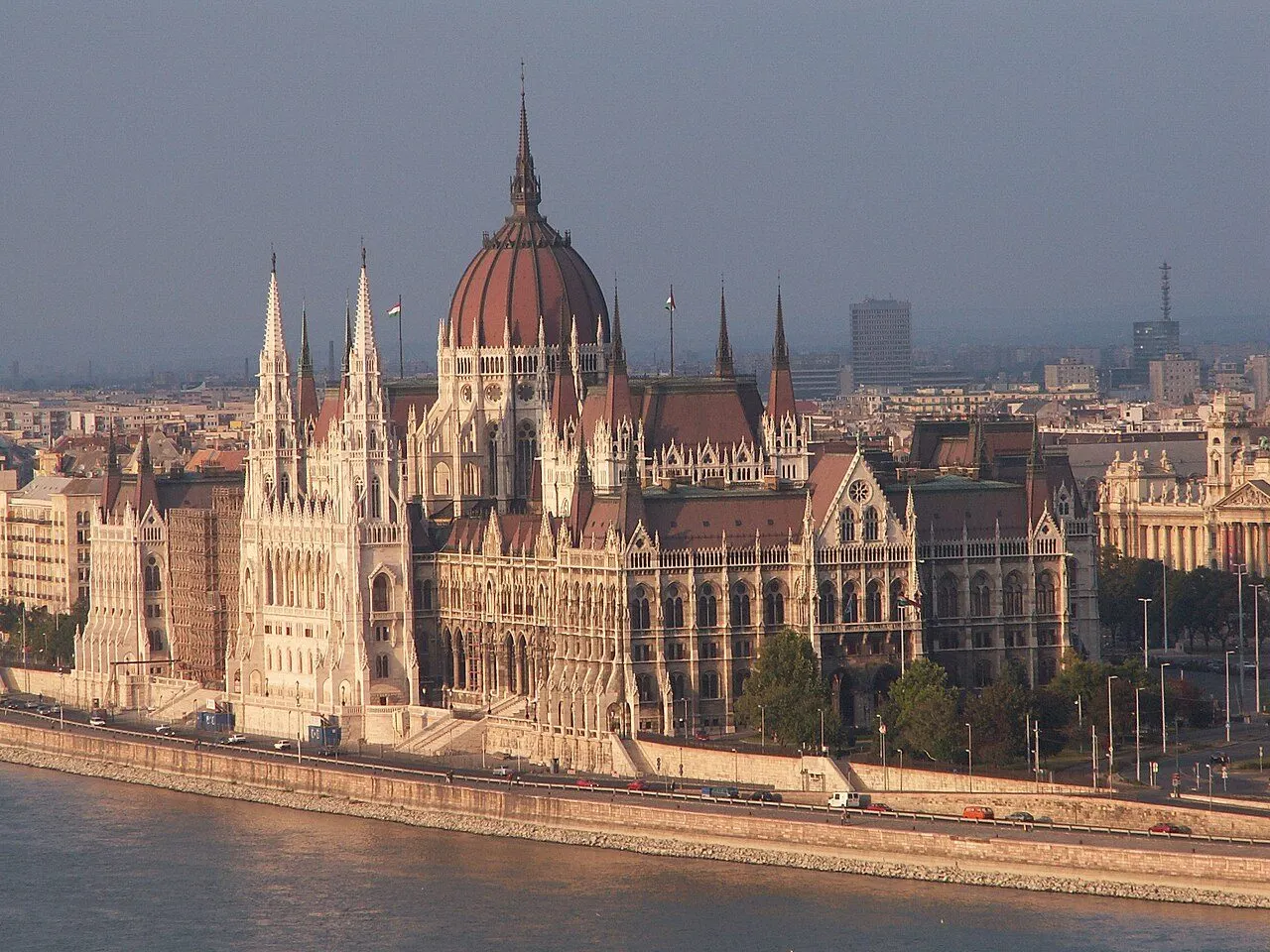 The Hungarian parliament building in Budapest
Budapest, where the state archives hold the communist-era files. Photo: Wikimedia Commons, CC BY-SA 3.0.