A morning collision near Urda
At least 64 people have died after two high speed trains collided in central Spain on Wednesday morning, according to the Castilla-La Mancha regional government. The crash happened near Urda, in Toledo province, on the high speed line linking Madrid with the southern region of Andalusia. It is Spain's second deadly high speed rail crash this year, and it comes nine months after a separate disaster near Adamuz that killed 46 people.
The BBC source article sets out the core facts as they were known on the day, and this explainer follows the same discipline: report what officials and reputable outlets have confirmed, attribute every figure, and say plainly what is not yet known. Casualty figures in a disaster of this kind change as rescue teams reach wreckage, hospitals confirm admissions and families are contacted. Readers should treat the numbers below as the latest official position at the time of writing, not as a final count.
The collision was reported shortly after 9 a.m. local time on Wednesday 28 October. Spain's rail infrastructure operator, Adif, said traffic on the Madrid to Andalusia high speed line had been suspended after a rear end collision between two trains. A spokesperson for the Castilla-La Mancha regional government, Esther Padilla, said the two trains were travelling in the same direction when one struck the rear of the other, which had stopped. The impact forced two carriages off the tracks, with reports that carriages fell down an embankment beside the line.
The site lies between the towns of Urda and Los Yebenes, at around kilometre 118 of the Madrid to Andalusia line, according to Spanish media reports. Footage from regional Castilla-La Mancha Television showed a derailed train with at least one carriage remaining on an elevated section of track, while twisted metal, broken panels and wreckage could be seen strewn across an embankment beneath the line. Emergency services, including firefighters, Civil Guard officers, medical teams and Civil Protection personnel, were deployed to the remote site, where access for ambulances was limited.
How many people have died and been injured
The death toll rose sharply during the day as rescue teams reached the worst affected carriages. The regional government first confirmed at least 10 deaths, then at least 30 by late morning, before confirming at least 64 by early afternoon. Regional president Emiliano Garcia-Page said the figure was 64 with a tendency to grow further, as the search continued inside the wrecked carriages. That warning matters: officials have repeatedly described the toll as provisional, and it could change again.
A breakdown reported by El Pais and other Spanish outlets, citing the central government's delegation in Castilla-La Mancha, put 40 of the dead on the Iryo train and 24 on the Renfe train. That breakdown has not been presented here as a final official breakdown, because it comes via media reporting of official sources and because the overall toll itself remains provisional. What is confirmed is the overall figure of at least 64 from the regional government, and the expectation from officials that it could rise.
Injury figures vary between sources and are also provisional, so they should be read with the same caution. Garcia-Page spoke of at least 80 injured, with about 50 seriously injured and 15 critically injured, and warned that some of the most seriously injured might not survive. Other reports cited different hospital figures during the day, including 58 injured in hospital. The variation reflects different counting points: people treated at the scene, people taken to hospital, and people in different condition categories. Spanish Health Minister Monica Garcia said the injured were being taken to several hospitals in the area, and emergency teams concentrated on rescuing survivors and recovering bodies from the two most severely damaged carriages.
Passenger numbers help explain the scale of the rescue operation. Padilla said 397 passengers were aboard the Renfe train and 147 aboard the Iryo train, a total of 544 people, according to reporting of her statement. Other early reports gave a figure of more than 540 passengers across both trains, consistent with that total. The mayor of nearby Urda, Manuel Galan, told Cadena SER that emergency services had asked the town council to prepare emergency facilities, including a sports hall, to accommodate passengers and the injured.
Further reporting from Al Jazeera, CGTN and Geo News confirms the same sequence of a rising toll and a suspended Madrid to Andalusia service, while Spanish rail coverage tracks the hour by hour updates. Readers can also follow health coverage of hospital responses and politics coverage of the official reaction. For readers following world news, the evolving toll is a normal, if distressing, feature of major disasters. Early figures count only confirmed deaths. Later figures count deaths confirmed once wreckage is searched. A rising toll does not by itself mean earlier reports were wrong; it usually means rescue teams have reached more of the site.
What happened, and what has not been established
What officials have confirmed so far is the sequence in broad terms: a Renfe AVE train and an Iryo train collided on the Madrid to Andalusia line near Urda on Wednesday morning; the Renfe train struck the rear of the Iryo train, which had stopped on the track, according to the regional government spokesperson; two Iryo carriages and one AVE carriage derailed, according to emergency service accounts reported in Spanish media; and high speed services between Madrid and Andalusia were suspended as a result.
What has not been established is why the collision happened. The regional government spokesperson said the cause and the full extent of casualties were still being determined in the first hours after the crash. Adif confirmed the suspension of services and the fact of a rear end collision, but did not, in the material reviewed for this article, publish a confirmed cause. That gap is important, and it should not be filled with guesswork.
Some Spanish media reports have since raised questions about signalling and control centre decisions, including a report that Transport Minister Oscar Puente said Adif's control centre allowed stopped trains to move on after a safety system failure. That account is attributed here to media reporting, not presented as a confirmed official finding, because a full investigation has not yet reported. Readers should expect investigators to examine signalling data, train recorders, control centre logs, track condition and operating procedures before reaching any conclusion. Until then, any claim about a single cause, whether human error, a technical failure or a signalling fault, remains speculation.
That caution also applies to speed figures and other technical details circulating in early coverage. Different outlets have reported different details during a fast moving day, and some details attributed to one crash have been confused with the other crash on the same line this year. This article therefore avoids presenting unconfirmed speeds or technical claims as fact, and will need updating when investigators publish their first findings.
The Adamuz crash nine months earlier
The Urda crash inevitably recalls the Adamuz disaster of 18 January 2026, when a high speed train derailed near Adamuz in Cordoba province and collided with an oncoming train, killing 46 people and injuring more than 100. That crash, on the same Madrid to Andalusia corridor and involving the same two operators, Renfe and Iryo, triggered a debate about investment in railway maintenance and the safety of Spain's extensive high speed network.
Investigators in the Adamuz case pointed to defects in the track, rail or weld between two sections of track as the main hypothesis in a preliminary Civil Guard report in February, while keeping other theories open. A later technical account described a complete transverse fracture in the right hand rail at a welded joint. Those findings relate to Adamuz, not to Urda, and they should not be transferred to the new crash. The two incidents share a corridor and operators, but investigators have not said they share a cause.
The comparison matters for a different reason: public confidence. Spain's high speed network is one of the largest in the world, and it has a strong safety record over decades. Two deadly crashes in nine months on the same line will therefore prompt hard questions in parliament, in the press and among passengers, even before investigators report. Transport policy, maintenance spending, signalling systems and the pace of safety recommendations from Adamuz are all likely to come under scrutiny. Those questions are legitimate, but they are not answers. The investigation into Urda must be allowed to establish its own facts.
For context on how news coverage handles fast moving disasters, the pattern is familiar: an initial toll, a rising toll, competing injury figures, political reaction, and then a long investigation. The political reaction on Wednesday was immediate. Prime Minister Pedro Sanchez said he was shocked by the serious accident in Toledo and that emergency services were on the ground to assist those affected. His agenda for the day was cleared, according to the Spanish government's published agenda, and the opposition People's Party cancelled campaign events ahead of November's snap election. Andalusia declared three days of mourning, according to reports, and a helpline for families was set up through the court in Orgaz.
What happens next
The immediate priority, according to officials, is the search of the wreckage and the care of the injured. Once all survivors have been evacuated, as the government delegation said had happened by the afternoon, the focus shifts to identification of the dead, support for families, and preservation of evidence for investigators. Spain's railway accident investigation commission, the CIAF, is the body that would normally examine a crash of this kind, alongside the Civil Guard and judicial authorities, although this article does not present an unconfirmed statement about which body is leading this specific investigation as fact.
Passengers and families need practical information first: which hospitals the injured were taken to, how to contact the family helpline, and when the line between Madrid and Andalusia will reopen. Adif suspended services on the line after the crash, and no reopening time had been confirmed in the material reviewed for this article. Travellers should check with Renfe, Iryo and Adif for the latest service updates rather than relying on early estimates.
The investigation will take time. Train recorders, signalling logs, control centre recordings and track inspections must be gathered and analysed, and investigators will need to interview staff and passengers. A preliminary report may come within weeks, but a full finding on cause could take months. Until then, the honest summary is the one officials themselves have given: at least 64 people have died, many more have been injured, the cause is under investigation, and the toll remains provisional.
That summary is distressing, and it leaves the most important question unanswered. But it is the summary the evidence supports today. The Verity homepage will update this story as officials confirm new figures and investigators publish findings, and will correct any figure here that is superseded by a later official count.
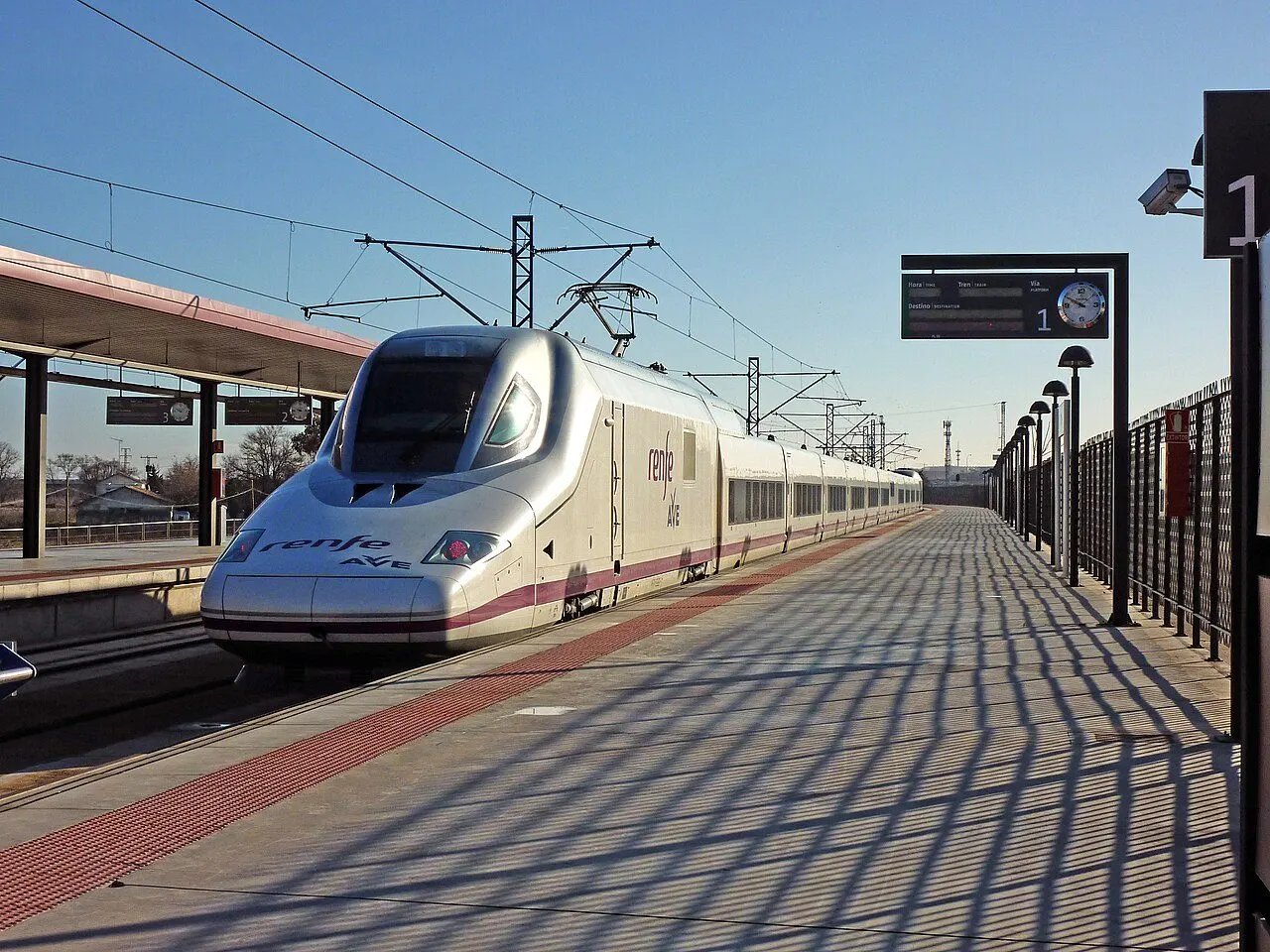
 An AVE high speed train passing through the Spanish countryside.
Credit: Diego Delso, Wikimedia Commons, CC BY-SA 3.0.