King Charles will confront Britain's role in the transatlantic slave trade with unflinching honesty when he addresses Commonwealth leaders in Antigua and Barbuda on Tuesday, Buckingham Palace has said, in a speech that is set to become one of the most closely watched moments of his Caribbean tour. The Palace said the King will not shy away from confronting the most shameful aspects of the past during the visit, and that his address will acknowledge the lasting pain of slavery with sincere sorrow.
The speech will be delivered to the Commonwealth Heads of Government Meeting, known as CHOGM, which runs in St John's, Antigua and Barbuda, from 1 to 4 November, bringing together leaders and representatives from the Commonwealth's 56 member countries. The King is speaking in his role as head of the Commonwealth, a voluntary association made up largely of former British colonies, and his words will be heard in a country where the legacy of slavery is not an abstract historical question but a living part of the landscape, the economy, and family memory.
The Palace briefing, issued on Saturday ahead of the speech, was carefully worded, as Palace briefings on this subject always are. A spokesperson said: "The King will not shy away from confronting the most shameful aspects of the past during this visit. You may therefore expect him to address them in his speech with unflinching honesty, sincere sorrow, and respect for the wider discussions that will be taking place between relevant governments on this issue." That final phrase is important. It signals that the King will speak personally and morally, while leaving questions of policy, including any formal apology or reparations, to governments.
No apology expected from the Palace
Royal officials have been clear that no formal apology is expected in the speech. A formal apology on behalf of the British state, they say, is a matter for the government, not for the Palace, and it would not be appropriate for the King to comment on the government's position. That constitutional distinction shapes everything the King can and cannot say on this tour. As a constitutional monarch, he acts on the advice of ministers in matters of state policy, but he is also able, in his own voice, to express sorrow and to acknowledge suffering. The tension between those two roles has defined royal visits to the Caribbean for years.
The debate has intensified because of a shift in the British government's own position. Prime Minister Andy Burnham, who is due to attend the summit alongside the King, has said he is open to the United Kingdom formally apologising for its role in slavery, a position no previous prime minister has adopted so openly. Writing in the Guardian on Friday, Burnham described the transatlantic slave trade as a brutal and barbaric violation and said Britain must face up to the past. He said listening to calls for a formal apology on behalf of the British state would form an important part of a structured dialogue with those affected, and that he was open to them. He also made clear that he does not believe British people today can be held liable for historical wrongs in which they played no personal part, and he has ruled out paying financial reparations.
The Palace said it was informed of Burnham's comments in advance, but that the King has made no changes to his speech in response. That detail matters because it underlines that the King's address is not a reaction to a news cycle but part of a longer pattern of remarks he has made about slavery across the Commonwealth. In Barbados in 2021, as the country became a republic, he described slavery as an appalling atrocity that forever stains our history. On this tour, he has returned repeatedly to the same theme, adapting his language to each island while keeping the core message consistent: acknowledgement, sorrow, and a refusal to look away.
Not everyone in British politics welcomes the prime minister's openness to an apology. Conservative leader Kemi Badenoch criticised the idea on Saturday, describing it as a navel gazing distraction and arguing that slavery was an evil in which people from every continent and region participated, and that the Commonwealth should be looking forward rather than backward. Her intervention illustrates the domestic political sensitivity of the issue in Britain, where questions of historical responsibility, national identity, and the cost of any reparations scheme are fiercely contested.
A tour shaped by history
The King's current visit is a nine day tour of three Caribbean countries: the Bahamas, Guyana, and Antigua and Barbuda, undertaken with Queen Camilla. History has shaped every leg of it. In the Bahamas, the first stop, the King spoke of the suffering of the past. In Guyana, he visited Independence Park in Georgetown, the site of public executions that followed the Demerara slave rebellion of 1823, during which hundreds of enslaved people were killed after rising against the colonial authorities. He paused there in reflection, in a gesture widely read as an acknowledgement of that injustice.
He arrived in Antigua and Barbuda on Friday evening, and on Sunday he and the Queen attended a church service and joined celebrations for the country's Independence Day, marking 45 years since Antigua and Barbuda became independent. The juxtaposition is striking: a celebration of sovereignty, attended by the monarch who remains the country's head of state, in a week when the country's past under British rule is at the centre of international discussion. Antigua and Barbuda remains one of the few Commonwealth realms where King Charles serves as head of state, and its prime minister, Gaston Browne, has made no secret of his intention to hold a referendum on becoming a republic, following Barbados and aligning with active plans in Jamaica.
Antigua's own history explains why the debate resonates so strongly there. For much of the colonial period, the island's landscape was divided into sugar estates worked by enslaved Africans, and the wealth those estates generated flowed to Britain. Sites such as Betty's Hope, a former sugar plantation whose stone windmill ruins still stand, are physical reminders of that economy. The profits of slavery built fortunes and institutions in Britain, while the people who laboured on the plantations were denied freedom, family security, and basic humanity. That asymmetry is at the heart of the reparations argument: that the consequences of slavery, in wealth, in health, in education, and in global power, did not end with abolition.
Reparations, and what they might mean
Reparations are expected to be discussed at the summit, and Caribbean leaders want the issue given a prominent place. The host, Prime Minister Gaston Browne, has called for the Commonwealth to set up a framework to address the issue, and leaders of the Caribbean Community, known as CARICOM, have pressed for the same. Their argument is not only about money, although financial compensation is part of what some campaigners seek. The prime minister of the Bahamas, Philip Davis, said after the King's visit there earlier in the week that the call for reparations is not absolutely about money, pointing instead to acknowledgement, education, training, and similar measures, and to the work of the King's Foundation in providing education grants across the Commonwealth as a potential vehicle.
That broader definition matters, because it opens space for outcomes that fall short of direct payments but still carry substance: funding for education and health, support for cultural heritage, debt relief, and formal acknowledgement of wrongdoing. Other campaigners insist that without financial restitution, acknowledgement alone is insufficient, and they point to the scale of wealth extracted through slavery and to the long term economic disadvantages faced by Caribbean states. Britain has never formally apologised for slavery or agreed to pay reparations, and the gap between Caribbean expectations and British political willingness remains wide.
This year's summit theme, "Accelerating Partnerships and Investment for a Prosperous Commonwealth", reflects the organisation's attempt to look forward, toward trade, investment, climate resilience, and development. But the past keeps intruding on that forward looking agenda, because for many Commonwealth members, prosperity cannot be discussed honestly without acknowledging how present inequalities were created. The King's speech on Tuesday will therefore be judged not only on its language but on whether it helps or hinders the difficult governmental discussions that follow.
There is also a constitutional question running quietly beneath the summit. In the Bahamas, Davis said he would be open to losing Charles as head of state, a remark that, while not a formal policy announcement, signals how republican sentiment is growing across the region. Each royal visit now carries a double purpose: to strengthen the Commonwealth as a partnership of equals, and to make the case, implicitly, that the monarchy still has a role in that partnership. A speech that is seen as honest about the past may help that case; a speech seen as evasive could damage it. Historians have described this tour as among the most perilous of the King's reign, precisely because the balance is so delicate.
What to watch on Tuesday
When the King rises to speak on Tuesday, listeners will be listening for several things. The first is tone: whether his language goes beyond the sorrow he has expressed before, and whether he names specific wrongs rather than speaking in general terms. The second is scope: whether he acknowledges the continuing consequences of slavery, not only its historical horror. The third is what he does not say: whether he avoids the words apology and reparations, as Palace officials have indicated he will, and how that avoidance is received by leaders who have called for both.
Whatever the precise wording, the speech will not settle the debate. It cannot, because the decisions that matter most, on apology and on reparations, belong to governments, and because the history at issue spans centuries and continents. What a royal speech can do is set a moral frame: to state plainly that the past must be confronted, that its pain is still felt, and that a modern Commonwealth cannot be built on silence about how it came to be. That, in essence, is what Buckingham Palace has promised for Tuesday, and it is why this speech, delivered on a Caribbean island whose sugar estates once fuelled an empire, will be watched far beyond Antigua's shores.
Read our world news, politics coverage, and latest news. For related coverage, see our opinion section and our reporting on the UK's future inside the EU. Visit our homepage or learn more on our about page.
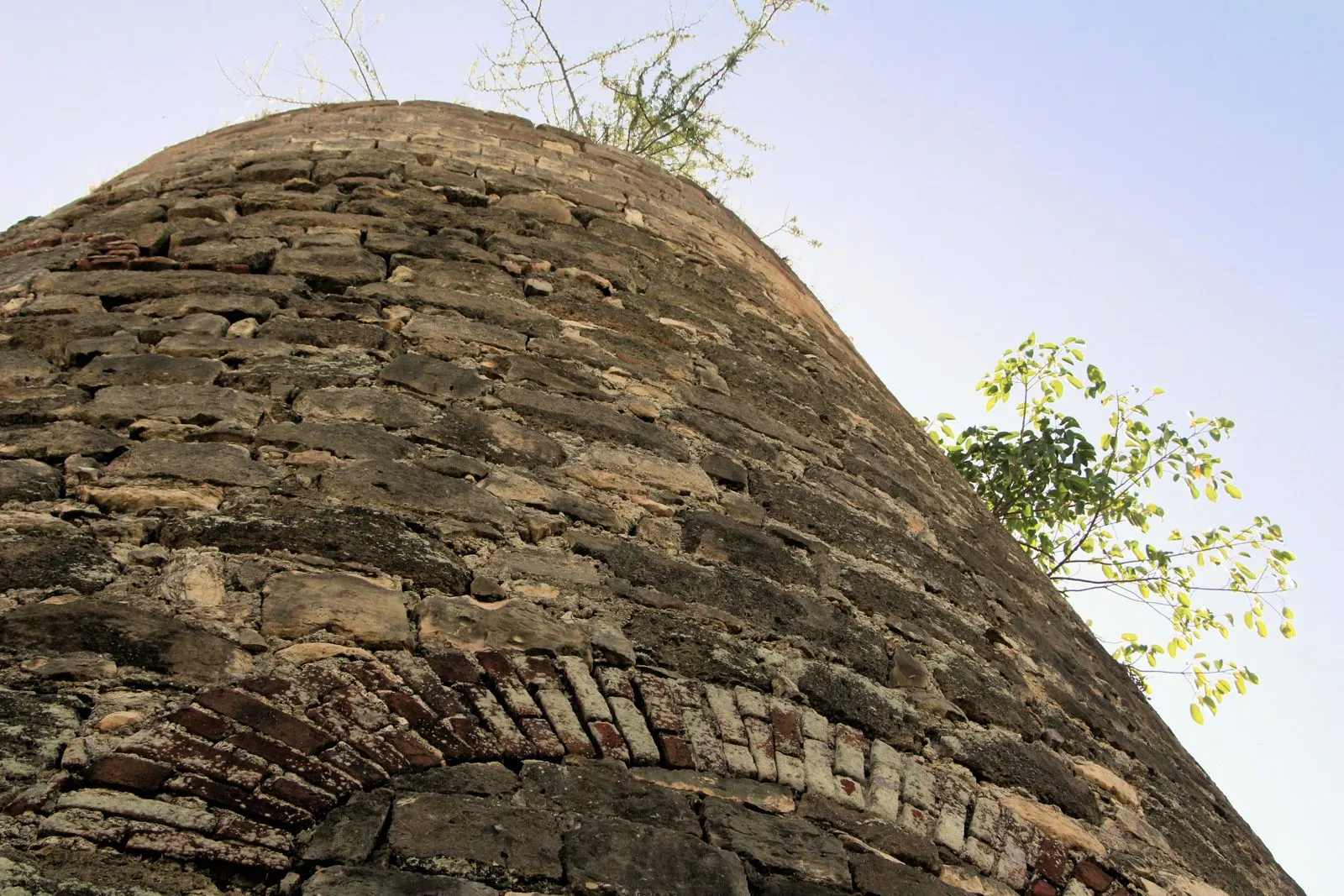 Ruins of Betty's Hope sugar plantation in Antigua
The ruins of Betty's Hope sugar plantation in Antigua, a reminder of the island's plantation past. Wikimedia Commons, CC BY-SA 4.0.