Hundreds detained outside the embassy
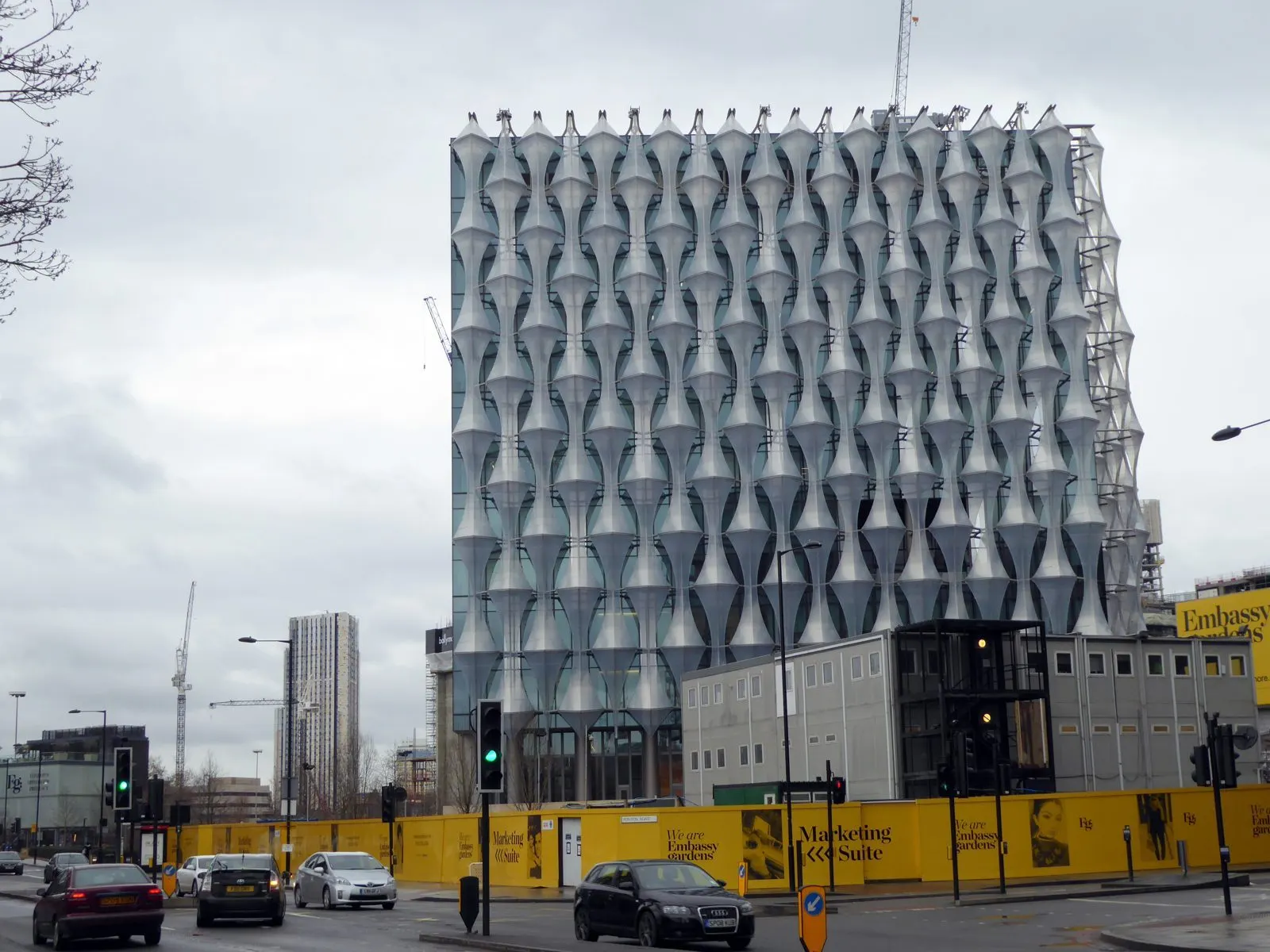
More than 300 people were arrested during a protest in support of the banned organisation Palestine Action outside the US embassy in London, police have said. The Metropolitan Police said on Sunday that 325 arrests were made on Saturday, with 320 of them for expressing support for a proscribed organisation under the Terrorism Act. The demonstration, in the Nine Elms area of the capital, was one of the largest single days of arrests since the group was banned, and it has taken the total number of people arrested in connection with Palestine Action past 4,000.
Hundreds of people gathered outside the embassy on Saturday, many holding placards with slogans such as "I oppose genocide, I support Palestine Action". Demonstrators applauded and chanted "free, free Palestine" as people were arrested and taken to police vans parked on Ponton Road, just off the embassy grounds, before being transferred to police stations. Some protesters were carried to the vans by officers after refusing to move, according to reporting of the police operation. For readers following protests and politics in the UK, the scale of the arrests underlines how the ban on Palestine Action has become one of the most contested policing issues in Britain.
Why the protest took place
Palestine Action was proscribed in July 2025 under terrorism legislation, making it a criminal offence to express support for the group, to arrange meetings in its support or to display articles, such as clothing or flags, that arouse reasonable suspicion of membership or support. The group had campaigned through direct action against arms companies and other targets linked to Israel's military, and its proscription placed it on the same list of banned organisations as groups including Hamas.
The protest was organised by the activist group Defend Our Juries, which has been coordinating a series of demonstrations against the ban. Organisers described Saturday's gathering as a mass action, and it came just days before a crucial legal test of the ban. The UK Supreme Court is due to review Palestine Action's proscription under terrorism legislation, after the group's co-founder was granted permission to appeal it. A two-day hearing is scheduled to begin on Wednesday 4 November, and the Home Office has said it will robustly defend against the appeal.
That legal context is central to understanding Saturday's events. Many of those arrested were, in effect, deliberately inviting arrest in order to challenge the law itself, holding up signs that stated their support for the group in plain terms. Defend Our Juries has argued that the ban criminalises peaceful protest and freedom of expression, while the government maintains that proscription is a necessary tool against organisations it considers to be involved in terrorism. The Supreme Court hearing will test those competing arguments, and its outcome could reshape how protest law is applied in the UK.
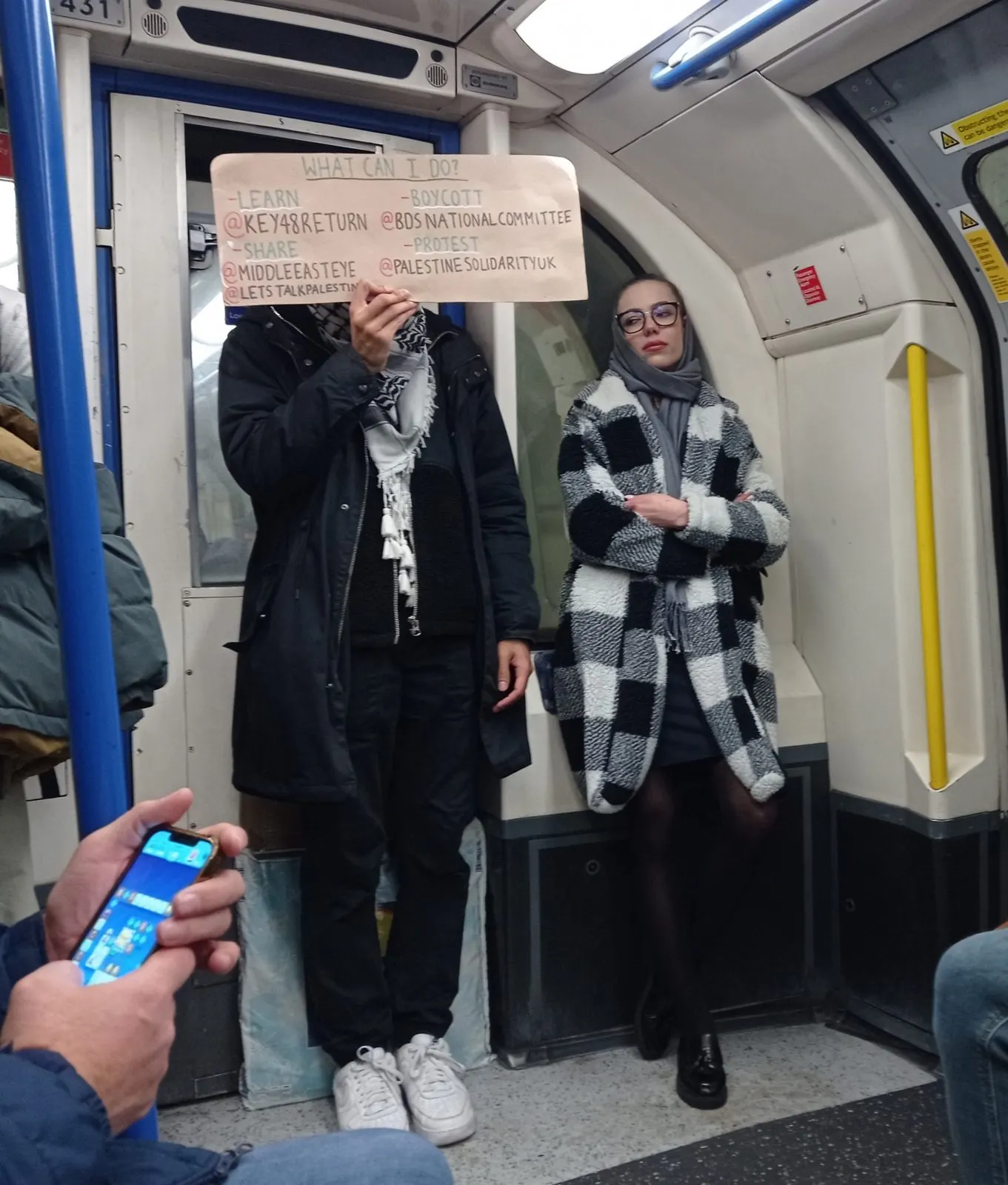 Pro-Palestinian placards displayed in London
Credit: Wikimedia Commons contributor (CC0)
A running total past 4,000
The arrests on Saturday pushed the cumulative total of people detained in connection with Palestine Action beyond 4,000, according to campaigners and official figures. Home Office figures obtained by the BBC showed that 3,630 arrests were made in the year ending June 2026. Adding 134 people arrested outside Westminster Magistrates' Court earlier this year and those arrested on Saturday brings the reported total to 4,089. The BBC has contacted the Metropolitan Police to confirm any figures it might hold, and the force has not yet published its own cumulative count.
A smaller protest was also held outside the US consulate in Edinburgh on Saturday, but no arrests were made there at the time. Police Scotland said it was reviewing evidence to identify people seen wearing T-shirts and holding banners supporting the banned group, a reminder that enforcement is not limited to London and that further arrests could follow as footage is examined.
The policing operation in London was extensive. A Section 35 dispersal order was in place in parts of the capital, covering the embassy grounds, from 8am to 11pm on Saturday, giving officers additional powers to direct people to leave the area. The Metropolitan Police operation involved large numbers of officers and vans, and the processing of more than 300 arrests in a single day is itself a major logistical exercise, with detainees taken to police stations across the capital.
The international dimension
The choice of the US embassy as the location was deliberate. In August 2025, the US government announced sanctions against Palestine Action, designating it a terrorist organisation, a step that mirrored the UK ban and reflected the Trump administration's wider campaign against movements it characterises as extremist. Protesting outside the embassy therefore carried a double message: opposition to the UK ban, and opposition to the US designation.
The case has also drawn attention beyond Britain. Campaigners point to the age and profile of many of those arrested in earlier protests, including senior citizens, and argue that the ban is being used against peaceful demonstrators rather than against people planning violence. The government, by contrast, points to Palestine Action's history of direct action, including break-ins and damage to property, as justification for proscription. That disagreement is precisely what the Supreme Court will be asked to resolve, and Saturday's protest was timed to keep the issue in public view in the days before the hearing.
What happens next will depend in large part on the court. If the ban is upheld, further protests of this kind are likely to lead to further mass arrests, and the cumulative total will continue to rise. If the ban is overturned, the legal basis for the thousands of arrests made since July 2025 would be thrown into question, with potentially far reaching consequences for those already charged. Either way, Saturday's events show that the campaign against the ban is not fading, and that a significant number of people are willing to be arrested to make their point.
For background on protest movements in Europe, see our coverage of protests in Paris over the cost of living, student protests challenging the rule of Serbia's president and school protests in France. You can follow UK politics on our Politics page and international stories on our World page. For official information, see the Metropolitan Police, the UK government, the Home Office, the UK Supreme Court and the BBC source article, and return to the Verity homepage and our About page for continuing coverage.