Shares in SpaceX fell sharply in early trading on Friday as a selloff swept through technology and artificial intelligence stocks, dragging the tech heavy Nasdaq Composite lower and putting the data centre boom under fresh strain.
SpaceX shares were down more than 7 percent in the early session, while shares in Tesla, the electric car maker also led by Elon Musk, dropped as well, according to the BBC. The falls came as investors reacted to the results of the US midterm elections and to the prospect of tougher scrutiny of data centre construction and the wider artificial intelligence industry.
The market move was striking because it cut across the companies most closely associated with the AI boom. Chipmakers, data centre operators and cloud computing firms all fell, reversing much of the optimism that had followed the election results earlier in the week. For investors who had bet heavily on AI infrastructure, the message was clear: the political backdrop for the industry has changed, and the market is now pricing in that risk.
A rough morning for Musk's companies
SpaceX and Tesla were at the centre of the selloff. Both companies are led by Musk, and both have major operations in Texas, the state where the political fallout from the midterms has been most direct. Tesla shares had already fallen in the days after the election, and the declines deepened as the week went on.
The pressure on Musk's companies is closely tied to his political spending. Musk spent nearly 450 million dollars backing Republican campaigns during the election, including at least 45 million dollars in support of Ken Paxton in the Texas senate race. That spending has now become a liability in the eyes of some investors, who worry that the Democratic victories could bring greater scrutiny of his business interests, including government contracts, artificial intelligence and the proposed merger between Tesla and SpaceX.
Democrats won control of both chambers of Congress in the midterms, and they also made gains in Texas and Georgia, two states where public opposition to new data centres has been growing. Investors fear that a Democratic Congress could open investigations into Musk's federal contracts and his companies' ties to Washington, even though no such action has been taken yet. The concern is about what might happen next, not about any decision already made.
The political risk is only part of the story. SpaceX and Tesla are also exposed to the same forces hitting the rest of the AI supply chain. When investors start to doubt the pace of data centre construction, they sell the companies that depend on it, and Musk's companies are among the most visible names in that trade.
Chipmakers feel the pressure
The sharpest falls over the past five days have come in the semiconductor sector. AMD dropped nearly 17 percent over the five day period, Intel shares fell more than 18 percent, and Nvidia shares dropped more than 10 percent over the same stretch. Those are steep declines for companies that have been among the biggest winners of the AI boom.
The logic behind the selling is straightforward. Data centres need vast numbers of advanced chips to run AI systems, and chipmakers have built their growth plans around that demand. If new data centres are delayed or blocked, demand for chips could slow, and the high valuations attached to chip stocks would be harder to justify.
Nvidia, which makes the graphics processors that power most AI training, has been the emblem of the AI trade, and its shares have now given back a significant part of their recent gains. AMD, which competes with Nvidia in AI chips, and Intel, which supplies processors for servers and data centres, have fallen even further in percentage terms.
The selling has not been limited to chipmakers. Data centre operators and AI infrastructure companies have also fallen sharply, with some losing between 6 and 13 percent in a single session. Cloud computing firms that rent out AI computing power have suffered too, as investors question how quickly the infrastructure buildout will continue.
For the broader market, the Nasdaq Composite has borne the brunt of the decline because technology stocks make up such a large share of the index. When the biggest tech names fall together, the index follows, and that is what happened as the selloff gathered pace.
Why data centres are at the centre of the selloff
Data centres sit at the heart of the AI boom. They are the giant facilities that house the servers and chips used to train and run AI models, and their construction has surged as companies race to build computing capacity. But that expansion has also created a backlash in the communities where the facilities are being built.
Data centres require large amounts of electricity, land and water. Their expansion has raised concerns about power costs, local infrastructure and the impact on nearby communities. In Texas and Georgia, residents have pushed back against new projects, arguing that the facilities strain local power grids and water supplies while delivering relatively few local jobs.
Texas accounts for an estimated 27 percent of planned US data centre capacity, according to Wells Fargo, which makes the state central to the future of the AI buildout. That is why the election result there matters so much to investors. Texas governor elect Gina Hinojosa campaigned heavily against data centres, pledging a moratorium on new ones until lawmakers introduce stronger safeguards. Her proposals include greater community involvement, protections for local water and electricity supplies, and requirements for companies to pay for the infrastructure their projects need.
Investors are now considering whether tighter rules could delay new projects and affect companies supplying equipment and computing services. A pause on construction in Texas would not stop the AI boom on its own, but it would slow the deployment of computing power and push back the delivery of upstream equipment, which is exactly the kind of delay that markets punish.
The politics behind the market move
The midterm results changed the political landscape for the technology industry in two ways. First, Democratic control of Congress raises the prospect of hearings and investigations into the AI industry and into Musk's companies in particular. Second, Democratic victories in key states have given a boost to politicians who want to slow data centre construction.
Hinojosa defeated incumbent Governor Greg Abbott in Texas, marking the first Democratic victory in a Texas statewide election since 1994. Her campaign made opposition to data centres a central theme, and her win has been read by the market as a sign that the backlash against the facilities has real political force.
The concern extends beyond Texas. Democrats also made gains in Georgia, another state where data centre expansion has become a local political issue. Investors are watching both states closely, because what happens there could set a pattern for other states where data centre projects are planned.
There is also a wider question about whether the AI boom has been overvalued. Some analysts have warned for months that the spending on AI infrastructure has run ahead of the revenue it generates, and the selloff suggests that at least some investors are starting to agree. The election results may have been the trigger, but the underlying worry about valuations was already there.
Tech leaders admit they were caught off guard
The industry's own leaders have acknowledged that they were surprised by the strength of the backlash. OpenAI president Greg Brockman said tech leaders had been surprised by the reaction against data centres, and Meta president Dina Powell McCormick agreed that the industry needed to improve its communication with the public.
Their comments point to a problem that goes beyond politics. The AI industry has spent years talking about the benefits of its technology while saying relatively little about the physical footprint of the infrastructure behind it. For many communities, the first they hear of a data centre is when construction begins nearby, and by then the debate is already about power, water and noise rather than about the technology itself.
Better communication will not resolve the underlying tensions over resources and local impact, but industry leaders appear to recognise that they need to make their case more clearly. That means explaining what data centres do, what they need, and what communities get in return.
What investors are watching next
Investors will be watching several things in the coming days. The first is whether the selloff continues or whether buyers step in to pick up shares at lower prices. The second is whether Democratic leaders in Congress signal any concrete plans for scrutiny of the AI industry or of Musk's companies. The third is what happens in Texas, where Hinojosa's pledge of a moratorium will be tested against the reality of governing a state where the tech industry is a major employer.
The October jobs report, due on Friday, could also influence the market, as could any further signals from the Federal Reserve about interest rates. Filings published by the US Securities and Exchange Commission will also be watched for any new disclosures from the companies involved. But for technology stocks, the central question is now political: how far will the backlash against data centres go, and how much will it slow the AI buildout?
For now, the market has given its answer. SpaceX shares are down more than 7 percent, Tesla is falling, chipmakers have lost between a tenth and nearly a fifth of their value in five days, and the Nasdaq is sliding. The AI boom has not ended, but the easy part of the trade is over, and investors are now asking harder questions about the politics, the costs and the pace of the buildout that made it possible.
More coverage is available in our technology and business sections, and on the Verity homepage.
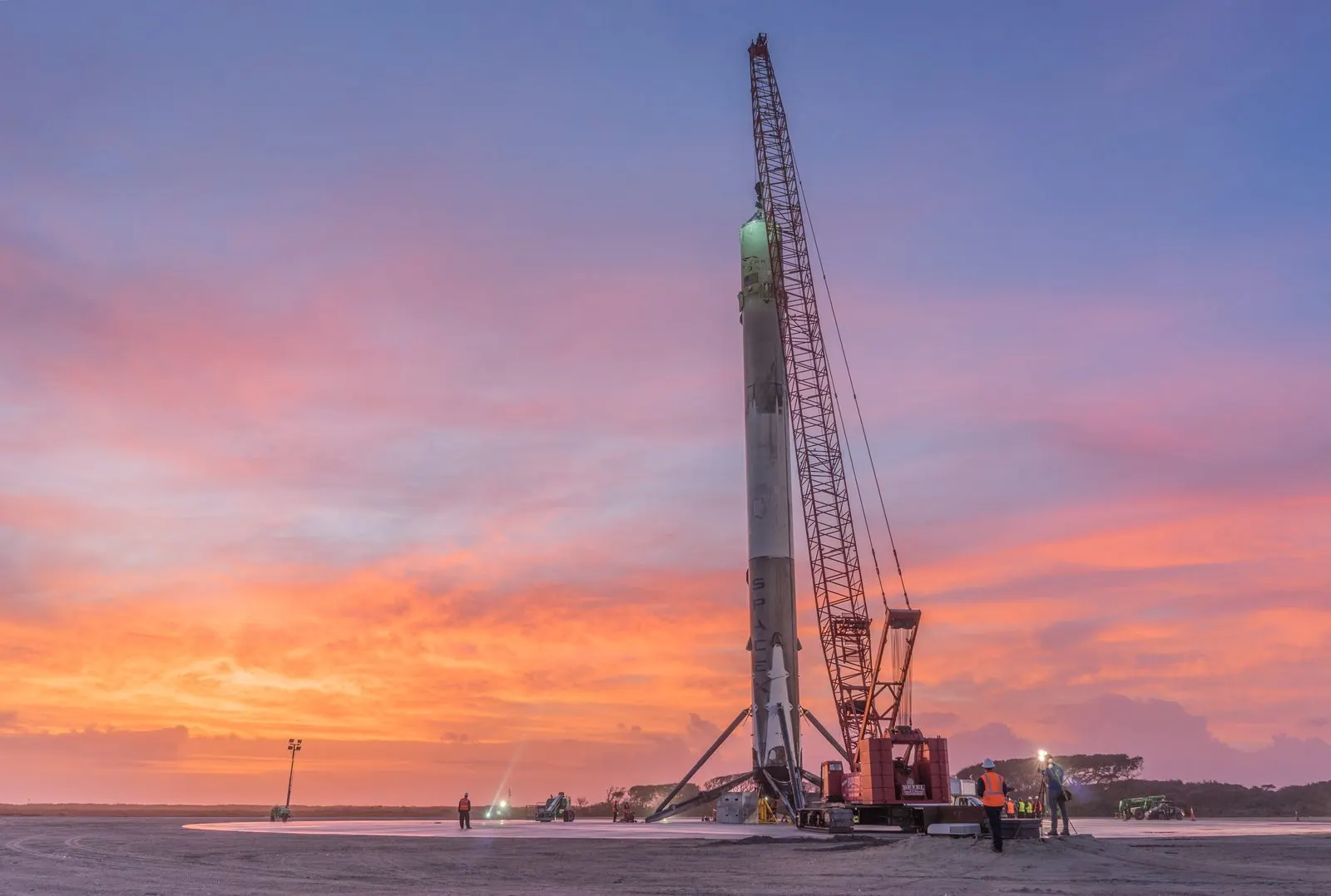 A SpaceX Falcon 9 first stage booster standing at its landing zone after returning to Earth
Credit: A Falcon 9 first stage after landing. Photo: SpaceX, via Wikimedia Commons (CC0)