Elon Musk has confirmed he is actively considering one of the most dramatic corporate shake-ups of the decade: a merger between Tesla and SpaceX, the two biggest companies in his business empire. Speaking during SpaceX's earnings call on Tuesday, Musk told investors that both companies had established special committees to examine a possible combination — the first time he has confirmed the idea is being formally reviewed, as the BBC reported.
Asked directly whether he thought the tie-up made sense, Musk answered yes — calling it a good idea — while emphasising that the committees had not agreed on any terms of a transaction and that there was no guarantee they ever would. News of the review sent SpaceX shares up 8% in extended trading, as investors priced in the possibility of a combination that would reshape the electric-vehicle, space, and artificial-intelligence industries in one stroke, according to market coverage.
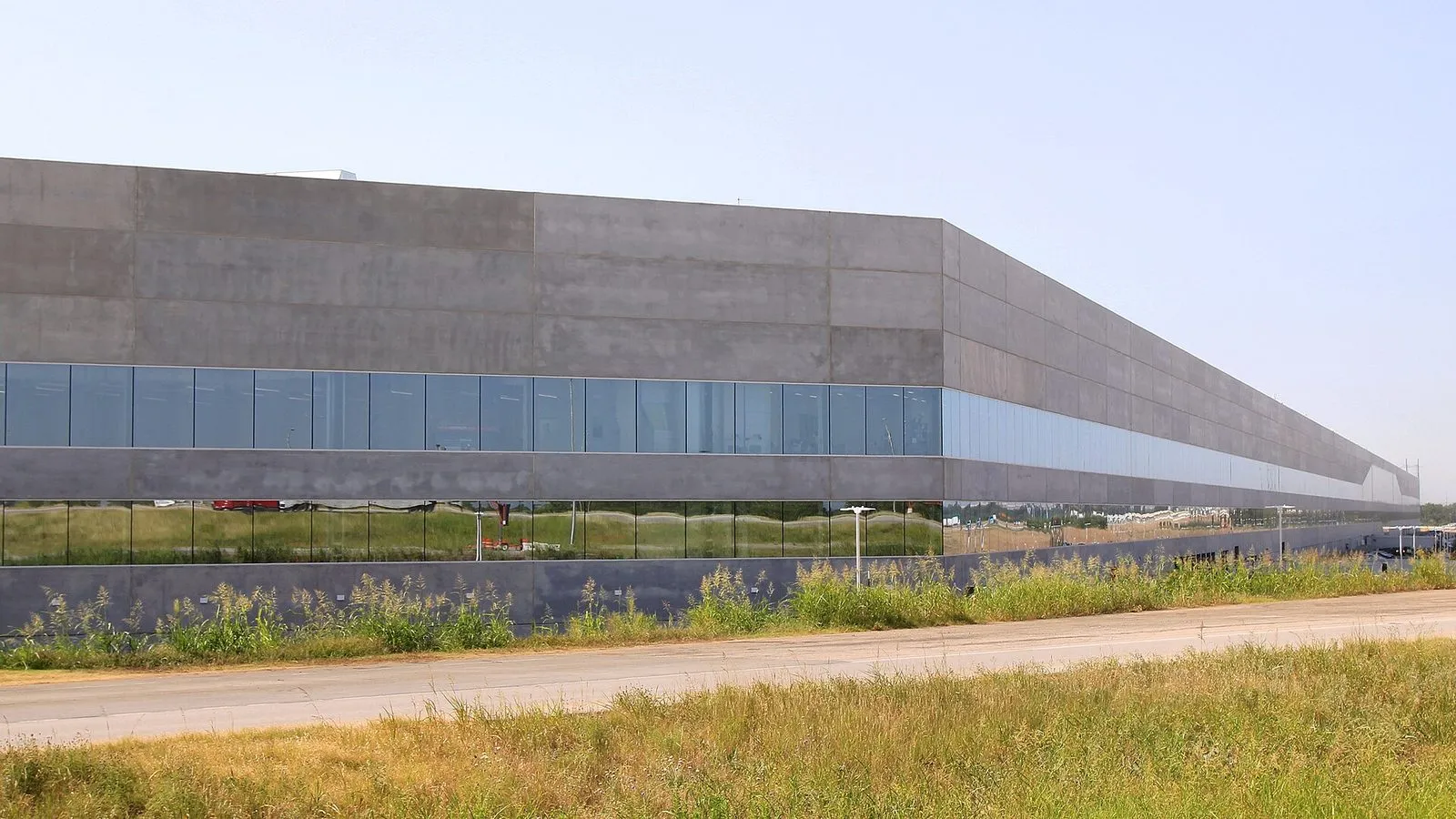 Tesla's Gigafactory Texas manufacturing plant
Tesla's Gigafactory Texas in Austin — Tesla's manufacturing muscle could one day sit under the same corporate roof as SpaceX's rockets and satellites. (Larry D. Moore, CC BY 4.0, via Wikimedia Commons)
A shared bet on "superintelligence"
The strategic logic Musk laid out rests on a single theme: the growing overlap between his two flagship companies in artificial intelligence, chips, and software. Tesla is no longer just a carmaker — it is deep into self-driving technology, humanoid robotics, and energy storage. SpaceX, meanwhile, has expanded far beyond rockets into satellite internet via Starlink, and, more recently, into renting out cloud-computing capacity to AI companies.
Musk argued that unified operations would accelerate cooperation across what he called the "superintelligence singularity" — joint work on AI software, chip architecture, robotics, orbital communications, and large-scale computing. The two firms are already collaborating on Terafab, a joint semiconductor project aimed at manufacturing the AI chips that would power autonomous vehicles, humanoid robots, and space-based computing systems, as detailed in TechSpot's account of the call.
That convergence is accelerating. SpaceX disclosed on the same call that its newer cloud-computing business — which sells capacity to firms such as Anthropic and Google — brought in $7.5 billion and has become its most profitable area, the Free Press Journal reported. Starlink recorded $5.2 billion in revenue. Bringing those data-centre and connectivity operations together with Tesla's vehicles and robots would, in Musk's telling, create a vertically integrated giant spanning cars, chips, satellites, and AI.
Committees in charge — with Musk sidelined
One of the more unusual features of the process is that Musk, the man who runs both companies, cannot take part in the deliberations. Because he sits at the top of both firms, he is what corporate lawyers call a conflicted party, and the review is being handled by committees of independent directors at each company.
Musk acknowledged that the decision rests entirely with the committees, noting that his dual role prevents him from participating directly. The committees were set up at the request of shareholders, who would ultimately need to approve any deal, and they retain the final say on whether a transaction happens at all, Reuters reported.
That governance structure matters because a merger would be anything but simple. Analysts have noted that Musk holds a far larger voting stake in SpaceX than in Tesla, which could complicate the politics of any deal for Tesla's public shareholders. The semiconductor supply chain and AI hardware markets are already under intense investor scrutiny, and a transaction of this scale would invite questions from regulators as well as shareholders.
The biggest merger in history?
If it happens, the numbers would be staggering. Tesla is valued at roughly $1.5 trillion, while SpaceX is estimated to be worth about $2 trillion — a combined enterprise of around $3.5 trillion, which would make it one of the largest mergers ever attempted. Some analysts have gone further: Bloomberg reported the combination could rank as the largest corporate merger in history.
The speculation has been building for weeks. Barclays suggested recently that a deal could be announced before Tesla's annual meeting in December, after Musk repeatedly hinted at the idea without confirming that formal talks were under way. Tuesday's comments are the first official confirmation that the two boards are examining the move, Reuters noted.
On the Tesla side, the bar for approval is notably high. Musk said a deal would need the support of at least half of all Tesla shares — not merely a majority of those voting — describing the requirement as a significant hurdle that any proposal would have to clear.
SpaceX's first profit as a public company
The merger talk came wrapped in a strong set of financial results. SpaceX reported its first quarterly profit since going public, driven in large part by the booming demand for computing capacity tied to the AI boom, according to reports of the results. Musk said he expects annual recurring revenue of between $500 billion and $1 trillion by the end of 2027.
Yet the picture is not entirely rosy. Despite the milestone quarter, SpaceX remains in the red for the year so far, having lost $1.1 billion in 2026. The tension between its rocket business's capital intensity and the promise of its AI infrastructure arm is precisely the kind of strategic question a merger might reframe.
Tesla, for its part, was due to report its own quarterly results on Wednesday — figures investors will now read for clues about whether the electric-vehicle maker can sustain the valuation a merger would demand.
What it would mean for the industries involved
A combined Tesla–SpaceX would be an unprecedented entity: a single company building cars, humanoid robots, rockets, satellite networks, AI data centres, and semiconductors. The deal would also continue Musk's pattern of consolidating his businesses — earlier this year, SpaceX absorbed his AI company xAI, folding it into the rocket and satellite company alongside the social-media platform X.
For US markets, the implications are enormous. A merger of two of the world's most valuable private and public companies would test shareholder democracy at a scale rarely seen, with retail Tesla investors effectively voting on whether to absorb a space and AI business worth more than the carmaker itself — a deal that would dwarf even the giant media mergers reshaping corporate America.
For the technology sector, the rationale is the deepening fusion of AI compute, connectivity, and physical-world automation. Tesla's work on self-driving systems and robots needs vast computing power and communications infrastructure; SpaceX's satellites, data centres, and launch capacity could supply both. Whether that logic is worth one of the biggest deals in corporate history is now, Musk says, a question for the independent directors — not for him.