Christa Pike, the Tennessee death-row prisoner who survived two lethal injections last month, is now "up and walking" around her hospital room, her legal team has told the BBC — a development that has turned one of the most extraordinary episodes in the history of capital punishment in the United States into an unfolding medical, legal and political saga.
Pike, 50, was administered two doses of the sedative pentobarbital on 30 September at the Riverbend Maximum Security Institution in Nashville. She was expected to become the first woman executed by Tennessee in more than two centuries. Instead, she lived — and is now believed to be the only person ever to survive an execution by lethal injection.
Speaking to BBC Radio 4's Today programme, her lawyer Stephen Ferrell said she had walked for the first time since the attempt, albeit only short distances within her room. But he cautioned that her recovery is far from straightforward: she remains mentally clouded, loses her train of thought easily and forgets where she is going.
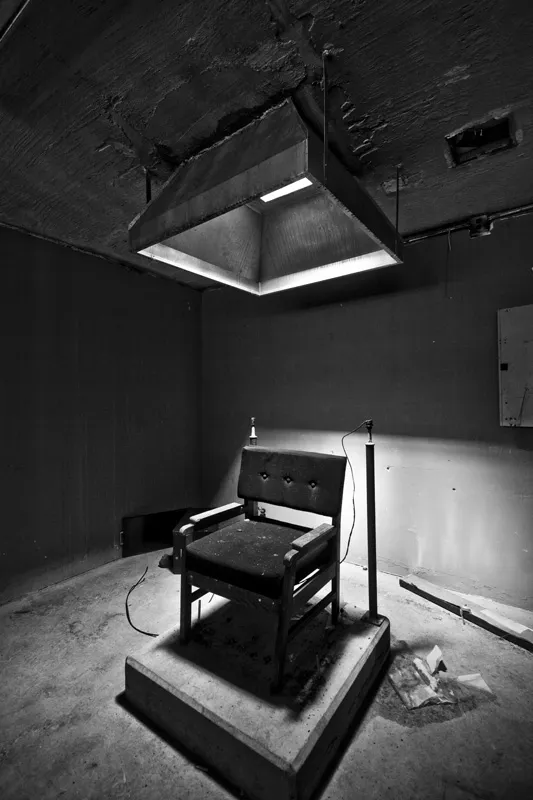 Tennessee's electric chair
. The state retains electrocution as a backup execution method — a fact back in the spotlight after a US senator called for its return. Credit: Dave.scaglione / Wikimedia Commons (CC BY-SA 3.0)
What happened inside the death chamber
According to accounts given by Pike's lawyers, the execution team spent roughly an hour trying to establish intravenous access before administering the drug. Pike, they said, was cooperative throughout, even attempting to help staff locate a usable vein.
Her lawyer Randy Spivey told a press conference on Wednesday that she was "kind and polite" as the team worked, stabbing her arm with needle after needle, before she felt the burning sensation of the pentobarbital entering her bloodstream. The first dose failed to kill her. A second dose was administered — and that failed too.
She was rushed from the death chamber to a hospital in critical condition, unconscious and on a ventilator. Her lawyers said she was in grave danger of dying for days afterwards, as doctors fought to clear the drug from her system.
From the brink back to consciousness
On Monday, doctors determined Pike had no brain activity, her legal team has said, and preparations were made to remove her from life support. The following day, she regained consciousness — disoriented and angry, with no memory of the execution attempt. As she came round, she asked those around her: "Where am I and who are you?"
Her family and lawyers have said they were told she was close to being taken off life support before she unexpectedly woke up. It remains unknown whether she has suffered permanent brain damage, according to Ferrell, who described her mental state as "good and bad" — aware of her surroundings one moment, drifting the next.
The case has already had a ripple effect beyond Tennessee's borders. On Wednesday evening, Jamaal Howard became the first person to be executed in the United States since the failed attempt on Pike, put to death by lethal injection at the state prison in Huntsville, Texas. He was 46 and was pronounced dead at 8.03pm local time after receiving a fatal dose of pentobarbital.
The physical toll of a failed execution
While Pike is now mobile, her arms — repeatedly punctured during the hour-long struggle to insert IV lines — are in a terrible state. Spivey said: "She cannot move either of her arms."
Ferrell described her limbs as very injured and barely functional, and said she is being kept under constant supervision in the hospital. Her mental state — aware one moment, drifting the next — will be closely watched by doctors in the days ahead. Reports have described a woman who is believed to be suffering from pneumonia and a blood clot in one arm, and who is unable to swallow — though the precise extent of her injuries is still being assessed by her medical team.
The severity of her condition has become central to the legal battle now taking shape. Pike's lawyers argue that the failed execution amounts to cruel and unusual punishment, and they are pushing for her death sentence to be commuted to life without parole.
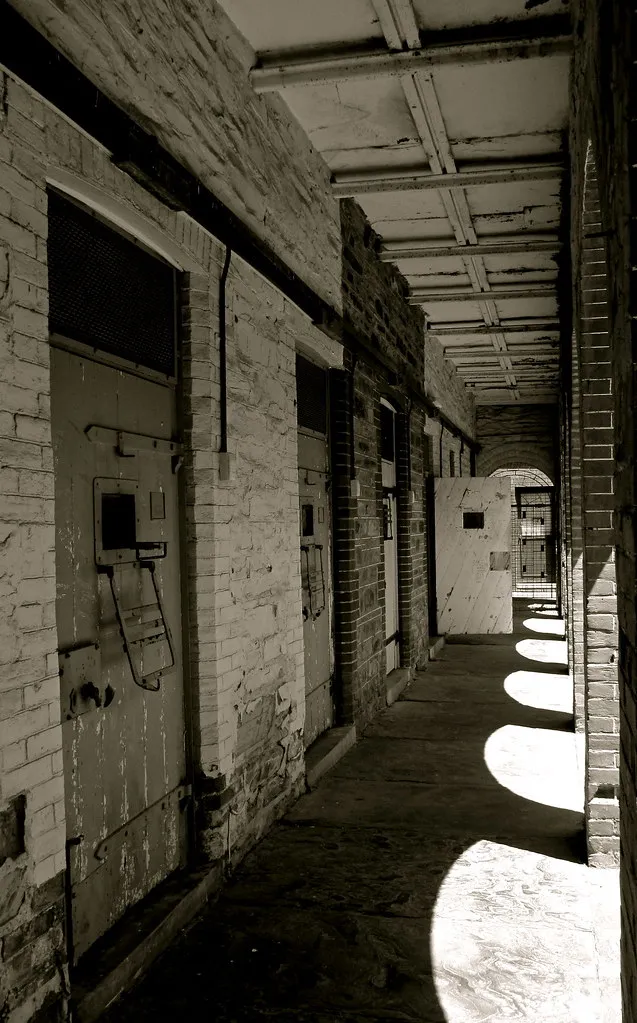 A row of cells on a US death row
Death row cells in a US prison. Pike has spent three decades on Tennessee's death row. Credit: Allison Cornford / Wikimedia Commons (CC BY 2.0)
A courtroom fight over the evidence
On Wednesday, a court ordered that every piece of physical evidence connected to the failed execution be preserved — the IV lines, syringes, drug waste and labels — along with documentation of Pike's psychological condition. The order was requested by her lawyers, who say the materials could ground a future lawsuit against the state.
At Wednesday's hearing, the state of Tennessee declined to say whether it intends to set a new execution date. Assistant attorney-general John W Ayers confirmed that no new date had been scheduled, and when asked whether an execution order could be presented as early as Thursday, replied: "I can't answer that question."
Pike's attorney Luke Ihnen told reporters the hearing was about transparency: the public, the courts and Pike herself, he said, should not simply have to take the state's word for what went wrong inside the death chamber.
Tennessee's death-penalty apparatus under pressure
The political consequences have been swift. Governor Bill Lee, who had previously denied Pike clemency, has halted all executions in the state for the rest of the year while an independent review of what went wrong is conducted. He also ordered a review of the execution protocol at Riverbend.
Frank Strada, the commissioner of the Tennessee Department of Correction, resigned days after the attempt and is expected to leave his post this month. Strada maintained that his department had carried out its responsibilities in accordance with established protocol, but said stepping aside was in the best interests of Tennesseans as the review proceeds. An interim commissioner is yet to be named.
The failed execution was not an isolated incident: Tennessee halted another execution in May after medical staff failed to find a vein in a prisoner's arm. The two failures have intensified scrutiny of how the state administers capital punishment, and of the secrecy surrounding its lethal-injection protocols.
Had the drugs worked, Pike would have been the first woman executed by Tennessee in more than 200 years. Across the United States, only 18 women have been executed since 1976, according to the Death Penalty Information Center — a reminder of how rarely the ultimate punishment is applied to women, and how extraordinary the state's failure has been.
The political fallout
The case has reignited the national debate over execution methods. Senator Marsha Blackburn, the Republican now running for governor of Tennessee, responded to the debacle by calling on the state to bring back the electric chair — a method Tennessee still retains as a backup option for prisoners sentenced before 1999.
Pike's lawyers, for their part, are pursuing commutation. They argue that after surviving what was meant to be her death, and with her body and mind gravely damaged by the state's own hand, executing her a second time would be unconscionable. Whether the courts — or the governor — agree remains to be seen.
The crime that put her on death row
Pike was 18 when she was sentenced to death for the 1995 torture and murder of her 19-year-old Job Corps classmate Colleen Slemmer. She committed the killing alongside her then-boyfriend, Tadaryl Shipp, who was spared the death penalty because he was a minor at the time.
She has now spent more than three decades on death row — longer than she has been alive outside it. What happens next, in the hospital room, the courtroom and the governor's office, will determine whether the state of Tennessee ever tries again to carry out the sentence that failed so spectacularly on 30 September. Verity will continue to follow the case.