In Short (TL;DR)The Pentagon announced on Monday that Defence Secretary Pete Hegseth has recommended — and President Donald Trump has approved — execution by US Army firing squad for Nidal Hasan, the former Army psychiatrist convicted of killing 13 people and wounding 32 in the 2009 Fort Hood shooting. It would be the US military's first execution by firing squad since World War Two, and the first military death sentence carried out in 65 years. The Army secretary will set the time and place of the execution, which still requires appellate review and a final judgment before it can proceed. Hasan is one of four inmates currently on the US military's death row.
The Pentagon has announced that the former Army major convicted of the 2009 Fort Hood massacre will be executed by firing squad — a method not used by the US military since the end of World War Two. In a social media post on Monday, Pentagon spokesperson Sean Parnell said Defence Secretary Pete Hegseth had recommended death by US Army firing squad for Nidal Hasan, and that President Donald Trump had approved the move.
"The Secretary of the Army will set the time and place of the execution. Judgement day for Hasan has finally come," Parnell wrote on X. Hegseth himself replied to the announcement with a single word: "Justice." The Pentagon's full statement was released via the Department of Defense. Read more US news in our News section.
If carried out, the execution would be the first carried out by the US military in 65 years, and the first by firing squad since the Second World War — a landmark moment in American military justice that is already drawing global attention. The BBC first reported the Pentagon's announcement.
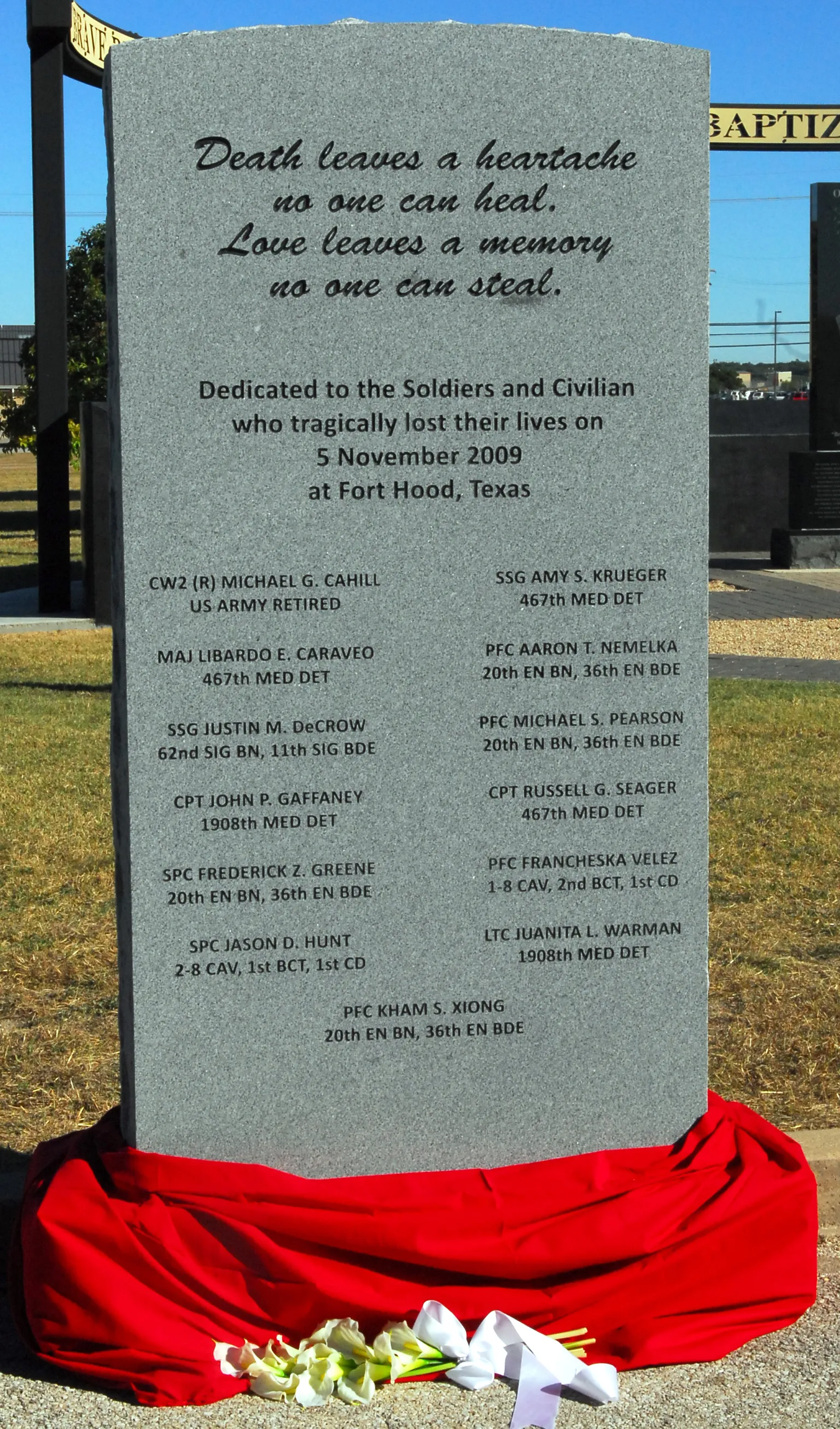
On 5 November 2009, Hasan — then a major and psychiatrist in the US Army — walked into a crowded medical building at Fort Hood in Texas, where soldiers were undergoing check-ups and receiving vaccinations ahead of deployment to Afghanistan. He opened fire on unarmed troops with a semi-automatic pistol, shouting "Allahu Akbar" as he did so.
Thirteen people were killed — 12 soldiers and one civilian — and 32 others were wounded. The killings remain the deadliest ever non-combat attack on an American military base. The attack only ended when a civilian police officer confronted Hasan outside the building and shot him, leaving him partially paralysed. When police searched him, they found an additional gun, extra ammunition magazines and a mobile phone.
The investigation that followed heard that Hasan, a US-born Muslim of Palestinian descent, had opposed the US military's occupations of Iraq and Afghanistan, and that he had exchanged emails with Anwar al-Awlaki, the radical cleric and alleged al-Qaeda figure who was later killed in a US drone strike in Yemen. Our World section covers the long legacy of the conflicts Hasan claimed to be resisting.
!Memorial ceremony at Fort Hood
A memorial ceremony at Fort Hood. The 2009 attack remains the deadliest non-combat attack ever on an American military base. (U.S. Army / Wikimedia Commons, Public Domain)
Hasan was court-martialled in 2013. In an extraordinary legal strategy, he chose to conduct his own defence, called no witnesses, gave no testimony and made no attempt to deny the charges — prompting his court-appointed defence attorneys to express concern that he was effectively seeking his own execution.
He admitted in court that he was the gunman, apologised for "any mistakes", and told the military judge that he believed he was protecting Muslims and the Taliban in Afghanistan. "There was adequate provocation that these were deploying soldiers that were going to engage in an illegal war," he said of the troops he attacked. A jury panel of 13 officers convicted him of 13 counts of premeditated murder and 32 counts of attempted murder, and unanimously recommended the death sentence. The long-running debate over capital punishment in America continues to divide the nation.
Carrying out a military death sentence is one of the most procedurally guarded processes in American law. Under the Uniform Code of Military Justice, the sentence cannot proceed without the president's personal approval, full appellate review, and a final judgment on its legality. It is unclear exactly when Hasan's execution will take place, and the legal machinery has further stages to complete.
Hasan is currently one of four inmates on the US military's death row at Fort Leavenworth in Kansas. The military has not executed anyone since 1961, when Private John Bennett was hanged for the rape and attempted murder of an 11-year-old girl in Austria. The military death penalty was briefly ruled unconstitutional by the US Court of Appeals for the Armed Forces in 1983, only to be reinstated the following year by an executive order from President Ronald Reagan. The US Army's legal framework still provides for capital punishment, though its use has become vanishingly rare.
According to CNN's reporting, the Army secretary will now set the time and place of the execution. The choice of method — firing squad rather than lethal injection — appears deliberate: the military has the authority to set its own procedures, and officials may have judged the firing squad more legally and logistically straightforward than the drug protocols that have plagued state executions. Our Politics section tracks how the Trump administration is reshaping federal law enforcement.
The decision is a powerful statement by the administration about military justice. Hegseth, who has pledged to restore what he calls a warrior culture to the armed forces, and Trump, who has championed the death penalty in both of his terms, have together chosen the most dramatic possible method for the military's first execution in generations. The announcement's tone — "Judgement day for Hasan has finally come", "Justice" — suggests the administration intends it to be seen as a closing of accounts with one of the darkest days in Army history.
Yet the execution is not yet certain. The remaining legal steps — appellate review and final judgment — will be scrutinised by opponents of capital punishment, who will argue that the same flaws that have led states to halt executions apply with equal force to military justice. See our recent coverage of a halted state execution.
For the families of the 13 victims, the wait has already lasted nearly 17 years. Whether Monday's announcement brings them the closure they have sought for so long will depend on what happens in the months ahead. Follow this developing story on our homepage.