A courtroom defeat for the lynx campaign
A long running campaign to bring wild lynx back to England has suffered a major setback in the High Court. A judge has dismissed a legal challenge brought by Lynx UK Trust against Natural England over the body's refusal to carry out a full assessment of a proposed release of Eurasian lynx into Kielder Forest in Northumberland.
The ruling, delivered on Friday, closes the latest chapter in a dispute that has run for years, but it does not settle the wider argument about whether a predator absent from Britain for more than 1,300 years should ever return. For now, the legal door that the trust tried to open remains shut, and any future release would need a change in the law or a different legal route.
The plan before the court involved three lynx, two females and a male, which the trust wanted to release into the forest on a trial basis. Natural England, the government's adviser on the natural environment, declined to assess the application in full. It argued that the release could not lawfully go ahead because lynx are listed as a dangerous wild animal, and the trust would need a licence simply to take possession of the animals.
Ms Justice Obi dismissed the claim. In a 16 page judgment, she rejected the trust's argument that the later Wildlife and Countryside Act 1981 had effectively removed lynx from the reach of the earlier Dangerous Wild Animals Act 1976. She said the 1976 Act continues to apply to lynx as a scheduled dangerous wild animal, and she found Natural England's decision not to undertake a full assessment was open to it and rational.
Two statutes at the heart of the case
The case turned on how two pieces of legislation fit together. The trust argued that a licence granted under section 16 of the Wildlife and Countryside Act 1981, which allows the release of animals that are not ordinarily resident in the UK, could authorise a lynx release even though the species appears on the dangerous wild animals list. Its lawyers also argued that the terms of the 1976 Act had been impliedly repealed by the later Act, meaning the older restrictions should no longer block a licensed release.
Natural England, supported by the Department for Environment, Food and Rural Affairs, argued the opposite. Its position was that there was no lawful route for the trust to release lynx into the wild while the species remained listed, and that it would therefore have been pointless to carry out a full assessment of an application for an activity that could not lawfully be carried out.
The judge sided with Natural England on the first ground of the challenge, rejecting it on its merits. On the second ground, which argued that the need for further authorisation was not a lawful reason to refuse to determine the application, permission was refused because of undue delay, since the application had been made in 2022. The judge added that she would have dismissed that ground on its merits in any event, finding that Natural England had acted lawfully in declining a full assessment.
The distinction matters. The court did not rule on whether lynx should be reintroduced as a matter of policy. It ruled on the narrower legal question of whether the current statutes allow Natural England to consider such a release at all. That leaves the policy question with ministers and Parliament, rather than with the regulator.
A long road to the courtroom
The trust's campaign stretches back many years. Its first proposal sought the release of six lynx into Kielder Forest as part of a five year trial. That proposal was refused, with Natural England advising that such a release was prohibited by the Dangerous Wild Animals Act.
A second application followed in 2022, this time for a smaller pilot involving three animals. Natural England eventually refused to consider that application either, saying that releasing lynx would not comply with the 1976 Act and that there was therefore no reasonably foreseeable prospect of the licensed activity being lawfully carried out. The trust, represented by Richard Buxton Solicitors, challenged that refusal, and the High Court ordered a full hearing in March 2026.
The hearing itself took place earlier in October 2026, and the judgment followed weeks later. Reporting of the case has also drawn attention to the government's wider stance. Ministers have privately rejected proposals to spend money studying the return of lynx and bison to Britain, according to emails released during a separate legal challenge, and have opposed investigating legal reforms that would enable the animals to return. Officials were reported earlier in 2026 to have urged the Environment Secretary to reconsider the position on the Dangerous Wild Animals Act because of the risk of legal challenges by lynx supporters.
That background helps explain why this case carried weight beyond one forest. It was, in effect, a test of whether campaigners could use the courts to force the regulatory system to engage with a reintroduction proposal, even where the government had been unwilling to do so.
Why supporters want lynx back
Supporters of reintroduction present the lynx as a missing piece of Britain's natural heritage. The Eurasian lynx is a medium sized wild cat that once roamed British woodland but disappeared centuries ago, with hunting and habitat loss among the causes most often cited. Campaigners argue that its absence has left deer populations without a natural predator, contributing to overgrazing that damages young trees, ground flora and the habitats of other species.
The trust has argued that deer numbers in the UK have swollen to more than two million, the highest level in 1,000 years, and that controlling them is essential to woodland recovery. In its earlier public statements, the trust linked high deer numbers to damage to woodlands and to habitats used by hedgehogs and ground nesting birds. The argument is not only about numbers. Supporters say predators change how deer behave, keeping them on the move rather than grazing heavily in one place, which can give vegetation a chance to recover.
There is also an economic argument. Wildlife tourism is often cited by reintroduction supporters, who point to parts of continental Europe where lynx are present and where visitors travel in the hope of seeing rare wildlife. In Germany, for example, conservation groups report that lynx reintroduced to forested areas of northern Bavaria have lived alongside farming communities for a decade, preying mainly on roe deer, with no recorded attacks on livestock such as cattle, sheep or goats in that project. A 2024 study cited in reporting on the Scottish debate found that the average lynx killed less than one sheep per year in most European countries studied, with Norway a notable exception.
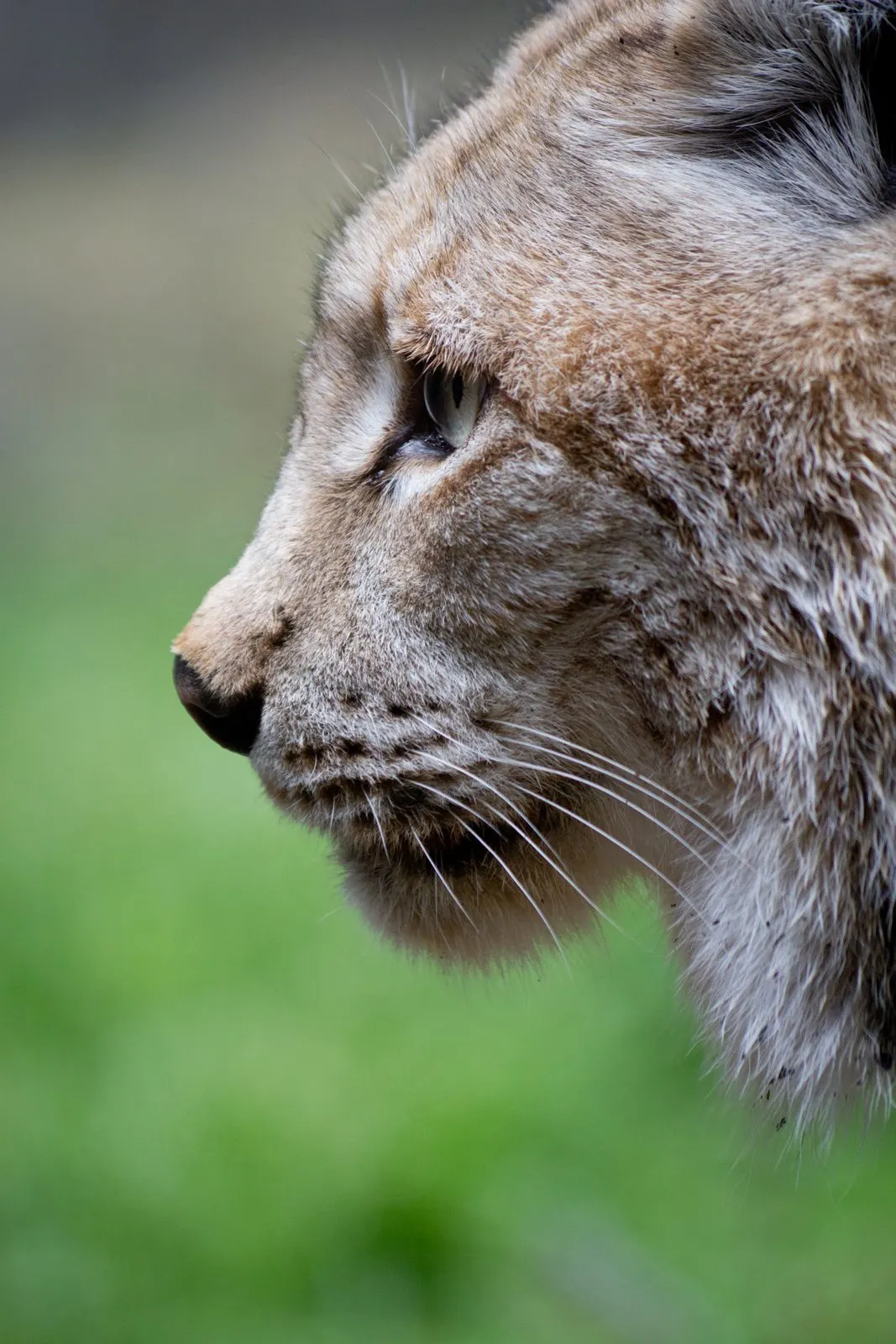 A Eurasian lynx standing in woodland
A Eurasian lynx in woodland. Credit: Carlos Delgado, Wikimedia Commons, CC BY-SA 3.0.
Why farmers and critics object
Opponents of reintroduction are unconvinced, and their objections go well beyond a dispute about statistics. Farming organisations argue that Britain's sheep systems are very different from those in much of continental Europe, with animals spread across large areas of open ground rather than kept in small protected groups or brought into secure enclosures at night. From that perspective, European evidence about low livestock losses does not guarantee a similar outcome in Britain.
NFU Scotland has said it fully supports the Scottish Government's position that there should be no reintroduction of lynx or other large carnivores in Scotland. It has warned of serious risks to livestock welfare, farm businesses and fragile rural communities, and has raised unanswered questions about who would bear the responsibility and cost if things went wrong. The union has also argued that discussions about compensation do not change its position, because any credible scheme would need to cover worst case scenarios, operate indefinitely, and reflect the real costs to farm businesses and animal welfare.
Critics also question whether lynx alone would solve the deer problem. Academic research on Scotland has noted that human hunting pressure is the main driver of red deer density, and that a reduction in deer density only occurred in some European studies when lynx, wolves and brown bears were present together. On that reading, lynx are unlikely to be a simple fix for overgrazing, even if they help at the margins.
There is a further concern about uncertainty itself. Reintroducing a predator after more than a millennium means relearning how to live alongside it, from fencing and livestock protection to monitoring, insurance and what happens when an animal strays beyond its expected range. Opponents say those practical questions have not been answered convincingly, and that the burden would fall on rural communities that did not ask for the experiment.
What happens next
The immediate effect of the judgment is clear: Lynx UK Trust's Kielder proposal cannot proceed on the legal basis the trust advanced. Whether the trust seeks permission to appeal, or whether it turns its attention to lobbying for a change in the law, remains to be seen. Campaigners have previously said they would take the fight as far as necessary, including to the Supreme Court, although that was said before this judgment and in the context of an earlier stage of the dispute.
The wider debate, meanwhile, continues on several fronts. The Lynx to Scotland partnership has held public consultations in the Highland and Moray regions about a possible Scottish reintroduction, and the Missing Lynx Project, run by Northumberland Wildlife Trust, has pursued its own interest in a Northumberland return. The Scottish Government has commissioned feasibility work in the past, concluding that a reintroduction could be biologically viable but that obstacles including public perception would need to be addressed first. No firm decision to proceed has been taken.
For conservationists, the judgment is a reminder that rewilding in Britain is as much a legal and political question as an ecological one. Species do not return simply because a habitat looks suitable or because a population exists elsewhere in Europe. They return only when the law allows it, when the government supports it, and when the communities who will live alongside them accept it. On all three tests, the lynx still has ground to make up.
The case also illustrates how slowly such decisions move. From the first Kielder proposal to a High Court judgment took the best part of a decade, involving two applications, a refusal to assess, and a full judicial review. Whatever the next step, it is unlikely to be quick. In the meantime, Kielder Forest remains a working forest of spruce and open moor, home to red squirrels, birds of prey and deer, but not, for now, to the wild cat that once hunted there.
Read more science coverage in our Science section, including the return of rare Manx shearwaters to the Isle of Canna, animals enjoying Halloween treats at London Zoo, and plans for an AI data centre in Canterbury. You can also visit our About page or return to the homepage.
The BBC's report on this ruling is available here: Wildlife body loses lynx High Court challenge. Other reporting includes the High Court judgment summary, Richard Buxton Solicitors on the full hearing, The Times on ministers blocking lynx and bison proposals, NFU Scotland's statement on lynx reintroduction, and insights from Europe on lynx reintroduction in Scotland.