The UK wants to be a leader in artificial intelligence, and it wants to reach net zero carbon emissions by 2050. Research by BBC File on 4 Investigates suggests those two ambitions may now be pulling in opposite directions, because the huge computing sites needed for AI also need huge amounts of electricity, and the grid cannot always deliver it fast enough.
The investigation found four planned hyperscale data centres are already considering gas-fired power to meet their electricity needs, a story covered in our Science section. Together, the BBC reported, they could create more carbon dioxide than the cities of Manchester, Liverpool and Southampton combined. The claim is striking, and it has sharpened a debate that has been building for months: how does Britain power its AI future without locking in the fossil fuels it is trying to leave behind?
The Budget deal that changed the rules
The story broke in the week after the Autumn Budget, delivered on Wednesday 28 October 2026 by Chancellor John Healey. In that speech, Healey launched a British Data Centre Covenant, a deal under which strategic data centres would get priority help with grid connections in return for meeting strict tests. Those tests cover investment in local communities, the creation of local jobs and the protection of local water supplies.
The covenant also opened a second door. Where a grid connection was not available, developers would be allowed to build power generation on site while they waited. Government documents describe that on-site generation as temporary and tightly controlled, and only for exceptionally strategic projects where other measures cannot secure a connection in time. For supporters, that flexibility is the point, and the wider Business case for AI investment is part of the argument. A data centre that cannot get power cannot open, and waiting years for a connection could push investment elsewhere.
For critics, the same flexibility is the problem. Once a gas plant is built, they argue, it is unlikely to sit idle. It will run, it will emit, and it may keep running long after the grid connection finally arrives. The question at the heart of the BBC investigation is not whether Britain needs data centres. It is whether a temporary fix becomes a permanent feature of the energy system.
Four sites, four long waits
The investigation named sites in different parts of the country, and each one tells a version of the same story about delay.
At Acre Slough, west of London, developers say they could use gas engines with a generating capacity of up to 49.5 megawatts while waiting for a National Grid connection. That wait, they expect, could last at least 10 years. The figure matters because 50 megawatts is a planning threshold, and a scheme just under it follows a different consent route. Nothing in the reporting suggests the engines are already running. The point is that gas is on the table as a bridging option.
At Wapsey's Wood, next to the M40 in Buckinghamshire, the scale is larger. A proposed 200-megawatt gas power station could operate until enough grid capacity becomes available, which is not currently expected until 2040. The wider project, known as the SDC M40 Campus, is planned as up to three hyperscale buildings, each drawing as much as 100 megawatts. Its own published answers say an energy centre of about 200 megawatts could be needed for up to around 15 years under one power supply scenario, while a second scenario would connect directly to existing high voltage lines and need no energy centre at all. The project says it is in talks with network operators to secure a grid connection as soon as possible.
A third example comes from Cardiff, where developer Curtis Hall has sought permission for a gas plant beside a proposed data centre campus. Reporting by Data Center Dynamics on the planning documents says the plant, with capacity of up to 49.9 megawatts, could start in July 2028 and run until a full grid connection arrives in July 2033. Curtis Hall has described the turbine plan as a worst case scenario for assessing emissions and noise, and says gas generation would not be the permanent power supply. If the connection arrives in time, the company says, the energy centre will not be needed at all.
The BBC investigation identified a fourth site as well, and said three of the four are in the south of England. The pattern across the sites is consistent. Developers are not choosing gas because they prefer it. They are considering it because grid connections can take many years, and a site without power has no business case.
A queue bigger than the country
The wider numbers explain why the queue has become a policy problem in its own right. Ofgem, the energy market regulator, says data centre developers are seeking connections totalling 72 gigawatts. Peak electricity demand across the whole country last year was 45 gigawatts. Not every application will be built, and not every connection request will turn into a working site. But the gap between what is being asked for and what the system currently handles at peak shows why ministers have moved to prioritise some projects and push others back.
The government confirmed on 28 October, in reporting by Computer Weekly, that it will prioritise strategic demand and align data centre connections with the wider grid plan, following a consultation that drew 156 responses. The response also sits alongside work by Ofgem on curbing speculative applications, including a proposed commitment fee for data centre developers. The aim, in the government's words, is to clear stagnant applications and direct scarce capacity toward projects judged critical for the economy and society.
There is also a target behind the urgency. The government estimates Britain will need 6 gigawatts of AI data centre capacity by 2030 to protect its national interest and keep secure access to AI models at home. Supporters of the covenant argue that without faster connections, that capacity will be built elsewhere, taking jobs and technical capability with it. The covenant is meant to answer that risk while asking developers to pay their fair share, so households and other businesses do not pick up the bill for growth they did not cause.
What the government says
The government response to the BBC findings was firm, as set out in Pinsent Masons analysis of the covenant. It said data centres are essential to Britain's economy, and that the new Data Centre Covenant sets clear expectations for developers to pay a fair share of the costs they impose on the energy system and to deliver benefits for local communities. The covenant's published tests go further, requiring credible commitments on grid capacity, security of supply, investment in clean power, responsible use of resources and support for a flexible and resilient energy system.
Ministers also point to the safeguards around on-site generation. It is presented as a last resort for exceptionally strategic sites, not a general permission for every developer to build a gas plant. A new Ministerial Control Centre, chaired by the Minister for AI, is meant to speed up planning and connections for strategic sites that meet the tests, using powers in the Planning and Infrastructure Act to reserve and reallocate capacity where other projects leave the queue.
That argument has some force. If the grid is the bottleneck, then speeding up the grid is the real answer, and on-site generation is only a bridge until the connection arrives. The difficulty is that bridges have a habit of lasting longer than planned, especially when they are built from expensive turbines that their owners will want to use.
What critics say
Labour MP Toby Perkins, who chairs the Environmental Audit Select Committee, in a debate followed by our Politics coverage, warned that a substantial increase in the use of natural gas cannot be the future for data centres. His committee has been examining the risks and opportunities of data centre growth in the UK, and its evidence sessions have heard warnings that demand could outpace clean energy rollout and prolong reliance on gas.
Local critics have been blunter. Buckinghamshire independent councillor Ed Gemmell, who also leads the Climate Party, described the Wapsey's Wood proposal as an environmental disaster for his area. Campaigners add a longer term warning. Gas turbines built to serve a data centre can have working lives of 20 to 25 years, which would carry them past 2050, the year the UK is legally required to reach net zero. A plant approved as temporary, they say, could still be burning gas in the target year itself.
The industry response is that data centres are also part of the clean energy story. They can provide flexibility to the grid, support the use of renewable power and spread fixed energy system costs across more users, which the government says could help lower the share paid by households. Some operators are also exploring hydrogen as a future fuel for on-site plants, although experts caution that low carbon hydrogen is not yet available at the scale or cost that would make a near term switch realistic. The Wapsey's Wood developers have pointed to a future conversion to hydrogen, while accepting that feasibility is more plausible later in the 2030s.
Why this matters beyond one sector
This is not only a story about computers, and it sits alongside Technology coverage of how AI is reshaping demand. Data centres sit at the junction of energy, planning, water and industrial policy, and decisions made now will shape the grid for decades. In constrained regions, a large new load can compete directly with housing, the electrification of transport and the decarbonisation of industry. That is why the debate has moved beyond the technology pages and into Budget speeches and parliamentary committees.
There are also questions of fairness. If developers jump the queue, other users may wait longer. If developers pay only part of the cost of new network capacity, bill payers may carry the rest. If local communities see a large building and a gas plant but few lasting jobs, consent for the next project will be harder to win. The covenant tries to address each of those points, but its tests will only matter if they are enforced, and if on-site generation really is temporary.
For now, the four sites identified by the BBC remain proposals and plans, not operating gas-fired data centres, as reported on veritynewspaper.com and in World energy debates. What the investigation has done is to make the trade off visible, a point readers can follow in our News section and on our About page for how we cover energy stories. Britain can build AI capacity quickly, or it can build it cleanly, but doing both at the same time will require grid connections to arrive far faster than they do today. Until that happens, gas will keep appearing in planning documents, and the net zero target will keep facing questions it cannot easily answer.
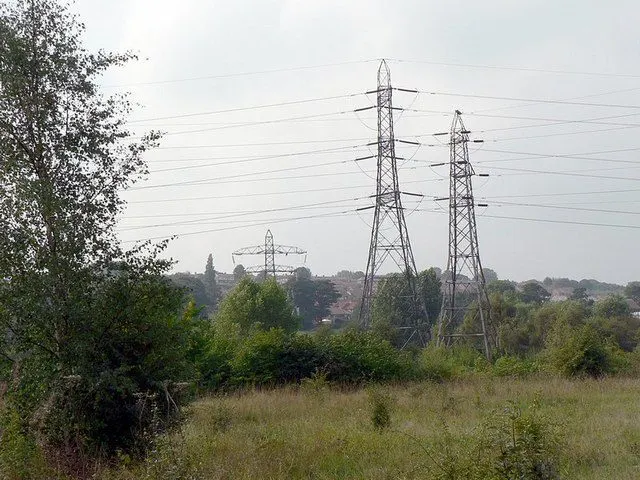 Electricity pylons carrying power lines across a valley in the UK
Credit: RichTea, Wikimedia Commons, CC BY-SA 2.0. Illustrative image of UK electricity infrastructure, not a named data centre site.