A scream in the dark, then a treasure
It was dark, and the survey team was working through the last stretch of ground on a tiny island off Mauritius. Entomologist Dr Max Tercel had already checked the other habitats on Ilot Vacoas that day. All that remained was a strip of coastal rock with sparse vegetation, not the sort of place where anyone expected to find something remarkable.
Then, searching crevices with a head torch, he saw a familiar pattern: a spider's legs extending from a burrow, something he had previously seen only in lush forests and grasslands. He called over his colleague Nik Cole, Mauritius country manager at Durrell Wildlife Conservation Trust, and the shout that followed has become part of the story. Cole later recalled that the thing he remembers most is Tercel screaming at him to come over because he had just seen a mygalomorph, a trapdoor spider.
That moment in 2023, reported by the BBC, has now led to the formal description of a new species: the Mauritian tidal trapdoor spider, Idioctis marevallum. The name marevallum comes from the Latin for sea wall, a fitting name for an animal that lives where the land meets the ocean. The discovery has been published in the journal Arachnology, in a study of the spider fauna of Mauritius by an international team of scientists, and it has been described by the researchers involved as like uncovering a hidden treasure.
For a one hectare island that takes only about 30 seconds to walk across, Ilot Vacoas has now produced a discovery with significance far beyond its size. It is a reminder that new species are not only found in remote rainforests or deep oceans. Sometimes they are hiding in a crack in a rock, in a place that survey teams have walked past for years.
A home that floods twice a day
What makes this spider extraordinary is not just that it is new to science, but where it lives and how it survives there. Most trapdoor spiders live on dry land. They dig burrows in soil and seal the entrance with a hinged door, waiting in ambush for prey to pass. The Mauritian tidal trapdoor spider breaks that rule completely.
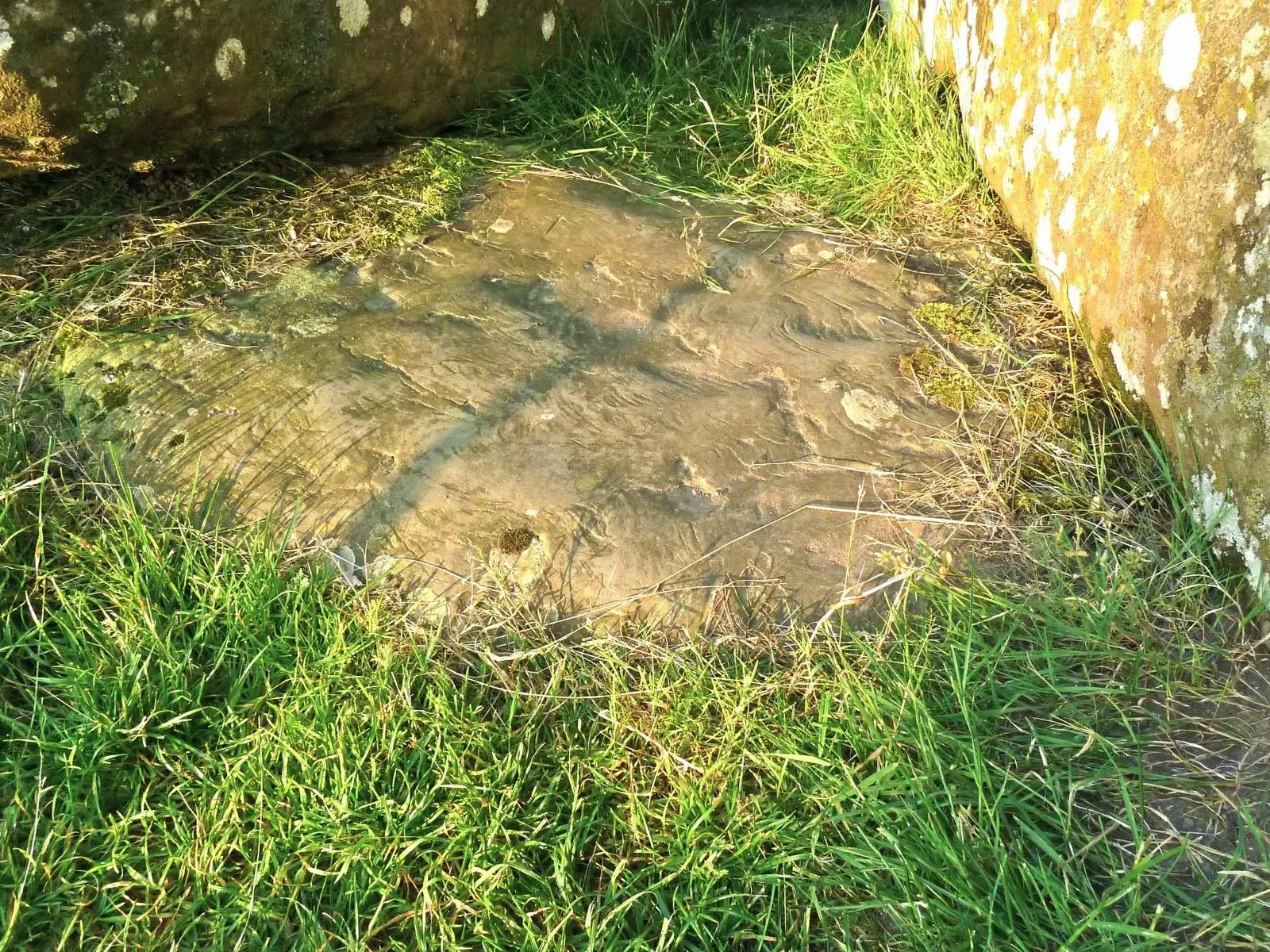
It lives in the intertidal zone, the band of shore that is exposed at low tide and covered at high tide. Its home is a tube in coralline bedrock, rock formed from algae, which is thought to have been created by molluscs and worms burrowing through it thousands of years ago. The spider does not dig its own burrow in the usual way. Instead, it moves into one of these ready made tubes and seals the entrance with a trapdoor made from silk, sand and algae.
That door has to do a remarkable job. At high tide the habitat is completely submerged and repeatedly battered by waves. The spider sits behind its camouflaged door while the sea covers its home, then emerges again when the tide falls. It is a way of life that sounds almost impossible for a land spider, and it is what left the discovery team completely stunned.
The species belongs to the mygalomorph group of spiders, the ancient lineage that includes tarantulas, and to the brush-footed trapdoor spider family, Barychelidae. Mygalomorphs are often large, long lived and slow to disperse, which makes them especially vulnerable when their habitat is damaged. A spider that lives only in one narrow band of rock on one small island is about as specialised as an animal can get, and that specialisation is both its marvel and its risk.
Readers of Verity Science may enjoy comparing this find with other recent wildlife stories, including the return of rare Manx shearwaters to the Isle of Canna and the work of conservation groups described in a wildlife body's court challenge. In each case, patient fieldwork in a small place has produced knowledge that changes how scientists understand a species.
How a new species is confirmed
Finding an unusual spider is only the first step. Confirming that it is a species new to science takes careful comparison, and the team on Ilot Vacoas knew they had to rule out a more ordinary explanation first. Using the island's patchy phone signal, they checked whether a trapdoor spider like this had ever been recorded in Mauritius before.
Their first thought was that they might have found Tigidia mauriciana, a trapdoor spider first described in 1892 and never seen again since. That possibility alone would have been exciting. Detailed study showed something better: the spider was not a rediscovery of a lost species, but a species that had never been described at all.
That conclusion matters for Mauritius. According to one summary of the research, the discovery has increased the known spider diversity of the island nation by more than 25 per cent, a striking figure for a single species description. It suggests that the invertebrate life of Mauritius and its offshore islands is still far from fully documented, even after decades of surveys, including night time reptile surveys on these islands.
The discovery was made as part of the Mauritius Island Restoration Programme, a partnership between Durrell Wildlife Conservation Trust, the Mauritian Wildlife Foundation and the National Parks and Conservation Service, with support from the Forestry Service. The programme works to restore island ecosystems that have suffered severe biodiversity loss, driven in part by habitat destruction and invasive species. Finding a new endemic species in the middle of that work underlines why island restoration matters: these small islands can hold animals found nowhere else on Earth, and losing them would mean losing that species entirely.
Durrell, based in Jersey, has a long history of work in Mauritius, including the famous recovery of the Mauritius kestrel and the pink pigeon. The spider adds a very different kind of animal to that story, an invertebrate that most visitors will never see, but whose existence tells scientists that the island's coastal rocks still hold secrets.
Why a spider in a rock matters
It is fair to ask why a spider that lives in a hole in a rock should matter to anyone who is not an arachnologist. There are several good answers, and none of them requires a love of spiders.
First, the discovery shows how much remains unknown about life on Earth, even in places that have been studied for years. If a new species can turn up on a one hectare island during a routine survey, after decades of night time work on nearby islands, then our maps of biodiversity are still incomplete. That incompleteness matters when decisions are made about which habitats to protect, because a place that looks empty may simply be under surveyed.
Second, the spider is an example of adaptation pushed to an extreme. Living in the intertidal zone means coping with salt water, wave force, temperature change and long periods underwater, all while hunting and reproducing. Understanding how its silk and sand door seals, and how the spider tolerates submersion, could interest researchers studying materials, physiology and the limits of life in harsh environments.
Third, the find is a warning as well as a celebration. A species confined to a narrow coastal band on a tiny island is exposed to sea level rise, stronger storms and coastal erosion, all of which are expected to intensify with climate change. Mauritius has already sustained significant biodiversity loss, and island species have nowhere to retreat when their habitat changes. Describing the species is the first step toward protecting it, because conservation law and management plans can only protect what is known to exist.
For those who want to follow more science and environment reporting, the Verity homepage and About page explain our approach, and our News section carries related coverage of conservation and climate issues around the world.
 A sandy beach and turquoise sea in Mauritius
Credit: Dennis Sylvester Hurd, CC0
The human side of discovery
There is also something deeply human about this story that is worth pausing on. Tercel has described the find as like uncovering a hidden treasure, and Cole has described it as incredibly exciting. Those are not the words of people performing wonder for an audience. They are the words of field scientists who spent a long day surveying, who nearly missed the last habitat of all, and who recognised in a dark crevice a pattern they had seen before in a completely different setting.
Field biology is often presented as a series of breakthroughs, but the reality is closer to this: long hours, small islands, patchy phone signal, head torches, and the discipline to check one more stretch of rock before packing up. The spider was found because the team finished the job properly, not because they were looking in an exotic location. That is a useful lesson for anyone who imagines that discovery belongs only to large expeditions with large budgets.
It is also a reminder that conservation programmes do more than protect the species they were set up to save. A programme designed to restore island ecosystems and protect reptiles and birds can also reveal a spider that no one knew existed. The value of keeping survey teams in the field, and of supporting the unglamorous work of cataloguing invertebrates, is written into stories like this one.
The Mauritian tidal trapdoor spider will probably never be a familiar animal. Few people will see it, and fewer still will visit its wave washed rock at low tide. But its formal description gives it a name, a place in science, and a chance of protection. From a scream in the dark on a tiny island, a hidden treasure has entered the scientific record, and the intertidal rocks of Mauritius are now known to hold one more remarkable resident than they did before.