It is the disease that emptied medieval cities, stalked the pages of history books, and — most people assumed — belonged firmly to the past. Yet this week, the death of a 28-year-old laboratory worker in Siberia has thrust plague back into the headlines, and with it, urgent questions about a disease most of us know only as a distant horror. The illness suspected in the Irkutsk case is pneumonic plague: the rarest, deadliest form of plague, and the only one that can leap directly from one person's lungs to another's.
So what exactly is it, how does it spread, and how worried should anyone be? Here is what the science says.
The three faces of plague
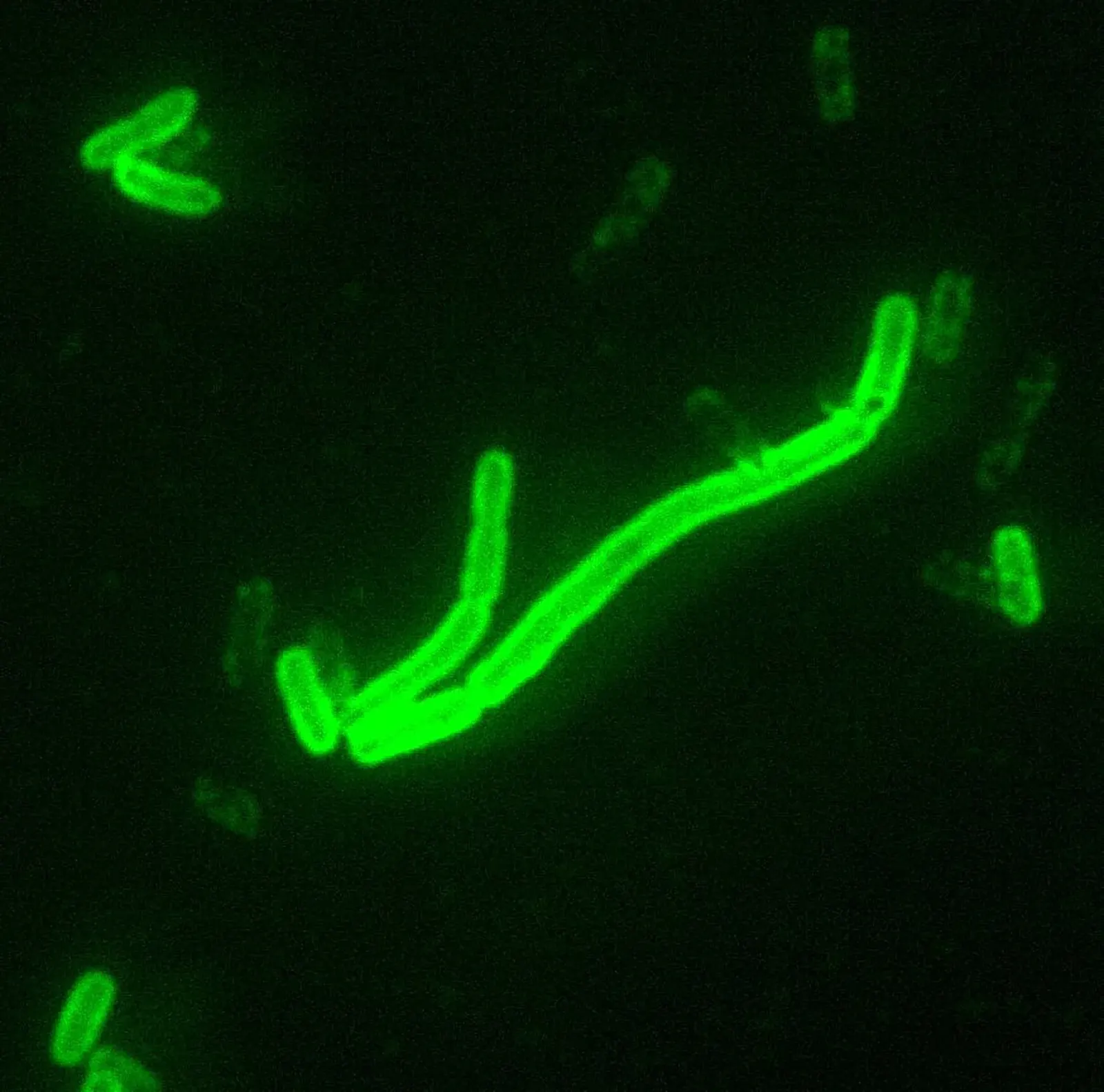
Plague is not one illness but three, all caused by the same bacterium: Yersinia pestis. The three forms differ in where the bacteria take hold in the body, and that difference shapes everything about how dangerous they are and how they travel.
Bubonic plague is the best known — the form behind the swollen, painful lumps called buboes that gave the "bubonic" its name. It attacks the lymph nodes and usually arrives via the bite of an infected flea. Septicaemic plague infects the bloodstream directly and can follow from untreated bubonic plague. Both are grave illnesses, but neither spreads easily between people.
Pneumonic plague is different. It occurs when Yersinia pestis invades the lungs. It can develop in two ways. Primary pneumonic plague happens when a person inhales the bacteria directly — breathing in infectious respiratory droplets from an infected person or animal, or, as investigators suspect in the Siberian case, inhaling bacteria accidentally released inside a laboratory. Secondary pneumonic plague occurs when untreated bubonic or septicaemic plague spreads through the bloodstream into the lungs.
According to the World Health Organization, pneumonic plague is the most virulent form of the disease and the only one that can pass directly from one person to another. That single fact is what separates a historical curiosity from a genuine public-health emergency: a disease that can move person to person, through the air, demands isolation, contact tracing and speed.
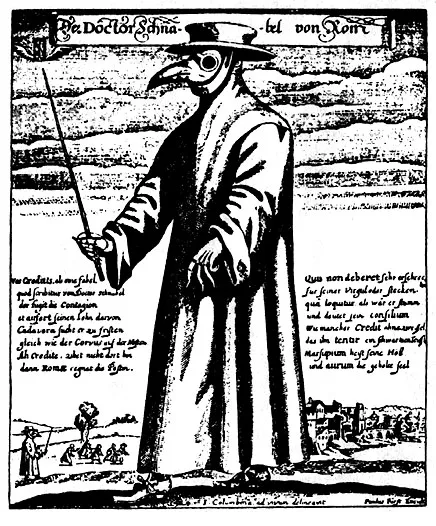 A 17th-century engraving of a plague doctor in the beaked mask worn during plague outbreaks
A 1656 engraving of a plague doctor in the protective beaked costume worn during plague epidemics — I. Columbina after Paul Fürst, public domain, via Wikimedia Commons
How it spreads
The route of transmission depends on the form of plague. Across all forms, the most common route of infection is the bite of an infected flea. People can also become infected after handling infected animals or their tissues — plague is a zoonotic disease, meaning it moves between animals and humans, and the bacteria live naturally in small mammals and their fleas.
Pneumonic plague adds a route the other forms lack: infectious respiratory droplets. When an infected person coughs, fine particles carrying Yersinia pestis can infect another person — particularly, experts stress, during close and sustained contact. Casual, passing contact is a far lower risk. This is why patients with suspected pneumonic plague are isolated and their close contacts monitored, which is exactly what Russian authorities have been doing in the Irkutsk region. The US Centers for Disease Control and Prevention recommends droplet precautions for such patients — the same agency whose outbreak investigations regularly put disease surveillance in the spotlight — while the WHO advises isolation and monitoring of contacts.
Importantly, being exposed to someone with ordinary pneumonia does not mean exposure to plague. The disease has to be caused by Y. pestis — and laboratory confirmation is what separates suspicion from a confirmed case.
Why it is so dangerous — and why speed saves lives
Pneumonic plague earns its fearsome reputation through pace. Its symptoms — shortness of breath, chest pain and coughing up blood — can escalate with terrifying speed. Left untreated, the disease is nearly always fatal.
But that is not the end of the story. Diagnosed early and treated promptly with antibiotics, pneumonic plague is survivable — and the odds improve enormously with every hour saved. High-risk contacts of patients are typically offered post-exposure preventive antibiotics, a standard public-health measure for diseases where the window between exposure and illness is short and the stakes are high.
The contrast with the Black Death is instructive. Scientists believe pneumonic plague was the main form behind the 14th-century pandemic that devastated Europe, the Middle East and Asia. What made that catastrophe unstoppable was not the bacteria's strength alone but the absence of everything we now take for granted: antibiotics, diagnostics, isolation protocols and organised contact tracing. The bacterium has not changed much in seven centuries. Medicine has.
Where the bacteria still lives
One reason plague never truly disappeared is that Yersinia pestis does not need humans. The bacterium persists in animal reservoirs — populations of wild rodents that carry it indefinitely. Professor Piero Olliaro of the University of Oxford notes that roughly 200 rodent species are capable of harbouring the bacteria, with reservoirs scattered across the Americas and Europe as well as Asia and Africa.
That ubiquity is why sporadic human cases continue to surface: in the western United States, in Madagascar, in parts of Central Asia. The Siberian wilderness itself is endemic territory for plague bacteria carried by local wildlife, though human infections there remain rare. The reservoirs mean eradication is not on the table; management and vigilance are.
Why laboratory science matters
The Siberian case is a grim reminder of why plague research exists in the first place. Dr Zania Stamataki of the University of Birmingham argues that laboratory work on Yersinia pestis remains vital: for developing reliable diagnostics, for advancing vaccine candidates, and for surveillance of antibiotic resistance — the creeping threat that some strains of the bacteria could become harder to treat.
That work is conducted in high-containment laboratories under strict protocols, precisely because the organism is so hazardous. When those protocols fail — as unconfirmed reports suggest may have happened in Irkutsk, where the 28-year-old worker is reported to have told medical staff she broke a test tube containing live plague bacteria while collecting samples on 25 September — the consequences can be fatal. Russian health authorities have not confirmed that account, describing her illness instead as pneumonia of unknown cause and saying tests did not detect pathogens linked to her work. The discrepancy between local media reports and official statements is one reason international agencies, including the WHO, have asked Moscow for more information.
The questions that remain
For now, there is no confirmed evidence of a wider outbreak. Around 200 people placed under medical observation in the Irkutsk region have shown no signs of illness, and initial test results have come back negative. The UK Health Security Agency has assessed the risk to Britain, and the consensus among international experts is that this is a contained, tragic incident rather than the start of an epidemic.
But the episode is a useful stress test of a timeless truth about pneumonic plague: it is the speed of recognition and response that decides everything. A disease that can kill within days of symptoms appearing leaves no margin for hesitation — which is why the world's health agencies are watching Siberia so closely, and why the science of Yersinia pestis, seven centuries after the Black Death, still matters.