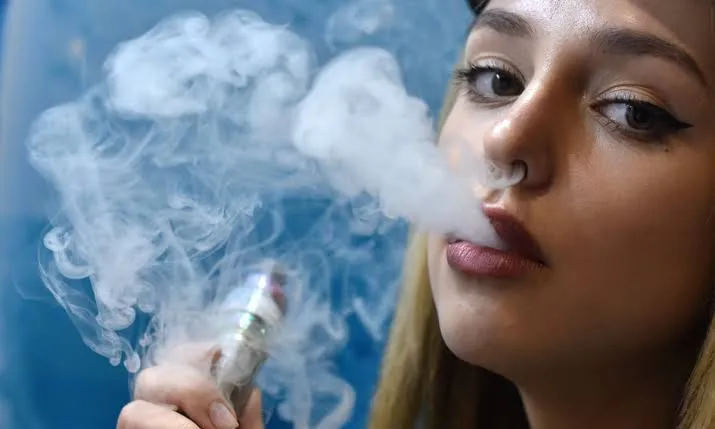
Doctors Warn of Growing Health Concerns Over Vaping Among Children
Doctors in the UK are calling for stronger measures to protect children and young people from vaping after a major review found concerning associations between e-cigarette use and several health problems.
The Royal College of Paediatrics and Child Health (RCPCH) reviewed around 81 studies examining the effects of vaping on children and young people.
The review suggests that vaping is associated with respiratory symptoms, nicotine dependence and several other health concerns.
Doctors are now urging policymakers to make vaping less attractive and accessible to children, including by considering restrictions on the flavours available in vape products.
The findings have added pressure on the UK government as it considers new rules covering the appearance, packaging and sale of vapes.
The RCPCH review examined research into health and social outcomes associated with vaping among children and young people.
Researchers found associations between vaping and several health issues, including:
- Poor oral and dental health
- Subsequent cigarette smoking
The review also identified evidence suggesting potential harm to babies when their mothers used vapes during pregnancy.
However, researchers stressed that vaping is relatively new and that more research is needed to understand its long-term effects.
Respiratory Health Is a Major Concern
One of the clearest areas of concern involves breathing and respiratory symptoms.
Professor Will Carroll, a co-author of the review, said the evidence showed clear links between vaping and respiratory symptoms as well as nicotine dependence.
For children and teenagers whose lungs are still developing, doctors say preventing unnecessary exposure to nicotine products should be a priority.
The RCPCH has warned against treating vaping as simply a normal part of growing up.
Dr Mike McKean, the college's vice-president for policy, said vaping remains relatively new and its long-term effects are not fully understood.
However, he said a concerning picture is emerging from the available evidence.
The organisation is calling for policymakers to keep pace with a rapidly changing vaping market.
Vaping Is Not the Same as Smoking
Health organisations also stress an important distinction.
Vaping is generally considered less harmful than smoking conventional cigarettes, particularly for existing smokers who switch away from combustible tobacco.
But this does not mean vaping is risk-free.
Action on Smoking and Health (ASH) has emphasised that vaping is less harmful than smoking but still carries health risks.
The public health message is therefore increasingly focused on preventing non-smokers, particularly children, from starting to vape.
One of the RCPCH's recommendations is to go beyond simply changing the names and descriptions of vape flavours.
The college wants the government to consider limiting the actual range of flavours available to young people.
Flavours such as fruit, sweets and soft drinks can make vaping appear more attractive to teenagers.
Doctors argue that restricting these products could reduce their appeal.
Packaging and Product Design Also Under Review
The UK government has already proposed restrictions on how vapes are packaged and displayed.
Under the proposals, vape packaging would face stricter rules around branding and appearance.
Flavour descriptions could also be simplified.
For example, instead of highly attractive product names, manufacturers could be restricted to basic descriptions such as "apple" or "cola".
The government is also considering requiring vape products to be kept out of sight in shops.
The latest medical review comes as the UK government is consulting on additional restrictions on vaping products.
A 12-week consultation launched in July focuses on the appearance, packaging and display of vapes.
The objective is to reduce the appeal of vaping products to children while maintaining their availability for adult smokers who may use them as part of an effort to quit.
The government has already taken several steps to regulate vaping.
The UK's Tobacco and Vapes Act establishes a framework for further restrictions on tobacco and nicotine products.
One of its major measures is the creation of what the government describes as a smoke-free generation.
Children aged 17 or younger are now affected by legislation that prevents retailers from legally selling cigarettes to people born after 1 January 2009.
The broader objective is to prevent future generations from becoming addicted to tobacco.
Why Vaping Creates a Policy Challenge
Vaping presents policymakers with a difficult balance.
On one hand, vaping can provide adult smokers with an alternative to traditional cigarettes.
On the other, nicotine products can introduce young people to addiction even if they have never smoked.
This means regulations need to reduce youth access and appeal without unnecessarily preventing adult smokers from using vaping as a smoking-cessation tool.
Data cited by Action on Smoking and Health indicates that almost one in five 11 to 17-year-olds in Britain have tried vaping.
The figure has increased concern among health organisations and policymakers.
Youth vaping has become a major public health issue because nicotine can be addictive, and teenagers may be particularly vulnerable to developing long-term dependence.
Nicotine Addiction Can Start Young
Doctors are particularly concerned about children becoming regular nicotine users.
Once dependence develops, stopping can become difficult.
Health experts therefore argue that preventing children from starting in the first place is preferable to trying to address nicotine dependence later.
Another concern highlighted by the review is the association between vaping and later cigarette smoking.
Researchers found evidence linking vaping among young people with subsequent cigarette use.
The relationship is complex and does not necessarily establish that vaping directly causes someone to begin smoking.
Nevertheless, the association is considered important enough for researchers and policymakers to monitor.
Why This Matters for Public Health
For decades, governments have attempted to reduce smoking rates.
If vaping becomes a pathway for some young people into nicotine dependence and eventually cigarette use, health officials fear that progress made against smoking could be undermined.
This is one reason youth vaping has become a central part of tobacco-control policy.
Several health organisations have supported stronger measures to prevent children from vaping.
Andrew McCracken of Asthma + Lung UK said vaping can have a role for existing smokers who are trying to quit.
However, he stressed that people who do not smoke should not vape, particularly children.
The Department of Health and Social Care also said children should never vape and pointed to the health risks identified by the new evidence.
The UK has already introduced a ban on single-use vapes.
The government says it is also legislating to restrict vape advertising and sponsorship from next year.
These measures form part of a broader effort to reduce youth exposure to nicotine products.
The latest consultation could add another layer of restrictions by changing how vaping products look, taste and are displayed.
Despite growing concern about youth vaping, public health experts continue to acknowledge that vaping may have a role in helping adult smokers move away from cigarettes.
This creates an important distinction in the debate.
A product can be less harmful than smoking while still being inappropriate for children and non-smokers.
The challenge for policymakers is therefore to design regulations that protect young people without eliminating a potentially useful smoking-cessation option for adults.
If the proposed measures are implemented, consumers could see significant changes in the way vaping products are marketed and sold.
Potential changes include:
- Plain or more restricted packaging
- Simpler flavour descriptions
- Restrictions on attractive product designs
- Vapes being kept out of sight in shops
- Further restrictions on advertising and sponsorship
- Potential limits on available flavours
The RCPCH is pushing for even stronger measures, including restrictions on the actual flavours available to children.
The UK government's consultation will allow health organisations, businesses and other stakeholders to respond to the proposed restrictions.
Officials will then consider the responses before deciding which measures should be introduced.
At the same time, researchers are likely to continue studying the long-term health effects of vaping.
Because e-cigarettes have not been used widely for as long as conventional cigarettes, some long-term consequences remain uncertain.
The latest evidence reinforces a growing concern among doctors: vaping should not be considered harmless simply because it is generally less dangerous than smoking.
For adults who already smoke, vaping may offer a lower-risk alternative.
For children who do not smoke, however, there is no comparable benefit.
The emerging evidence around respiratory symptoms, nicotine dependence and other health problems has prompted doctors to call for stronger protections.
The UK's next steps could influence how vaping products are designed, marketed and sold for years to come.
Verity