Twelve Bombers Gone in a Weekend
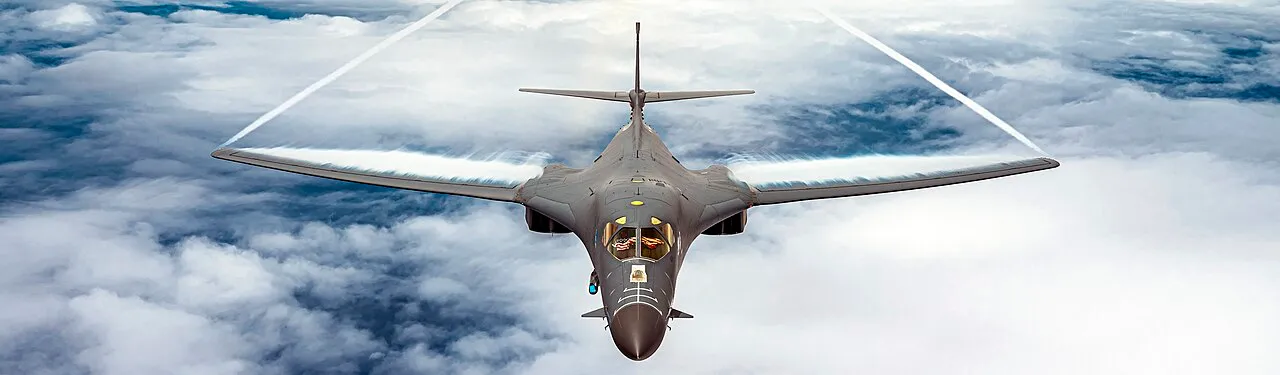
On Sunday, in a move that stunned military watchers on both sides of the Atlantic, America's heavy bombers withdrew en masse from RAF Fairford. Twelve B-1 Lancer bombers — the long-range workhorses of the US bombing campaign against Iran — lifted off from the Gloucestershire airfield and headed west across the Atlantic. The departure was so sudden that aerial refuelling tankers were still being organised to support their transatlantic flights as the bombers were already leaving. Read the BBC's original analysis.
For seven months, the B-1s had operated from Fairford, the US Air Force's only European airfield for heavy bombers, about 100 miles west of London. Their abrupt removal raises an unavoidable question: what prompted Washington to empty its most important European bomber base overnight? See our News coverage of the wider counter-terror investigation.
The Arrests That Changed Everything
The withdrawal followed a sequence of events that has put British counter-terror police on their highest alert. On 27 September, a major incident was declared when five British men were arrested near the base in the early hours of the morning; they were later released on bail. Then, at the weekend, a 25-year-old UK-Iranian dual national was arrested in London on suspicion of preparation of terrorist acts — the seventh arrest connected to the Fairford investigation. Reporting by The Japan Times, citing US and British officials, describes a suspected Iranian plot to strike the aircraft and kill some of the several hundred American personnel stationed at the base, possibly modelled on Ukraine's audacious Operation Spiderweb drone attack on Russian airfields in 2025.
British Prime Minister Andy Burnham has said there are "strong indications" linking the suspected plot to Iran. Tehran has denied any involvement, with Foreign Minister Abbas Araghchi accusing Western authorities of "barking up the wrong tree". The UK government has been more guarded in public: Downing Street insisted Fairford remained safe and secure, and pointed to £470 million in British defence investment at the site. Our Politics section covers the Burnham government's handling of the crisis.
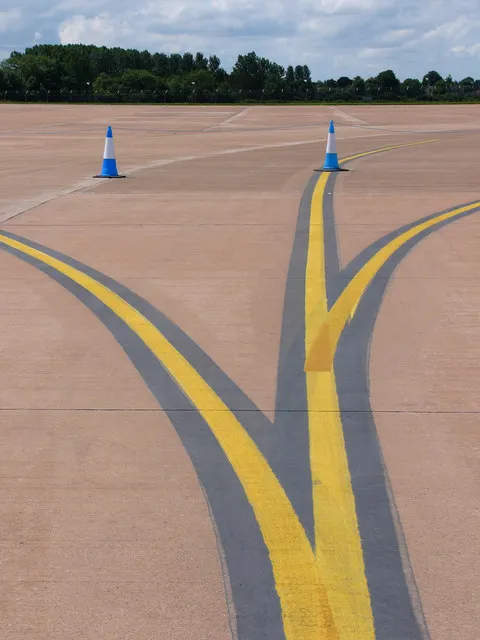 RAF Fairford perimeter
The perimeter of RAF Fairford in Gloucestershire — the USAF's only European airfield for heavy bombers. (Chris Gunns / Geograph / Wikimedia Commons, CC BY-SA 2.0)
"An Abundance of Caution" — or Panic?
Vice-President JD Vance framed the withdrawal as prudence. Speaking to reporters at Joint Base Andrews, he said the Pentagon moved the bombers "out of an abundance of caution", adding that Washington felt "with some confidence" that Iran was plotting attacks against the United States. "We are being extremely cautious," he said. Not everyone was so charitable: as security correspondent Frank Gardner noted, some observers called it "an abundance of panic".
President Trump was blunter. Asked why the bombers had gone, he said the US had moved them "because of 'some threats' to the base", adding: "There were some threats. Why should we leave them there? … Why should we tempt the enemy?" Trump said Washington knew who had made the threat. Secretary of State Marco Rubio, notably, was more restrained — describing the move as a routine rotation and declining to tie it directly to the suspected Iranian plot. The Week's analysis of the differing signals from Washington and London is worth reading.
What is almost certain, as Gardner observes, is that a fresh piece of intelligence drove the decision. Militaries do not empty a forward bomber base on a whim, and they certainly do not scramble tankers mid-departure without a reason. British officials speak of "an ongoing high tempo" of threats from Iran — a reminder that the Fairford incident is part of a wider pattern, not an isolated scare. Our World section tracks the Iran conflict in depth.
Why Fairford Was So Exposed
To understand the stakes, consider what was sitting on that runway. Each B-1 costs around $330 million. The Lancer carries up to 34 tonnes of ordnance — the largest conventional payload in the US arsenal — making it the ideal platform for sustained strikes against hardened Iranian facilities, ballistic missile sites and air defence networks. Twelve of them, parked together on an English airfield, represented both formidable striking power and an irresistible target.
The danger was not theoretical. In late March, Iran struck Prince Sultan Air Base in Saudi Arabia, destroying an E-3 Sentry Awacs aircraft worth more than half a billion dollars — a devastating demonstration that American assets in the region are within reach. And back in July, Tehran had explicitly warned that any country hosting a US bomber facility would be considered a legitimate target. The bombers at Fairford had been used in operations against Iran; the Iranian threat was pointed at them by name.
Seen in that light, the withdrawal was the prudent move. As General Sir Richard Barrons told the BBC: "I don't know what the threat was but the most prudent thing to do would be to remove them." No commander leaves $4 billion of bombers — and several hundred personnel — within range of a suspected plot once credible intelligence arrives.
An Embarrassing Retreat, However Prudent
And yet prudence has a cost. The withdrawal is, as Gardner's analysis concludes, an embarrassment — and one that Tehran has achieved without firing a shot. Without a European launchpad, the US Air Force must fly longer sorties from the American mainland or from distant alternatives such as Diego Garcia in the Indian Ocean, which offers strong security but lies far from the target. Missions run longer, crews tire, and reliance on aerial refuelling grows. The tempo of the bombing campaign slows accordingly.
Gulf bases would cut transit times, but their hosts — wary of Iranian counterstrikes and wider escalation — remain reluctant to allow offensive American sorties from their soil. US officials insist the country can deploy bombers from elsewhere and keep up the pressure. That may be true in the long run. But in the short term, Iran has demonstrated that it can shape American military posture from 4,500 kilometres away — a capability that will not have gone unnoticed in Moscow, Beijing or Pyongyang.
The Fairford withdrawal is also a strain on the Anglo-American alliance. London's insistence that the base is safe sits uneasily alongside Washington's decision to empty it — a gap between two capitals reading the same threat differently. Britain has narrowed the base's role, limiting American use to defensive strikes, and now finds its most important military guest packing its bags mid-campaign. Our Opinion section carries more analysis of transatlantic tensions.
For now, the bombers are home. The question Gardner poses — what prompted them to leave? — has an answer that is simultaneously simple and unsettling: a threat credible enough to move twelve bombers overnight, in a war where the enemy has shown it can reach across continents. Follow this story on our homepage.