Cameras back on the streets of three Suffolk towns
Suffolk Police will bring live facial recognition cameras back to the streets of three towns next week, in the latest deployment of a technology that the force says helps keep people safe and that critics say needs close public scrutiny. The camera van, borrowed from Bedfordshire Police, is due in Lowestoft on 3 November, Bury St Edmunds on 4 November and Ipswich on 5 November.
The announcement follows an August deployment across the same three towns, covered by the BBC, in which the system scanned 80,000 faces and contributed to four arrests. Suffolk Police say the technology compares passers-by with a police watch list of people officers want to speak to in connection with investigations, and that images of anyone not on the list are deleted immediately. Officers review any potential match before deciding whether to take further action.
Suffolk police and crime commissioner Tim Passmore has been an enthusiastic supporter of the technology. He said the cameras had huge potential to bring criminals to justice and prevent crime, and that anything that keeps Suffolk safe has his full support. Sergeant Anthony Welford said the system helped the force use its resources more effectively, freeing officers from time-consuming searches so they can focus on other work.
The deployments are part of a wider pattern of live facial recognition use across England. Suffolk has now trialled the technology several times, and each deployment has produced arrest figures that the force points to as evidence that it works. Each deployment has also renewed the debate about privacy, accuracy and oversight, a debate that will follow the van from town to town next week.
How the system works
Live facial recognition, often shortened to LFR, works by scanning the faces of people who walk past a camera and comparing them in real time with a watch list held by police. If the system flags a possible match, an officer reviews the match and decides whether the person is the one police are looking for. If there is no match, the force says the image is deleted within seconds, and faces are blurred in less than a second when they are not matched.
Police are legally required to tell the public in advance when they plan to use live facial recognition. That requirement follows a 2020 Court of Appeal ruling that covert use of the technology breaches the European Convention on Human Rights. Deployments must be advertised beforehand, with signage placed outside the scanning area, and each use must be authorised in writing by a senior officer. Suffolk's deployments are authorised at superintendent level or above, under a policy that requires the use to be necessary and proportionate.
The force's own live facial recognition policy describes the process in detail. Officers must consider the quality of both the watch list images and the live camera images, since poor quality on either side increases the risk of a false match. A possible match is never treated as proof of identity on its own. It is presented to an officer, who weighs the system information, the circumstances and their own judgement before deciding whether to engage with the person.
For readers interested in how technology is changing policing, the Suffolk deployments offer a concrete example. The technology is no longer experimental in the force's eyes. It is a tool it reaches for repeatedly, borrowed from neighbouring forces while it builds its own capability, and deployed at festivals, in town centres and on busy shopping streets.
A record of trials in Suffolk
Suffolk's experience with live facial recognition began in earnest in February 2025, when a six-hour trial in Ipswich town centre scanned more than 47,000 faces in the Cornhill area and led to five arrests. Those arrested included people wanted for failing to appear in court and for shop theft, and the force said around 400 members of the public stopped to talk to officers about the technology during the day. The equipment for that trial was borrowed from Essex Police.
The technology returned for Lowestoft's First Light Festival, held in June this year and last year. At this year's festival, Suffolk Police reported scanning more than 100,308 faces and generating two confirmed alerts, one of which resulted in an arrest. A later force summary, in its summer results round-up, put the festival deployment at three arrests, for theft and domestic assault cases, with engagement from more than 200 people in the town centre. The difference between the two accounts reflects the way arrest figures are counted at different stages of an operation, and it is a reminder that headline numbers from live operations can shift as cases are processed.
In August, the van visited all three towns again, this time borrowed from Surrey Police under a Home Office-funded programme that provided Surrey and Sussex Police with two facial recognition vans. That deployment scanned 80,000 faces and led to four arrests, according to the Digital Watch Observatory. A separate September account of the Ipswich leg, reported by Ipswich.co.uk, reported two arrests from 27,531 faces scanned in that town alone, one in connection with an outstanding domestic violence assault and another for breach of a Sexual Harm Prevention Order. The force said it was encouraging that members of the public approached officers in Ipswich to ask how the system worked.
Taken together, the figures tell a consistent story from the force's point of view. Large numbers of faces are scanned, a small number of alerts are generated, and a handful of arrests follow. Supporters argue that this is exactly the point: the system sifts through crowds quickly so officers do not have to, and it finds people who might otherwise have walked past unnoticed. Critics argue that the ratio of faces scanned to arrests made shows how many innocent people have their biometric data processed for each person the police actually want.
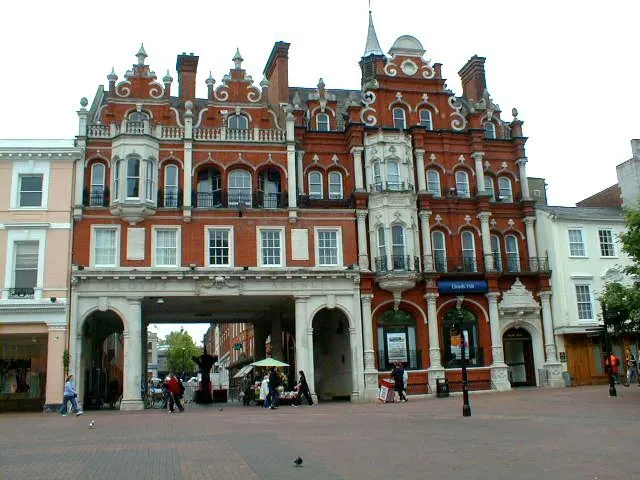 The Cornhill area of Ipswich town centre, where facial recognition was trialled in February 2025
Credit: michael wade, via Wikimedia Commons, CC BY-SA 2.0.
The privacy debate
The privacy argument against live facial recognition rests on a simple claim: that scanning the faces of everyone in a public place, even briefly, is a significant intrusion, and that it should not become routine without clear legal safeguards and independent oversight. Campaigners have pointed to research showing that facial recognition systems can perform less accurately for women and for people from ethnic minority backgrounds, raising concerns about discrimination. Surrey Police, which lent Suffolk its van in August, has acknowledged historical concerns about bias and says officers are briefed about potential disparities relating to race, age and gender.
Police forces respond that the safeguards are real and improving. They point to the requirement for senior authorisation, advance publicity, signage, immediate deletion of non-matches and human review of every alert. They also argue that the alternative is not the absence of surveillance, since town centres are already covered by CCTV, but a slower and less targeted form of policing. From the force's perspective, a system that deletes a non-matching face in under a second is less intrusive than an officer stopping and questioning people at random.
The legal position remains contested. The 2020 Court of Appeal ruling that shaped the current rules concerned South Wales Police, and it found that the force's use of the technology had not been properly governed at the time. It did not ban live facial recognition outright, and forces have since built detailed policies around authorisation, watch list composition and data handling. Whether those policies are enough is a question that continues to be tested by campaigners, lawyers and Parliament, and each new deployment adds to the evidence on both sides.
For the wider debate about technology and civil liberties, Suffolk is a useful case study precisely because it is not London. The Metropolitan Police has used live facial recognition extensively, but Suffolk's smaller deployments, in market towns and at a seaside festival, show how the technology is spreading to everyday policing across the country. The decisions made in Ipswich, Lowestoft and Bury St Edmunds next week will be watched by other forces weighing up their own deployments.
What to expect next week
The practical details for next week are straightforward. The van will be in Lowestoft on Tuesday 3 November, Bury St Edmunds on Wednesday 4 November and Ipswich on Thursday 5 November. Members of the public in the scanning areas should see signage explaining that live facial recognition is in use, and officers will be on hand to answer questions. The force has previously encouraged people to look inside the van and see the system in action, and it reported that most people who did so during the February trial were receptive and positive, with only a couple of exceptions.
Sgt Welford's comment about resources points to the operational logic behind the deployment. Suffolk, like other forces, has to cover large areas with limited staff, and a system that can flag wanted people in a crowd is attractive when officers cannot be everywhere at once. The force will publish its own assessment of next week's deployments in due course, and the arrest figures, if any, will be added to a growing record that supporters and critics will each read in their own way.
The longer question is whether live facial recognition becomes a permanent fixture of policing in Suffolk, or remains an occasional tool borrowed from neighbours for specific operations. The force has said it is optimistic about using the technology again in future, and the commissioner has given it his full backing. For now, the van's route next week is the next step in that direction, and the people of three Suffolk towns will be the first to see it.
More stories on policing and technology can be found on the homepage, and background on the site is on the about page. The news section carries the latest UK stories, and the world section follows similar debates in other countries.