A deadly night over Russia's second city
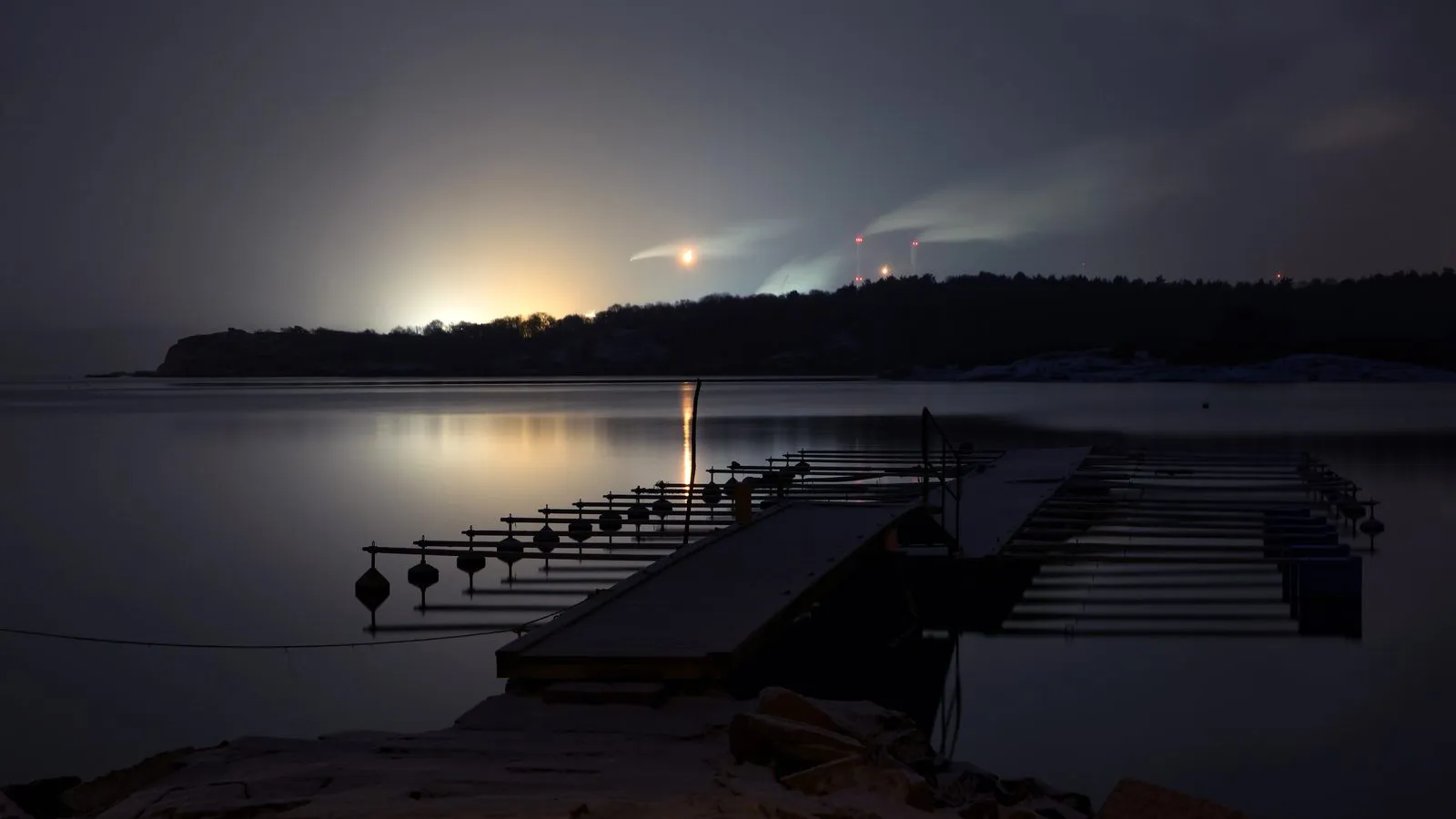
Russia's second city woke on Sunday to burning oil facilities, damaged homes and closed airport runways after one of the most damaging drone attacks on St Petersburg of the war. The overnight strikes, which began late on Saturday and continued into the early hours of Sunday, killed at least one person and injured at least five others, according to the city governor, and set two major oil facilities ablaze.
Governor Alexander Beglov said fires had broken out at the St Petersburg Oil Terminal and the Ruchyi oil depot after what he described as a "massive" drone attack, with emergency crews still working to bring the blazes under control on Sunday morning, the BBC reported. Beyond the energy targets, the governor said 12 apartment buildings and two private homes were damaged, and warned residents that disruption to mobile internet was possible while the attack continued.
The strike was not confined to fuel infrastructure. E-commerce giant Ozon confirmed that one of its logistics centres had been hit and caught fire; the company said staff were evacuated, no one was hurt, and it had temporarily stopped accepting shipments at the site. VK, Russia's largest domestic social media company, confirmed that a drone had targeted its regional data centre, though it said its services were operating as usual.
W.carter / Wikimedia Commons (CC0)
Moscow's claim of more than 1,000 drones downed
The scale claimed by Russia's defence ministry was extraordinary. The ministry said its forces had destroyed 1,015 Ukrainian drones overnight across 15 Russian regions, the annexed Crimean peninsula and the Black Sea — one of the largest single-night aerial barrages of the conflict, according to the Daily Sabah's reporting. Moscow's mayor, Sergey Sobyanin, separately reported that 512 drones had been heading toward the Moscow region, most of which he said were destroyed before reaching the capital.
Such figures cannot be independently confirmed, and Russia's defence ministry has a history of overstating interception rates. But even allowing for exaggeration, the volume of activity described by Russian officials — spanning from the Baltic to the Black Sea — points to an operation of unusual breadth. The Leningrad region governor, Alexander Drozdenko, said nearly 150 drones had been shot down over his region alone, a figure that is likewise unverified.
According to reporting by Radio Free Europe/Radio Liberty, summarised by Ukraine Brief, one drone struck a cable-stayed bridge on the Western High-Speed Diameter, the toll highway linking northern and southern St Petersburg, though the extent of the damage was still being assessed on Sunday.
Residents caught in the fallout
For residents, the attack brought the war uncomfortably close. In the Leningrad region surrounding the city, Drozdenko said four people had been hospitalised, drone debris had fallen on an apartment building in Gatchina, and 55 parked vehicles were damaged in the settlement of Novosyolye, A News reported. An emergency power outage affected 50 apartment buildings, leaving about 20,000 people without electricity, he said. Two transformer substations in Yanino were reportedly shut down.
Pulkovo Airport, St Petersburg's international gateway, temporarily suspended operations during the attack — a standard precaution that Russian authorities have repeatedly taken as Ukrainian drones have ranged deeper into Russian territory. St Petersburg had been hit before — its oil terminal was last targeted in July — but the combination of energy infrastructure, a major e-commerce logistics hub and a data centre in a single night marks a distinct and deliberate target set.
Ukraine had not publicly commented on the strikes at the time of initial reporting, maintaining its usual policy of ambiguity toward operations inside Russia. That silence itself has become a source of friction with Washington, as explored in our World news coverage.
The energy ceasefire row that frames it all
The St Petersburg attack cannot be separated from the diplomatic storm that preceded it. On 11 October, US President Donald Trump announced that Russia and Ukraine had agreed to an "energy ceasefire" in the four-and-a-half-year-old war — though he offered no details, and Kyiv reported continued Russian attacks on its energy sites afterwards.
Ukraine initially paused its strikes on Russian oil facilities for three days, describing the move as intended to limit Moscow's primary revenue source for its military operations. But it resumed the campaign on Thursday, drawing sharp criticism from Trump, who called the strikes a "disgrace" and said Kyiv's attacks on Russian refineries were driving up fuel prices — a charge he used to justify his controversial deal to import diesel from Russia, as the Brussels Reporter detailed.
Ukrainian President Volodymyr Zelensky pushed back hard. On Saturday, he said Russia had struck Ukraine's energy sector 76 times in the week since Trump's ceasefire announcement, and accused Moscow of trying to cause a blackout in Ukraine ahead of winter. As our earlier reporting on Zelensky's clash with Trump over the strikes detailed, the Ukrainian leader insists Kyiv will not give up one of its few effective tools of pressure while Russia keeps hitting Ukrainian cities.
On Sunday, Zelensky said he had spoken with Trump's negotiators Steve Witkoff and Jared Kushner — a sign that back-channel diplomacy continues even as the energy war escalates.
Winter looms over the energy war
The timing is no coincidence. Both sides are racing to degrade the other's energy infrastructure before the cold sets in. Zelensky said Russia launched nearly 2,700 drones, 1,700 aerial bombs and 66 missiles against Ukraine in the past week, with tens of thousands of people left without power. On the same night as the St Petersburg strikes, Russian attacks on the southern Ukrainian city of Zaporizhzhia killed a woman and wounded at least two more people, including a six-year-old girl, local officials said — a grim echo of the strikes covered in our reporting on the earlier Zaporizhzhia attacks.
The logic on both sides is brutally symmetrical. Ukraine's strikes on Russian refineries and depots aim to squeeze the oil revenues that fund Moscow's war machine and to bring the economic pain of the war home to Russian consumers. Russia's strikes on Ukrainian power plants aim to break civilian morale and industrial capacity as heating demand surges. Energy analysts at the International Energy Agency have repeatedly warned that energy infrastructure has become a central theatre of the war, while the US Energy Information Administration tracks the market effects of disrupted Russian fuel exports.
For St Petersburg — a city that had largely escaped the war's physical destruction — Sunday's fires are a reminder of how far the conflict has spread from the front lines. Whether the overnight barrage was a one-off demonstration or the start of a sustained campaign against the northwest's fuel infrastructure will determine how this winter unfolds.
What to watch next
Three questions will shape the coming days. First, whether Kyiv claims or distances itself from the operation, and how Washington responds — Trump has already shown he is willing to publicly rebuke Ukraine over strikes on Russian oil. Second, whether the damage to the St Petersburg terminal, a significant export facility, tightens regional fuel markets; the recent G7 emergency fuel release discussions show how sensitive Western governments are to price spikes. And third, whether Russia retaliates with a fresh wave against Ukrainian energy targets — a pattern, tracked in our politics coverage, that has repeated through every phase of this energy war.