In Short (TL;DR)- Russia attacked Zaporizhzhia with five guided glide bombs on Saturday morning, hitting residential buildings; at least 15 people were killed, including three children, and 16 injured.
- Acting Mayor Regina Kharchenko said a ground floor was struck and the floors above collapsed; more than 80 rescue workers were searching the rubble, pausing regularly to listen for survivors.
- President Zelensky said 13 other regions of Ukraine were also attacked overnight and tied the strike to the easing of sanctions on Russian diesel exports.
- The attack follows a deadly week: a strike on buses killed more than 30 people on Thursday, and a missile attack on Pryluky on 7 October killed 22, including five children.
- The UN has reported that civilian casualties in Ukraine jumped 55% in the first eight months of 2026, according to the BBC.
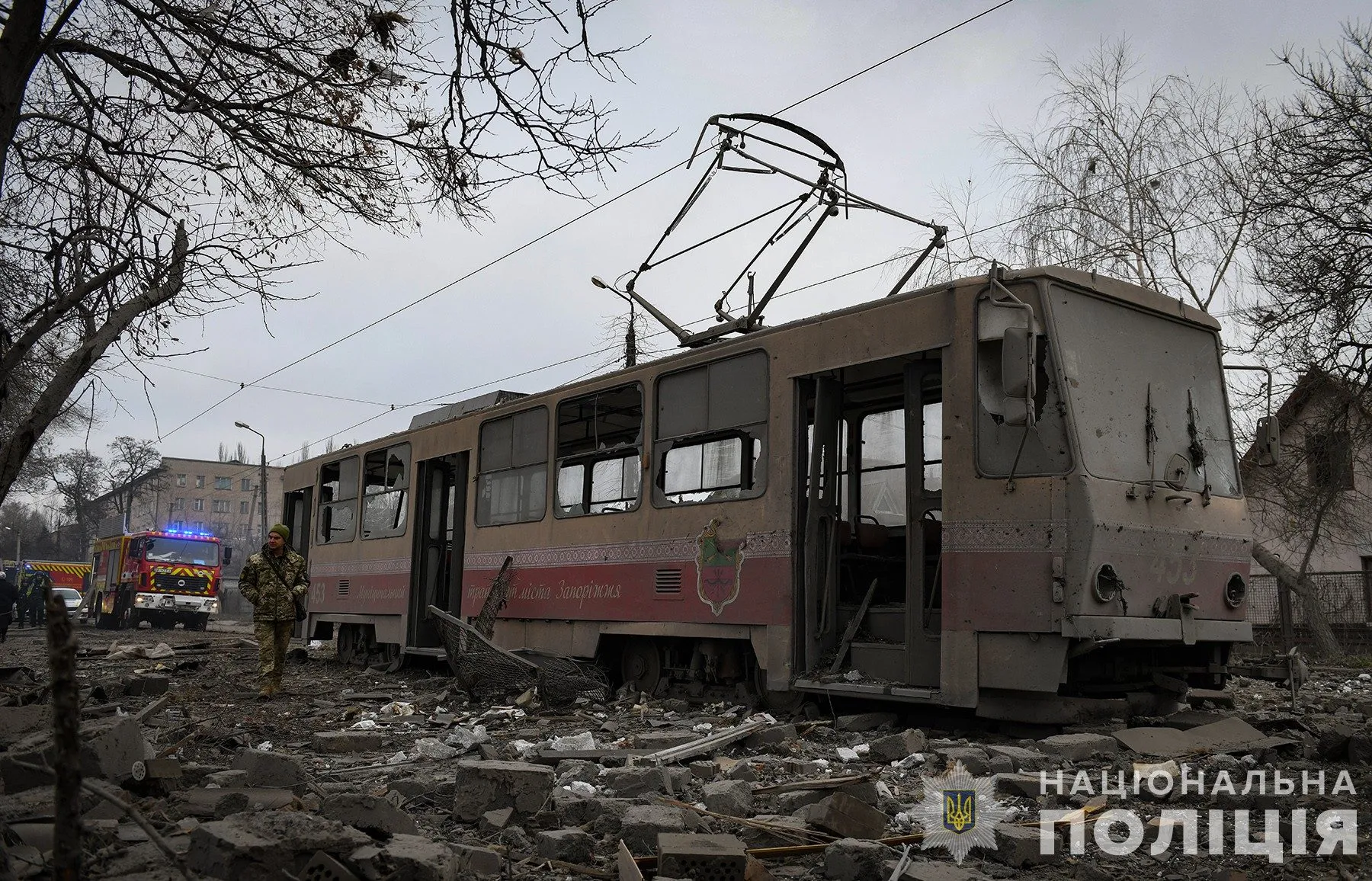
Five Russian glide bombs slammed into residential buildings in the southeastern Ukrainian city of Zaporizhzhia on Saturday morning, killing at least 15 people — including three children — and wounding 16 more in one of the deadliest single strikes on the city in recent months. Rescue workers spent the day picking through collapsed concrete and twisted metal, pausing at regular intervals to listen for any sound from survivors trapped beneath the rubble.
The attack, which struck in the morning when families were at home, reduced sections of apartment blocks to ruins. Photographs from the scene showed a residential building with its facade torn away, floors pancaked onto one another and debris scattered across the street. Ukraine's State Emergency Service said search and rescue operations were continuing through the day, with the fate of around a dozen more people still being established.
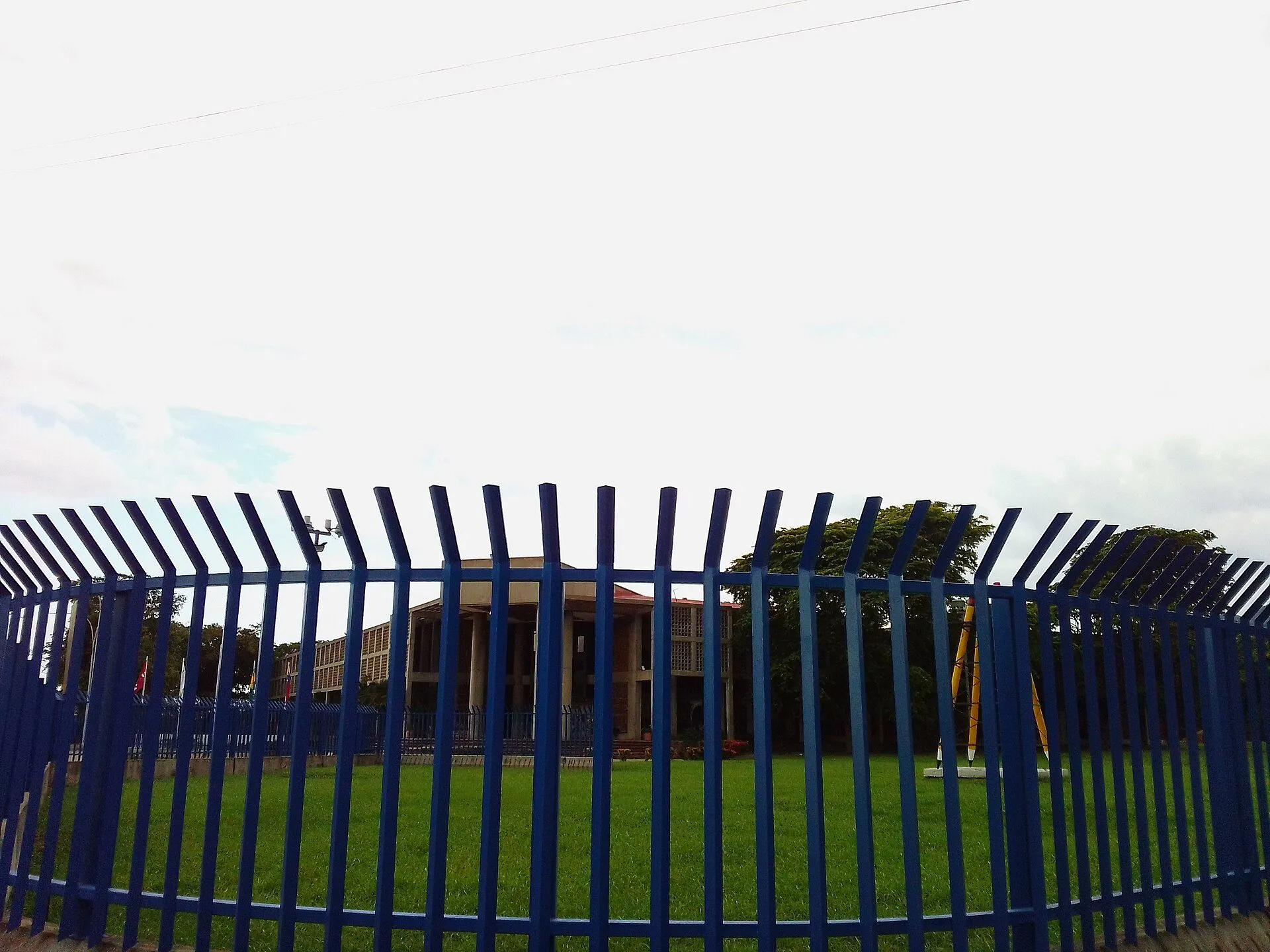
!The Zaporizhzhia city administration building in peacetime
Credit: Zaporizhzhia, a regional centre of more than 700,000 people less than 10 miles from the front line. Photo: Brücke-Osteuropa (public domain via Wikimedia Commons).
Acting Mayor Regina Kharchenko, speaking from the scene on Ukrainian television, described the mechanics of the destruction in stark terms. "The ground floor was hit, and the floors above just collapsed," she said — a description that explains the grim arithmetic of the casualties. When lower floors give way, upper storeys drop vertically, compressing the living spaces between them and leaving little survivable void for those inside.
Kharchenko said more than 80 rescue workers were involved in the operation, which was expected to continue throughout the day. Rescuers repeatedly stopped their machinery to listen for noises from beneath the debris — the standard, agonising protocol of urban search and rescue, where heavy equipment must fall silent so that faint cries or tapping can be heard. She said Russia had struck at "our very heart" and spoke of the grief felt by families across the city.
President Volodymyr Zelensky, writing on social media, said the bombs had fallen on residential buildings and confirmed that children were among the dead. "My condolences to their families and loved ones," he wrote, adding that doctors were fighting for the lives of the seriously injured. He said information was still being gathered about another 12 people who may have been at the site when the bombs fell.
The Zaporizhzhia strike was not an isolated event. Zelensky said 13 other regions of Ukraine had also come under attack overnight, with residential buildings, infrastructure and railway facilities damaged across the country. "Our responses to these] Russian strikes will come," he added — a signal that Ukraine intends to answer the bombardment, as it has done with its own long-range strikes on Russian military and energy targets. Verity has followed the week's escalation closely, from the [deadly strike on buses in Kramatorsk to Russian drones hitting Kyiv's bridges.
The breadth of the overnight assault points to a coordinated Russian air campaign rather than an opportunistic strike. In recent months both Russia and Ukraine have intensified attacks on infrastructure, and Ukrainian cities have faced a growing tempo of daytime strikes. Al Jazeera's correspondent in Kyiv noted that glide bombs and jet-powered drones are increasingly hitting targets during daylight hours, when streets are full — a shift that has made everyday life in frontline cities markedly more dangerous.
Zaporizhzhia's geography makes it especially exposed. The city of more than 700,000 people sits less than 10 miles (16 km) from the front line, well within range of Russian glide bombs, artillery and drones. It has endured repeated strikes throughout the full-scale invasion, and its residents live with air raid alerts as a daily routine.
In an unusually pointed political framing, Zelensky linked Saturday's attack directly to a diplomatic development in Washington. The strikes came just hours after US President Donald Trump announced a deal to import Russian diesel into the United States — a move that effectively eases economic pressure on Moscow.
"Today, Russia expressed its thanks for the lifting of sanctions on diesel exports by dropping five glide bombs on residential buildings in Zaporizhzhia," Zelensky wrote. He called the American diesel arrangement a gift to Russian President Vladimir Putin, describing it as "an investment in a war that must be ended, not prolonged."
The Ukrainian president has repeatedly argued that Moscow interprets any relaxation of sanctions as permission to escalate. "Russia interprets any easing of pressure as a signal" to continue its aggression, he said, insisting that Russia must feel the costs of the war for it to stop. The diesel deal, announced amid soaring US fuel prices ahead of the midterms, has already drawn criticism from Kyiv as undermining the sanctions regime — and Saturday's carnage gave Zelensky a devastating illustration for his argument. The fuel debate connects to Verity's earlier coverage of Trump's diesel plan.
The timing is politically awkward for Washington. The Trump administration has cast the diesel imports as a pragmatic response to domestic fuel costs, but images of collapsed apartment blocks in Zaporizhzhia landing on the same news cycle will make that case harder to sustain — at least in the court of international opinion.
Saturday's strike caps a week in which Ukrainian civilians have been killed in sickening numbers. Earlier in the week, a glide bomb hit a bus stop, killing 30 people, according to Al Jazeera's reporting from Kyiv. And on the morning of 7 October, Russian forces launched missile strikes on Pryluky in the Chernihiv region; one missile hit a five-storey residential building, destroying two entrances of the apartment block. The death toll from that strike rose to 22 people, including five children, with another 54 injured, seven of them children.
The pattern — residential buildings, transport stops, daytime hours — fits a broader and deeply troubling trend. The United Nations has reported that civilian casualties in Ukraine jumped 55% in the first eight months of 2026, according to the BBC, a statistic that captures in a single number the war's accelerating toll on non-combatants. Each week's headlines add new entries to that ledger: apartment blocks in Zaporizhzhia, buses in Kramatorsk, a five-storey block in Pryluky.
For the residents of Zaporizhzhia, statistics offer no comfort. The city declared 11 October a day of mourning for those killed in Saturday's attack, according to Ukrainian media. Rescue workers managed to pull at least one woman alive from the rubble after she had been trapped for more than eight hours — a rare moment of hope in a day defined by loss.
Military analysts have long noted that Russia's glide-bomb campaign serves a dual purpose: it terrorises the civilian population of frontline cities, and it systematically degrades Ukraine's urban infrastructure ahead of any ground operations. Zaporizhzhia, as a major logistics and administrative hub near the southern front, is a perennial target — but strikes of this scale on purely residential buildings underline how little distinction is being drawn between military and civilian objectives.
The attack also highlights the limits of Ukraine's air defences against glide bombs, which are released from Russian aircraft operating safely behind the front line and are difficult to intercept once in flight. Western-supplied air defence systems have blunted Russia's cruise missile and drone campaigns, but the cheap, plentiful glide bomb remains one of Moscow's most effective — and most indiscriminate — weapons.
Diplomatically, the strike lands at a delicate moment. The US has said it held talks with European and Ukrainian officials aimed at securing a lasting peace before winter approaches, with American officials describing the discussions as "productive". But as long as Russian bombs keep falling on apartment blocks — and as long as each easing of economic pressure is met, in Zelensky's telling, with escalation — the gap between diplomatic process and battlefield reality will remain brutally wide.
For the families of Zaporizhzhia, the geopolitics are secondary. What matters is the silence between the rescue workers' shouts, the hope of a sound from under the concrete, and the knowledge that in a city less than 10 miles from the front, tomorrow could bring the same horror again. Follow Verity's world coverage, return to the homepage, or read our about page.