In Short (TL;DR)- James Deller, head of the Metropolitan Police's volunteer Special Constabulary, was dismissed at an accelerated misconduct hearing on Friday.
- Investigators used lawful business monitoring and Palantir's AI-powered Foundry system during a week-long "Project Galatasaray" anti-corruption operation.
- In July and August 2025, Deller photographed two intimate images sent via WhatsApp's "view once" feature on his police phone, copied them to a personal device, then deleted them.
- He has been added to the College of Policing's barred list, permanently ineligible to serve as a police officer.
- The case renews scrutiny of Palantir's controversial UK contracts — the firm is suing MOPAC over a blocked £50m Met deal.
James Deller was one of the most senior volunteers in British policing. As Special Chief Officer, he led the Metropolitan Police's Special Constabulary — the thousands of volunteer officers who give up their spare time to patrol London's streets. On Friday, his career in policing ended at an accelerated misconduct hearing after investigators found he had used his police-issued phone to photograph intimate images of a woman that had been sent to his personal phone.
The misconduct was uncovered during Project Galatasaray, a week-long operation using advanced technology to hunt for professional misconduct and corruption within the Met. Investigators used lawful business monitoring of police devices alongside Palantir's Foundry system — a data-analysis platform that applies artificial intelligence — to surface the evidence, according to the BBC's report, with further details carried by PA Media.
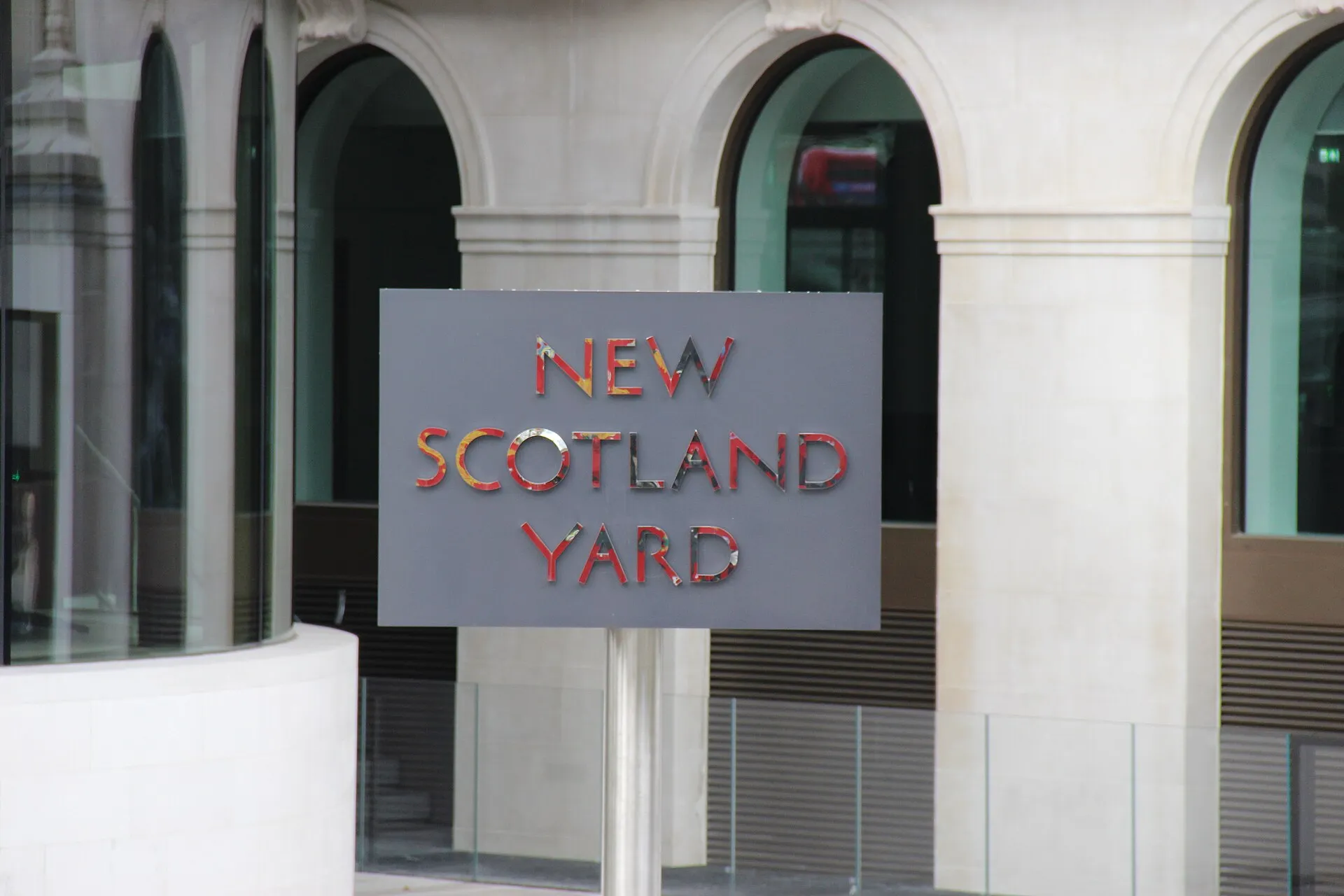
!The New Scotland Yard sign outside the Metropolitan Police headquarters in London.
Credit: The sign outside New Scotland Yard. Image: Gary Todd, CC0, via Wikimedia Commons.
What the investigators found, covering conduct in July and August 2025, was a calculated workaround. The woman had sent Deller two intimate images using WhatsApp's "view once" feature, which is designed to make photos disappear after they are opened. Deller used his work phone to photograph the images, sent the copies back to his personal device, and then deleted them from the police phone — an apparent attempt to keep the copies without leaving a trace on the device that carried them. The monitoring tools found them anyway.
The Met's response was swift and unsparing. Commander Pete Stevens said the volunteers of the Special Constabulary "deserve to be led by people who demonstrate the highest standards in all parts of their lives", adding: "SCO Deller failed to meet that bar," Classic FM reported. He said Deller's conduct amounted to an abuse of the trust placed in him, and that it was right he could no longer serve in policing.
Deller will be added to the College of Policing's barred list, meaning he is permanently ineligible to serve as a police officer anywhere in England and Wales. The accelerated misconduct hearing — the fast-track process used when the evidence is considered clear-cut — removed him from his post on Friday.
The case is striking partly because of who Deller was: not a rank-and-file officer but the national figurehead of the volunteer constabulary, a leader whose authority rested on the credibility he has now lost. It is also striking because of how he was caught: not by a complaint, but by a deliberate, technology-driven trawl through the force's own devices.
The dismissal has thrust Palantir's role in UK public life back into the spotlight. The US software company, founded by tech investor Peter Thiel, supplies data platforms to the NHS, the Ministry of Defence and other public bodies — and its relationship with the Met has been particularly contentious.
Earlier this year, the Mayor's Office for Policing and Crime (MOPAC) blocked a £50 million two-year contract between the Met and Palantir, a decision the company has described as unlawful. Palantir is now suing MOPAC over the blocked deal. Former Labour deputy leader Tom Watson has since joined the company, adding a political dimension to its UK operations.
Palantir's defenders argue that tools like Foundry simply make better use of data that organisations already hold — in this case, the Met's own lawful business monitoring of its issued devices. The Deller case is, from that perspective, a proof of concept: a week-long, AI-assisted sweep caught misconduct by the force's most senior volunteer, exactly the kind of hidden abuse that manual oversight tends to miss.
Critics, however, see a different picture: a foreign tech giant with deep intelligence-community roots embedding itself ever further into British public institutions, at a time when the capital's own policing oversight body tried to block its latest contract. The fact that the company's tools work as advertised does not, for its detractors, settle the question of whether they should be there at all. The episode also lands amid wider European unease about powerful AI systems — Italy has moved to protect its prime minister's voice from AI deepfakes.
Anti-corruption operations in policing are usually reactive: a complaint arrives, an investigation follows. Project Galatasaray was proactive — a time-limited, technology-enabled sweep designed to find misconduct that nobody had reported. Its success in the Deller case will strengthen the hand of those inside the Met who argue for continuous, intelligence-led monitoring of police devices and data.
That shift has implications beyond one disgraced officer. The Met has spent years trying to rebuild public confidence after a series of scandals involving officers who abused their positions. Each case feeds the same corrosive question: if the force cannot police itself, who will? An operation that demonstrates the force can, in fact, catch its own — even its most senior volunteer — is a small but meaningful answer.
The use of AI-driven analysis in that effort is also a sign of where professional-standards policing is heading. The same week Philadelphia police disclosed that a rogue AI agent had filed a false murder tip with them, London's force showed the other side of the coin: AI systems being used not to deceive institutions, but to hold their own people to account.
Deller's name will now sit on the College of Policing's barred list alongside officers dismissed for the most serious misconduct. The Special Constabulary will need a new leader, and the Met will need to reassure thousands of volunteers that the standards expected of them are standards their leaders actually meet. The force's own account of the case is published by the Metropolitan Police.
Meanwhile, the Palantir lawsuit against MOPAC continues, and the political argument over the company's place in British public services is unlikely to cool. This week's events hand both sides ammunition: supporters can point to a genuine abuse of position uncovered by Foundry; opponents can argue that the episode shows how dependent British institutions are becoming on a single controversial vendor.
One thing is not in dispute: two intimate images, photographed from a disappearing message and copied between phones, ended a policing career — and the technology that found them is now part of the story of British policing itself.
For more on AI and accountability, see our reporting on the Pentagon's break with Anthropic's AI tools, OpenAI's dismissal of three researchers over mishandled information and Ofcom's investigation into Meta's safety practices. All of our technology coverage is collected on the Technology page.