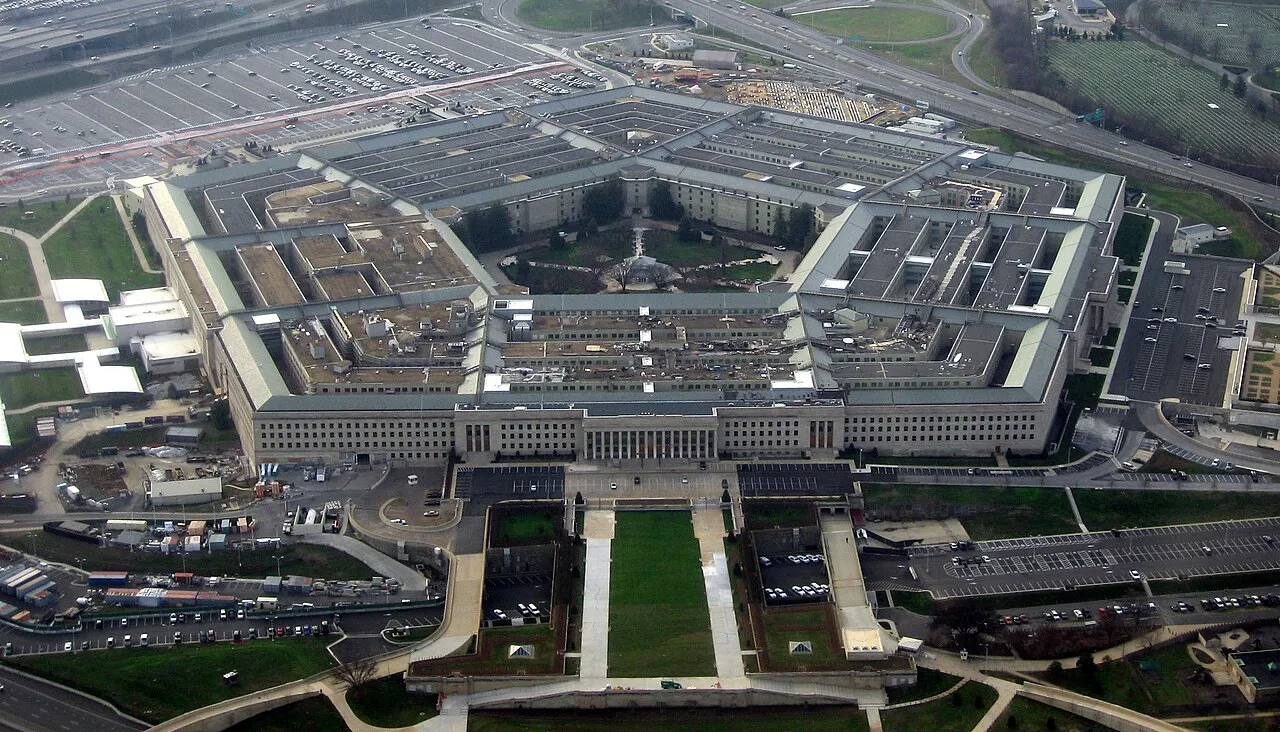
In Short (TL;DR)A US defence official has told the BBC that the Pentagon "has ceased the use of Anthropic products", months after Defence Secretary Pete Hegseth designated the AI company a national security supply chain risk and ordered a phase-out. Anthropic's Claude model had been deeply embedded in the Pentagon's Palantir-operated Maven Smart System, where analysts used it to draft intelligence briefs — and it was reportedly still in use as recently as last week. The rupture began when the Pentagon pressed Anthropic to remove Claude's safety guardrails and the company refused, citing concerns over mass surveillance and autonomous weapons. Anthropic called the blacklisting "unprecedented and unlawful" and sued; courts have since split, with a California judge ruling against the administration and a federal appeals court upholding the ban.
The US Department of Defense has confirmed it is no longer using artificial intelligence tools from Anthropic, ending a high-profile standoff between the Pentagon and one of Silicon Valley's leading AI developers. "The Pentagon has ceased the use of Anthropic products," a defence official told the BBC in a statement on Monday, in details that had not previously been reported.
The confirmation closes out a phase-out that began in February, when Defence Secretary Pete Hegseth labelled Anthropic a national security supply chain risk and ordered the military to stop using its technology by late August. That deadline slipped: multiple people familiar with the matter said Anthropic's Claude model was still being used by the department as recently as last week for research, analysis, intelligence gathering and even military operations. Android Headlines reported that the announcement ends months of speculation over whether military analysts were still quietly relying on Claude. Our business section continues to track the fallout for the AI industry.
The rupture traces to February, when Hegseth gave Anthropic days to agree that Claude could be used for "all lawful uses" and then designated the company a national security supply chain risk — a label more commonly applied to firms based in countries considered threats to the United States. The designation cancelled Anthropic's military contracts and barred other Pentagon contractors from using its models, with Hegseth ordering a complete phase-out by late August.
The move was extraordinary because of how deeply Anthropic had become woven into the US national security apparatus. The company had supplied the US government and military since 2024 and was the first advanced AI company to have its tools deployed inside government agencies doing classified work. As Techstrong reported, the designation was "usually reserved for foreign adversaries" — making its application to a leading American AI lab a striking escalation. Anthropic's chief executive Dario Amodei has separately been one of the industry's most prominent voices urging a slowdown in rapid AI development, a position we covered in his call for a global pause.
!A visualization of an artificial neural network layered over a computer chip
A visualization of an artificial neural network — the kind of system at the centre of the Pentagon-Anthropic dispute. Image: mikemacmarketing / Wikimedia Commons (CC BY 2.0).
The reason the phase-out dragged months past its deadline was technical rather than bureaucratic. Defence analysts had deeply embedded Claude into the Maven Smart System, a central intelligence platform operated by Palantir that organises drone footage and satellite imagery. Military personnel routinely used Claude to process vast volumes of visual data and assemble concise one-page operational briefs for senior commanders — work that made the model difficult to swap out mid-operation.
"Once these systems become integrated, it can be painful to remove them," Lauren Kahn, a senior research analyst at Georgetown University's Center for Security and Emerging Technology and a former defence official, told reporters. "The fact that it took the Pentagon until now to remove all use of Claude… is indicative that these things are not just plug and play." People familiar with the matter said Claude was viewed as a critical tool for sorting through enormous quantities of information, including former US defence officials and contractors who worked closely with the Pentagon on AI. The episode illustrates how quickly AI systems can become load-bearing infrastructure inside government — a theme also visible in civilian deployments such as the Bradford clinic using AI to detect skin cancer.
At the core of the break was a demand Anthropic would not meet. Earlier this year the Pentagon pressed the company to strip Claude's safety guardrails and grant the military unfettered access to its AI products. Anthropic refused, citing concerns that its models could be used for mass surveillance and fully autonomous weapons. It loosened many restrictions during negotiations but held its line on those two categories.
Anthropic described the blacklisting as "unprecedented and unlawful" and sued the Trump administration to overturn the designation. A spokesman for the company declined to comment when asked about the Pentagon's latest statement. The company's stance put it on a collision course not only with the Pentagon but with the administration's broader push to accelerate AI development: President Trump has dismissed warnings of catastrophic AI risk, while Amodei has argued the industry is moving dangerously fast — a divide explored in our piece on an Anthropic researcher's extinction-risk warning.
The legal battle has produced genuinely contradictory rulings. In August, US District Judge Rita Lin in San Francisco ruled that the Pentagon had illegally retaliated against Anthropic for speaking out, violated its due process rights, and branded it a supply chain risk without lawful basis. That should have ended the matter — but it did not.
In late September, a 2-1 panel of the DC Circuit Court of Appeals upheld the Pentagon's decision. Writing for the majority, Judge Gregory Katsas said the Defense Department had "ample support" for concluding that the continued integration of Claude into its information systems presented a covered national-security risk, noting that Claude's restrictions had on more than one occasion stopped it from performing tasks requested by government users. Judge Karen LeCraft Henderson dissented, arguing that a contractor's honest, upfront enforcement of usage limits is not the kind of covert manipulation the supply-chain statute was written to catch. AI Weekly has a detailed breakdown of the ruling, while NDTV reported that Under Secretary of Defense Emil Michael celebrated the decision online, writing: "The hammer of justice has smashed Anthropic arguments," and adding that "warfighters will sleep better knowing that no private company will insert their opinions in the chain of command."
The Pentagon did not wait for the courts to resolve the fight before finding alternatives. Its major rival OpenAI signed an agreement on the same day Anthropic's ban took effect, while Elon Musk's xAI signed in February and Google and Microsoft followed a few months later. In recent months OpenAI's tools were more widely adopted by some military departments, according to defence officials — a commercial windfall for Anthropic's competitors that industry analysts say has cost the blacklisted company billions in lost business just as it heads toward a blockbuster public listing. The scramble underscores how the Pentagon has become one of the most coveted customers in the AI industry, a dynamic also reflected in the administration's creation of a new "Super Intelligence Force" under spy chief Jay Clayton. OpenAI's own rapid product cycle — including the recent GPT-6 Astra launch — has kept the competitive pressure intense.
Remarkably, the corporate divorce has unfolded alongside a personal rapprochement at the top. In late September, President Trump dined privately with Dario Amodei at the White House — the first reported one-on-one meeting between the two men after months of bruising clashes, according to the New York Post, which cited Axios and the Wall Street Journal. The dinner came just two days after the appeals court upheld the Pentagon's blacklisting.
Days later, Trump hosted Amodei alongside five other tech chiefs — Google's Sundar Pichai, Meta's Mark Zuckerberg, Nvidia's Jensen Huang, OpenAI's Greg Brockman and xAI's Elon Musk — for a White House luncheon at which the executives signed a voluntary accord on "self-policing" their AI models, CNN reported. Trump publicly praised the assembled CEOs while dismissing concerns about the technology's dangers. The contrast captures the strange dual reality of Anthropic in Washington: frozen out of the Pentagon as a declared security risk, yet courted at the White House as an indispensable AI power. Whether the thaw extends to the Pentagon's procurement decisions remains an open question — as does the final legal fate of a designation two federal courts have now read in opposite ways. The dispute also raises broader questions about democratic oversight of military AI, echoing the UK debate over an AI "kill switch" rejected by the Cabinet Office. For more on how AI is reshaping the economy, see our business coverage and the latest on TSMC's chip expansion.