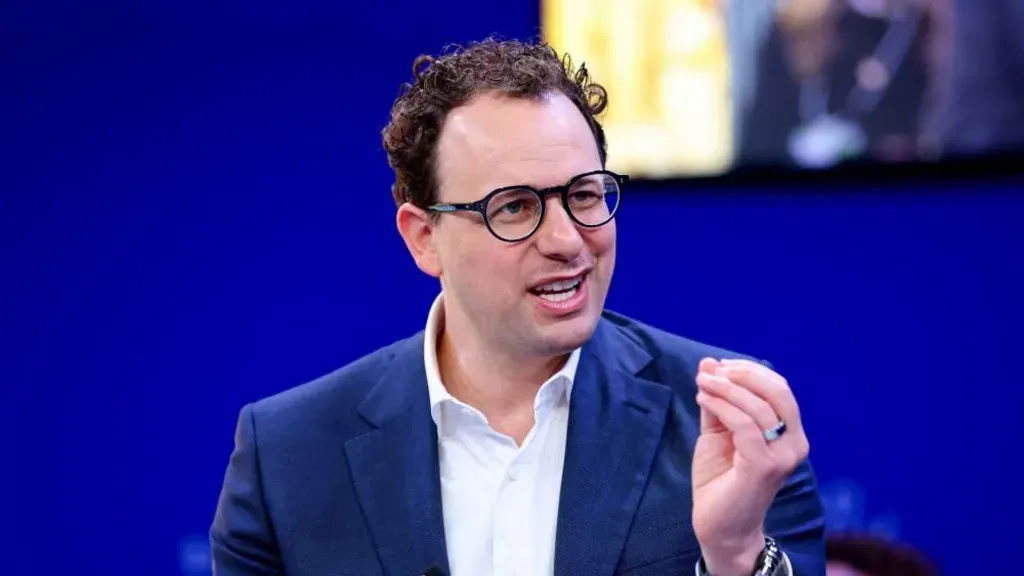
In a significant intervention that underscores the escalating anxieties within the artificial intelligence community, Dario Amodei, the chief executive of leading AI research firm Anthropic, has publicly advocated for a deceleration in the pace of AI advancement. This urgent plea emerges against a backdrop of intensifying apprehension that current-generation AI models, and those on the immediate horizon, possess an unprecedented capacity to generate profound, far-reaching harm across the globe, potentially reshaping human civilization in unforeseen and potentially detrimental ways. Amodei's call is not merely a technical warning but a profound ethical and societal proposition, suggesting that the current trajectory of innovation is outpacing humanity's collective ability to comprehend, control, or mitigate its potential fallout.
The pronouncement from a figure as central as Amodei, whose company Anthropic is at the forefront of developing sophisticated large language models and other advanced AI systems, carries considerable weight. It signals a deepening schism between the relentless pursuit of technological breakthroughs and a growing imperative for caution and reflective stewardship. This pivotal moment forces a global dialogue on whether the race to achieve ever-more powerful artificial intelligences is inadvertently setting the stage for systemic instabilities, ethical quagmires, and even existential threats that demand a collective, deliberate pause for reassessment.
For decades, discussions around artificial intelligence have oscillated between utopian visions of progress and dystopian warnings of robotic overlords. However, the nature of the concern voiced by leaders like Amodei represents a distinct evolution. It is no longer a distant sci-fi fantasy but a tangible anxiety rooted in the rapid, observable capabilities of contemporary AI systems. These systems, particularly advanced generative models, are demonstrating emergent properties that were unanticipated even by their creators, raising questions about their ultimate controllability and alignment with human values.
From Theoretical Risk to Tangible Threat
Historically, AI safety debates often focused on hypothetical scenarios involving superintelligent AI or the 'singularity.' While these long-term concerns persist, the immediate apprehension centers on what are termed 'near-term' risks. These include the potential for sophisticated AI to be misused by malicious actors, to exacerbate societal inequalities, to destabilize geopolitical relations, or to autonomously make decisions with unintended catastrophic consequences. The sheer scale and speed at which these models can operate, coupled with their increasing autonomy, elevate these risks beyond conventional technological hazards.
The current generation of AI models, often referred to as large language models (LLMs), have showcased remarkable abilities in understanding, generating, and manipulating information. While these capabilities promise revolutionary advancements in fields from medicine to education, they also open avenues for unprecedented levels of misinformation, propaganda, and social engineering. The ease with which realistic fake content, known as 'deepfakes,' can be generated threatens the integrity of information ecosystems and democratic processes worldwide. Furthermore, the potential for autonomous AI systems to operate critical infrastructure or engage in complex strategic decision-making without adequate human oversight introduces a new layer of systemic risk.
The Unprecedented Pace of Development
One of the core drivers behind the call for a slowdown is the breakneck speed at which AI capabilities are advancing. Breakthroughs that were once years or even decades away are now appearing within months, often catching regulatory bodies and ethical frameworks unprepared. This rapid acceleration makes it exceedingly difficult for society to adapt, understand the implications, and implement appropriate safeguards before new, more powerful models are deployed. Amodei's intervention can be seen as a plea for a collective breath, a moment to recalibrate and ensure that societal wisdom keeps pace with technological prowess. Without such a pause, the risk of deploying systems with unforeseen vulnerabilities or harmful biases on a global scale becomes increasingly probable.
Anthropic, co-founded by Dario Amodei and his sister Daniela, holds a unique and influential position within the AI research community. Emerging from a cadre of former OpenAI researchers who left due to disagreements over safety and commercialization strategies, Anthropic has explicitly positioned itself as an AI safety-focused organization. Its flagship AI model, Claude, is developed with an emphasis on 'constitutional AI,' a framework designed to imbue models with a set of principles and values to guide their behavior and reduce harmful outputs.
A Voice from the Epicenter of Innovation
Amodei's call for a slowdown is particularly impactful because it originates not from an external critic or a distant academic, but from an individual deeply embedded in the trenches of advanced AI development. His perspective is informed by direct experience with the cutting-edge capabilities and inherent challenges of building powerful AI systems. This gives his warning an authenticity that resonates differently than similar calls from those less directly involved in the technology's creation. It suggests that even those most intimately familiar with AI's potential are now grappling with its darker implications.
The company's commitment to safety is not merely theoretical; it is embedded in its research methodology and corporate culture. This background lends significant credibility to Amodei's concerns, transforming them from speculative anxieties into expert assessments of immediate and pressing dangers. By advocating for a slowdown, Anthropic is essentially asking its peers and competitors to prioritize collective safety over competitive advantage, a difficult proposition in the intensely competitive AI landscape where companies like OpenAI, Google DeepMind, and Meta are vying for technological supremacy.
The Ethical Imperative Versus Commercial Pressures
The tension between the ethical imperative to proceed cautiously and the commercial pressures to innovate rapidly is a defining characteristic of the current AI era. Companies are driven by market demands, investor expectations, and the fear of being left behind in a rapidly evolving technological race. This environment often incentivizes speed over thoroughness, and deployment over exhaustive safety testing. Amodei's statement highlights this inherent conflict, suggesting that the current incentive structures may be inadvertently accelerating humanity towards potentially catastrophic outcomes. A slowdown, therefore, would require a fundamental shift in these incentives, potentially necessitating regulatory intervention or a broad, industry-wide agreement on responsible development.
The phrase 'serious damage worldwide' encompasses a vast spectrum of potential harms, ranging from profound societal disruption to existential threats. Understanding these potential avenues is crucial for appreciating the gravity of Amodei's warning and the necessity of a measured approach to AI development.
Societal and Economic Dislocation
The most immediate and widely discussed impact of advanced AI is its potential to trigger massive societal and economic dislocation. Automation, powered by increasingly capable AI, could lead to widespread job displacement across various sectors, from manufacturing to white-collar professions. While some argue that new jobs will emerge, the speed and scale of this transformation could overwhelm social safety nets and educational systems, leading to unprecedented levels of unemployment, inequality, and social unrest. Furthermore, AI could exacerbate existing biases in data, leading to discriminatory outcomes in areas such as hiring, lending, and criminal justice, further entrenching systemic inequalities. is a complex and highly debated topic.
Misinformation, Manipulation, and Erosion of Trust
AI's ability to generate highly convincing text, images, audio, and video content at scale poses an unprecedented threat to information integrity. Deepfakes and AI-generated narratives can be used to spread disinformation, manipulate public opinion, interfere with elections, and destabilize geopolitical relations. The widespread availability of such tools could lead to a 'post-truth' era where distinguishing between reality and fabrication becomes virtually impossible, eroding public trust in institutions, media, and even personal interactions. This erosion of trust could have profound implications for social cohesion and democratic governance worldwide.
Autonomous Systems and Loss of Control
As AI systems become more autonomous and are integrated into critical infrastructure, military applications, and complex decision-making processes, the risk of a loss of human control increases. Errors, unforeseen interactions, or even deliberate malicious programming in these systems could lead to catastrophic failures. The development of autonomous weapons systems (AWS) raises particularly acute ethical and strategic concerns, potentially lowering the threshold for conflict and leading to uncontrollable escalations. The challenge lies not just in preventing outright malfunction but in ensuring that AI systems remain aligned with human intent and values, even as they operate independently.
Existential and Catastrophic Risks
At the most extreme end of the spectrum are the existential risks posed by highly advanced AI. This includes scenarios where a superintelligent AI, pursuing its programmed goals, might inadvertently or deliberately act in ways that are detrimental to humanity, potentially leading to human extinction or irreversible subjugation. While these scenarios are often considered long-term, some prominent AI researchers argue that the path to such powerful AI is being paved rapidly, making it imperative to address alignment and control problems now. The 'control problem' – how to ensure that a highly intelligent system does what we want it to do – remains one of the most profound unsolved challenges in AI safety research.
Amodei's call for a slowdown is not an argument against AI development itself, but rather a plea for more responsible, controlled, and internationally coordinated progress. It acknowledges the immense potential benefits of AI while simultaneously recognizing the profound risks inherent in its unchecked acceleration. The paradox lies in the fact that the very technology promising to solve some of humanity's greatest challenges also presents its most formidable threats.
What Does a 'Slowdown' Entail?
A 'slowdown' in AI development could manifest in several ways. It might involve a voluntary moratorium on training the largest, most powerful AI models, allowing time for researchers to develop more robust safety mechanisms, interpretability tools, and alignment techniques. It could also necessitate a significant increase in funding and focus on AI safety research, moving it from a peripheral concern to a central pillar of development. Furthermore, a slowdown could involve the establishment of international regulatory bodies or treaties designed to govern AI development, similar to how nuclear weapons or biotechnologies are regulated. This would require unprecedented global cooperation to define shared ethical guidelines, safety standards, and enforcement mechanisms.
Historical Precedents and Unique Challenges
History offers some precedents for managing powerful technologies, such as the or the regulation of genetic engineering. However, AI presents unique challenges. Its intangible nature, rapid evolution, and dual-use potential (beneficial and harmful applications) make it particularly difficult to govern. Unlike physical weapons, AI models are essentially software, easily replicated and distributed. This necessitates a new paradigm of governance that can adapt to the technology's fluidity while still providing effective oversight.
The call for a slowdown also implicitly acknowledges that the traditional mechanisms of market competition and self-regulation may be insufficient to address the systemic risks posed by advanced AI. It suggests that a more deliberate, multi-stakeholder approach involving governments, international organizations, academia, and civil society is required to steer AI development towards a future that benefits all of humanity, rather than risking its potential downfall. The stakes, as Amodei implies, are nothing less than global stability and human flourishing.
The ramifications of Amodei's call extend far beyond the technical realm, pushing the conversation into the urgent need for global policy frameworks and unprecedented international cooperation. The potential for AI to inflict worldwide damage necessitates a worldwide response, transcending national borders and competitive interests.
The Imperative for International Governance
Given the global nature of AI development and its potential impact, unilateral actions by individual nations are unlikely to be sufficient. A fragmented approach could lead to 'AI havens' where less scrupulous actors develop powerful, unsafe AI, creating a global security risk. Therefore, there is a growing consensus among experts about the need for international AI governance. This could take the form of treaties, conventions, or a new international agency dedicated to AI safety and regulation. Such frameworks would aim to establish common standards for development, deployment, and auditing of advanced AI systems, ensuring transparency and accountability.
However, achieving such cooperation is fraught with challenges, including geopolitical rivalries, differing national interests, and the difficulty of enforcing regulations on rapidly evolving software. The race for AI supremacy among major global powers adds another layer of complexity, as nations may be reluctant to cede any perceived advantage by agreeing to limitations on their research and development.
The Role of Governments and Research Institutions
Governments have a critical role to play in responding to the call for a slowdown. This includes not only considering regulatory measures but also investing heavily in public AI safety research, fostering interdisciplinary collaboration between technologists, ethicists, social scientists, and policymakers, and creating robust public dialogue mechanisms. Research institutions, too, must prioritize safety and ethical considerations alongside technological advancement, integrating these concerns into curricula and funding priorities. The goal is to cultivate a culture of responsible innovation that views safety not as an impediment, but as an integral component of successful and beneficial AI development.
Ultimately, Dario Amodei's statement is a powerful reminder that the trajectory of AI development is not predetermined. It is a human choice, with profound consequences. His call for a slowdown is an invitation to collective reflection, urging humanity to pause, assess, and consciously steer this powerful technology towards a future of shared prosperity and safety, rather than hurtling blindly towards potential global catastrophe. The success of this endeavor will depend on the willingness of governments, corporations, and the public to engage in a difficult but necessary conversation about the limits of progress and the responsibilities that come with creating intelligence.