In Short (TL;DR)Italian Prime Minister Giorgia Meloni has applied to the European Union Intellectual Property Office to trademark her voice, submitting a four-second recording of herself saying "Io sono Giorgia" to guard against unauthorised AI cloning. The move follows similar filings by Taylor Swift, who sought US trademarks for her speaking voice in April, and actor Matthew McConaughey. It also comes after around 80 British performers urged the UK government to give everyone legal ownership of their voice. Meloni has personal history with the issue: in 2024 she sought €100,000 in symbolic damages over deepfake porn videos made with her face, and she has warned that while she can defend herself, many others cannot.
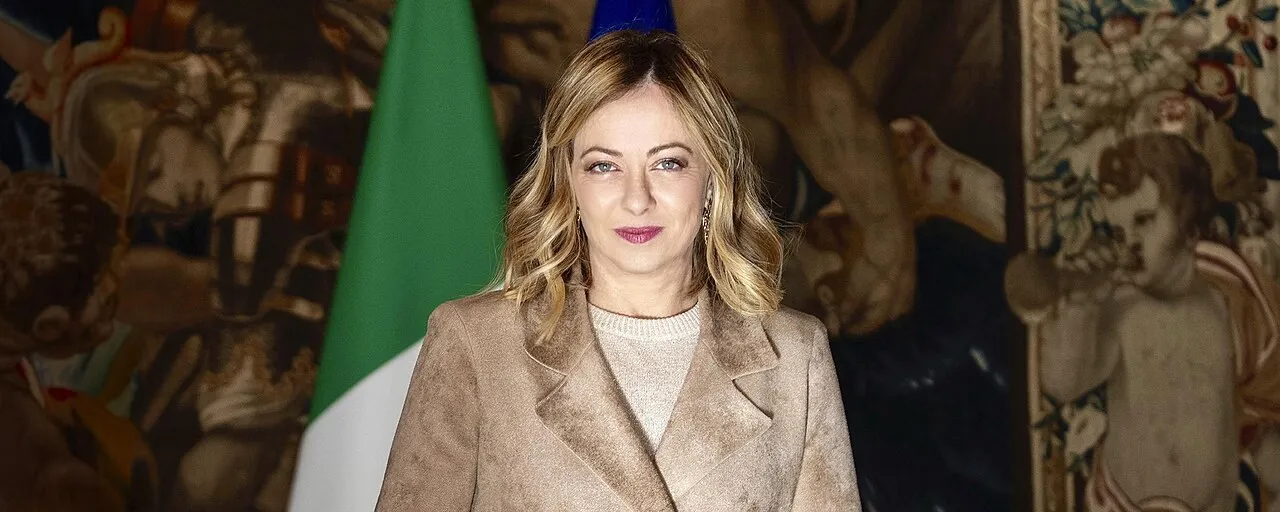
Italian Prime Minister Giorgia Meloni has applied to trademark her own voice in a novel attempt to protect herself against AI-generated deepfakes. Her application to the European Union Intellectual Property Office (EUIPO), dated 5 October and confirmed by her office, includes a four-second audio recording of Meloni twice repeating the phrase "Io sono Giorgia" — "I am Giorgia" in Italian.
The BBC first reported the filing on Monday, and Reuters confirmed the application remains under examination. Voice clones are created by training artificial intelligence systems on recordings of a person speaking — and while convincing replicas once required hours of audio, quick versions can now be produced from clips only seconds long, which is precisely what makes a short, distinctive sample like Meloni's both the asset to protect and the vulnerability to guard. Our technology section is tracking how the law is racing to catch up with synthetic media.
The choice of phrase was no accident. "Io sono Giorgia" was the title of Meloni's 2021 autobiography, echoing a famous declaration she made at a political rally in 2019 that was later remixed into a disco track. It is among the most recognisable utterances in Italian public life — instantly identifiable, and therefore exactly the kind of vocal signature that voice-cloning tools can most easily exploit.
The timing is political as well as personal. The filing comes ahead of Italy's general elections next year — the first Italian election since rapid advances in generative AI transformed the information landscape, raising the stakes for any public figure whose face and voice can be convincingly faked. Meloni's relationship with Brussels has had its frictions, including a recent parliamentary defeat on electoral reform, but the EUIPO application puts her at the forefront of a legal experiment other leaders are watching closely.
!A professional studio condenser microphone of the kind used to record voice samples
A professional studio microphone — modern AI systems can clone a voice from just seconds of recorded audio. Image: Will Fisher / Wikimedia Commons (CC BY-SA 2.0).
Meloni is following a trail blazed by entertainers. In April, Taylor Swift's company TAS Rights Management filed three applications with the United States Patent and Trademark Office: two sound marks covering Swift saying "Hey, it's Taylor Swift" and "Hey, it's Taylor", and one image mark covering a photograph of her performing on the Eras Tour. The filings were first noted by intellectual property attorney Josh Gerben and widely read as a response to the AI deepfakes and fake endorsements that have plagued the singer.
She was not the first. Actor Matthew McConaughey had already secured eight US trademark registrations covering distinctive elements of his public persona, including a sound recording of his iconic "alright, alright, alright" catchphrase from the 1993 film Dazed and Confused. Since then, Lionel Richie, Jimmy Kimmel and the Backstreet Boys have all filed similar applications covering recordings of their voices. As LexBlog's analysis put it, the strategy bets that a pop star's voice can function as a trademark — a source identifier that gives its owner an extra legal weapon where dedicated AI law is still missing. Mondaq's survey of the trend notes that in many US states celebrities already enjoy "right of publicity" protections, but trademarks add a federal enforcement layer — particularly useful since the NO FAKES Act, the US bill designed to protect voices and likenesses from AI exploitation, remains stuck in committee. The broader question of what AI means for human creativity is explored in our opinion piece on AI and creativity.
The push is not limited to A-listers protecting commercial brands. In August, around 80 performers backed Save Our Voices Now, a campaign that sent an open letter to Prime Minister Andy Burnham and launched a Gov.uk petition asking for everyone in Britain to be given ownership of their voice as part of their statutory rights. Signatories included Hugh Bonneville, Nicola Coughlan and Matt Lucas, alongside Luke Evans, Jen Brister, Siobhan McSweeney and Pearl Mackie.
"My voice is unique, it's mine, it's part of my identity," Bonneville said, joking that his quote "was handwritten, not created by AI." McSweeney said she was deeply worried that legislation, contracts and artists' rights were not being protected as quickly as AI technology is progressing, calling it "an existential problem" needing legislative control. The campaign's founder, Peter Caulfield, warned that with the right AI system a voice can be cloned in as little as three seconds — and the campaign claims 28 percent of UK adults say they have been targeted by a voice-cloning scam. The Westmeath Examiner's Press Association report has the full details. The campaign reflects the same anxieties driving Westminster's wider child-safety agenda, including the proposed midnight social media curfew for teens.
For Meloni, the issue is painfully personal. Manipulated images of the prime minister have repeatedly circulated online in recent years, at times shared as authentic — including one depicting her sitting on a bed in her underwear. In 2024 she launched a civil action against two men from Sardinia, a 40-year-old and his 73-year-old father, accused of creating and posting deepfake pornographic videos using her face. The videos were uploaded to a US-based porn site in 2020, before she became prime minister, and were viewed millions of times.
Meloni sought a symbolic €100,000 in damages — money her lawyer said would be donated to a fund supporting women victims of domestic violence — in a case intended to send a message to women facing this kind of abuse of power not to be afraid to press charges. The case remains pending before an Italian court, as the Week reported, with the men also facing criminal defamation charges. In May, after AI-generated images of her wearing lingerie surfaced online, Meloni warned that deepfakes are a dangerous tool because they can deceive, manipulate and harm anyone — adding that while she is able to defend herself, many others are not. In a social media post about the trademark filing, she stressed that the point goes beyond her personally: deepfakes, she wrote, are a danger to everyone. CNBC-TV18's coverage of the 2024 case documented the scale of the videos' spread.
Lawyers are divided on how much protection a voice trademark really offers. Italian media have reported that even if the EUIPO approves Meloni's application, it would not by itself prevent the use of her voice in AI-generated deepfakes — though it could create additional legal obstacles for those seeking to replicate it. Trademark law targets commercial confusion, not non-commercial deception, and much deepfake abuse is neither.
But practitioners see real tactical value. Technology lawyer Guido Scorza has argued that it is significantly easier to get content removed from a platform by claiming a trademark violation than by invoking personal-data rights — platforms have well-oiled takedown machinery for IP complaints and respond to them faster. In that sense, Meloni's filing is less a silver bullet than a new lever: one more legal hook in a fight where victims currently have too few. The Outpost's analysis notes this marks the first Italian election cycle of the generative-AI era, and StarGuard Law's guide to the Swift filings explains why sound marks, though rare, are gaining traction as an AI-era strategy. Whether parliaments follow with dedicated legislation — as Britain's performers are demanding — may matter more in the end than any single trademark. The debate connects to wider AI governance questions, from the UK's rejected AI "kill switch" proposal to the rogue ChatGPT incidents that keep regulators awake at night.