One of the deadliest attacks on Jordan's Christian community
Six people have been killed and 28 wounded after gunmen opened fire during a funeral at a church in southern Jordan, in one of the deadliest attacks on the country's Christian community in living memory. The shooting took place on Friday at the Hamoud Greek Orthodox church in Karak governorate, where mourners had gathered for the funeral of a woman. According to Jordan's Public Security Directorate, the attackers were "unknown assailants" who struck the congregation and then fled, prompting a manhunt by the security forces.
Several minutes of gunfire
Witnesses told Jordan's state-owned broadcaster Al-Mamlaka that a vehicle carrying the gunmen arrived at the church and that the men fired continuously for about five minutes before fleeing the scene. Between 150 and 200 people were inside and around the church at the time, according to a witness quoted by the broadcaster, with most of the victims aged between 50 and 70. Khaled Burqan, a man who had been attending the funeral, told Al-Mamlaka that dozens of people were at the procession and that at least two of the attackers — one carrying a rifle and another a pistol — opened fire for several minutes. Security camera footage aired by the broadcaster appeared to show the moment of the attack. Reuters said it was able to verify the video against the church's entry path and surrounding wall. The footage showed the attackers firing from outside the church before moving towards its entrance. A relative of one of the dead told The National that the gunmen opened fire during the funeral in Hamoud, a Christian village north of Karak, and a member of the Halasah family in Karak said three doctors were among those killed. "This was a direct attack on the church. Christians were the target," the relative said. The official casualty count of six dead and 28 wounded revised an earlier state-media report that seven people had been killed. Some of the wounded were described as critically injured.
The kingdom's response
The response from Jordan's leadership was swift and severe. King Abdullah II vowed that the attack would be met with "the harshest retaliation". "Those who delude themselves into thinking that they can divide Jordanians with their bullets have no chance in the face of our unity," the king said in a statement. "Every Jordanian life is precious, and we will strike with an iron fist against those who dare to threaten our nation." Prime Minister Jaafar Hassan chaired a meeting of Jordan's security council in Karak to oversee the response to the attack. Government spokesman Mohammad al-Momani said security forces had deployed at the church and were pursuing the suspects, and that the investigation was proceeding rapidly. The spokesman described the shooting as a terrorist attack. Security forces were deployed at the church throughout the day, and officials said further findings would be released as the investigation advanced.
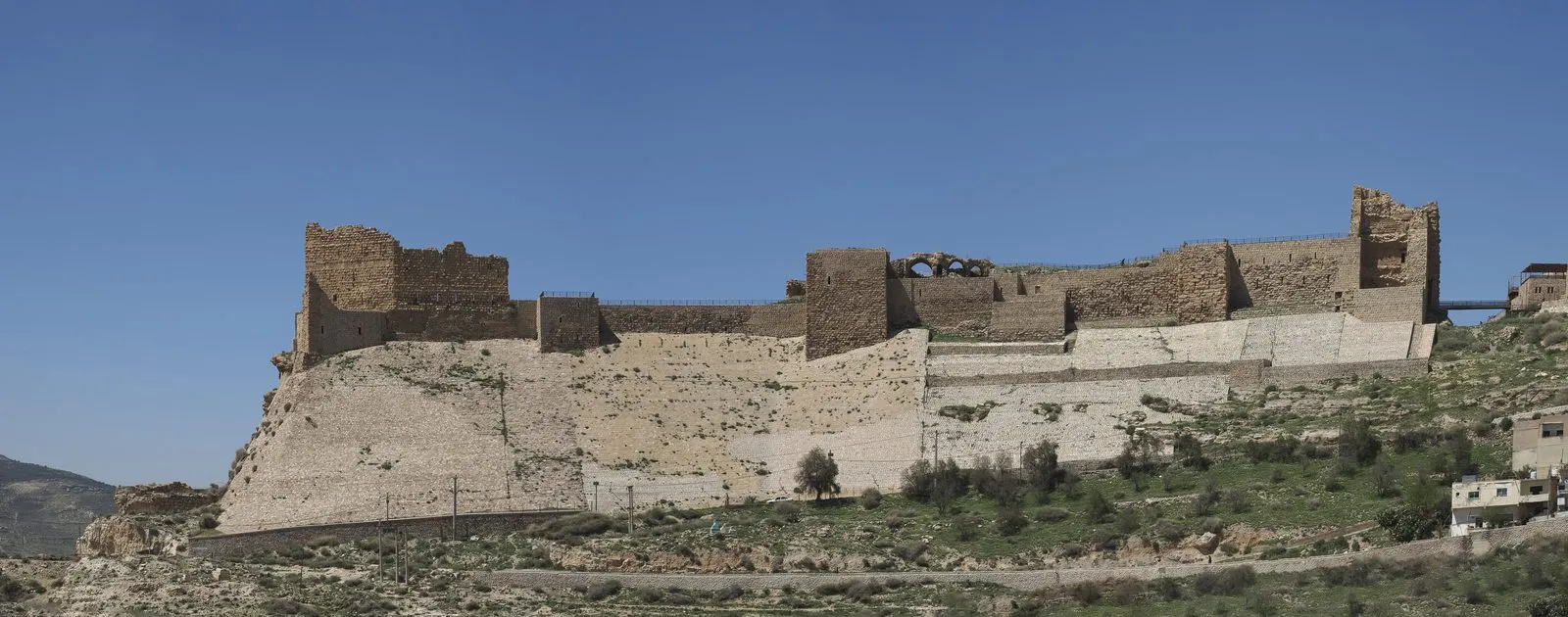 Karak Castle in Jordan's Karak governorate
A rare and shocking attack
Such violence is extremely rare in Jordan. The kingdom is widely regarded as one of the more stable countries in the Middle East, and attacks on civilians — let alone on a religious congregation — are uncommon. Christians, numbering about 300,000 people, make up a small minority of Jordan's population of roughly 11.5 million. The country is nevertheless home to several biblical sites that attract Christian pilgrims from around the world, and its Christian community has historically lived in relative security. Karak itself is no stranger to violence, however. In 2016, gunmen ambushed police in a series of attacks in the governorate — including at a Crusader castle popular with tourists — killing 10 people, seven of them officers, and wounding dozens. Jordanian security forces killed the gunmen after a long standoff.
No claim of responsibility
There was no immediate claim of responsibility for Friday's attack, and Jordanian authorities have not said who was behind it. The Public Security Directorate's description of "unknown assailants" leaves open every possibility, from an organised cell to a smaller group acting alone. The attack comes at a volatile moment for the region, which Verity's world desk has been tracking — from the attack on Riyadh airport to Russian drone strikes on Kyiv's bridges and the glide-bomb attack on Zaporizhzhia that killed 15. In Europe, meanwhile, Poland's schools have faced a third week of knife attacks, and in the United States a teacher survived an Oregon shooting by pretending to be dead — a reminder that attacks on places of gathering and learning are a global concern.
What comes next
The manhunt for the attackers continues, and the official investigation is in its early stages. The government spokesman said an official statement would be issued once details were verified, and the security council meeting in Karak suggests the authorities expect a sustained operation. For Jordan's Christian community, the attack is a devastating blow to a sense of security that has held for decades. For the kingdom, it is a test of the unity King Abdullah invoked — and of the "iron fist" he promised. The BBC's original report and the wire coverage that followed — from The National, Arab News, Daily Sabah, Al Jazeera and i24NEWS — will be updated as the investigation names names and motives. Until then, the facts that stand are the official ones: six dead, 28 wounded, and a nation mourning a funeral turned into a massacre.