A first statement, one month on
Christa Pike has spoken publicly for the first time since surviving Tennessee's attempt to execute her. In a written statement released on Friday 30 October, exactly one month after the failed execution, Pike said she walked into the execution chamber prepared to die, and woke up days later alone in a hospital, confused and in pain.
The statement, which her attorneys say was dictated to them from the prison infirmary, is short and restrained. It does not argue her legal case in detail, and it does not dwell on the mechanics of the execution itself. Instead it describes, in her own words, what the month since 30 September has felt like: constant pain, difficulty speaking, and isolation in a medical ward away from other people.
Pike said she had made her peace before entering the chamber at Riverbend Maximum Security Institution in Nashville. She said she had told the people who loved and supported her through the years that she was grateful for them, and had told the people in the room and those there to witness the execution that she was leaving them in loving kindness. She had not, she said, contemplated life beyond that night.
What happened on 30 September
Pike, 50, was sentenced to death for the 1995 murder of 19-year-old Colleen Slemmer in Knoxville. Pike was 18 at the time of the killing. Her execution had been scheduled for the morning of 30 September, but a last minute legal battle delayed proceedings until the evening.
According to the timeline given by media witnesses who were present, Pike was given a first dose of pentobarbital, the drug used in Tennessee's lethal injection process, at about 7.40pm. A second dose followed at about 8pm. After an hour of waiting for Pike to die, the execution attempt was stopped and emergency services were called at about 8.40pm. She was taken to hospital in critical condition, and her attorneys said they did not expect her to survive. She was at one point on a ventilator, and she did not regain consciousness for days.
Her attorneys later said her arms were badly swollen, bruised and blistered, possibly because the execution drug leaked into arm tissue instead of circulating through her bloodstream. That account has not been confirmed by the state's investigation, which is still under way, and it should be treated as the account of her legal team rather than an established finding. What is established is that two doses of the drug did not cause death, and that the attempt was abandoned after about an hour.
Pike is, according to the Death Penalty Information Center, the only person ever to survive being injected with lethal chemicals in an execution. The failed attempt was the second to go wrong in Tennessee this year, a fact that has thrown the state's lethal injection procedures into the national spotlight.
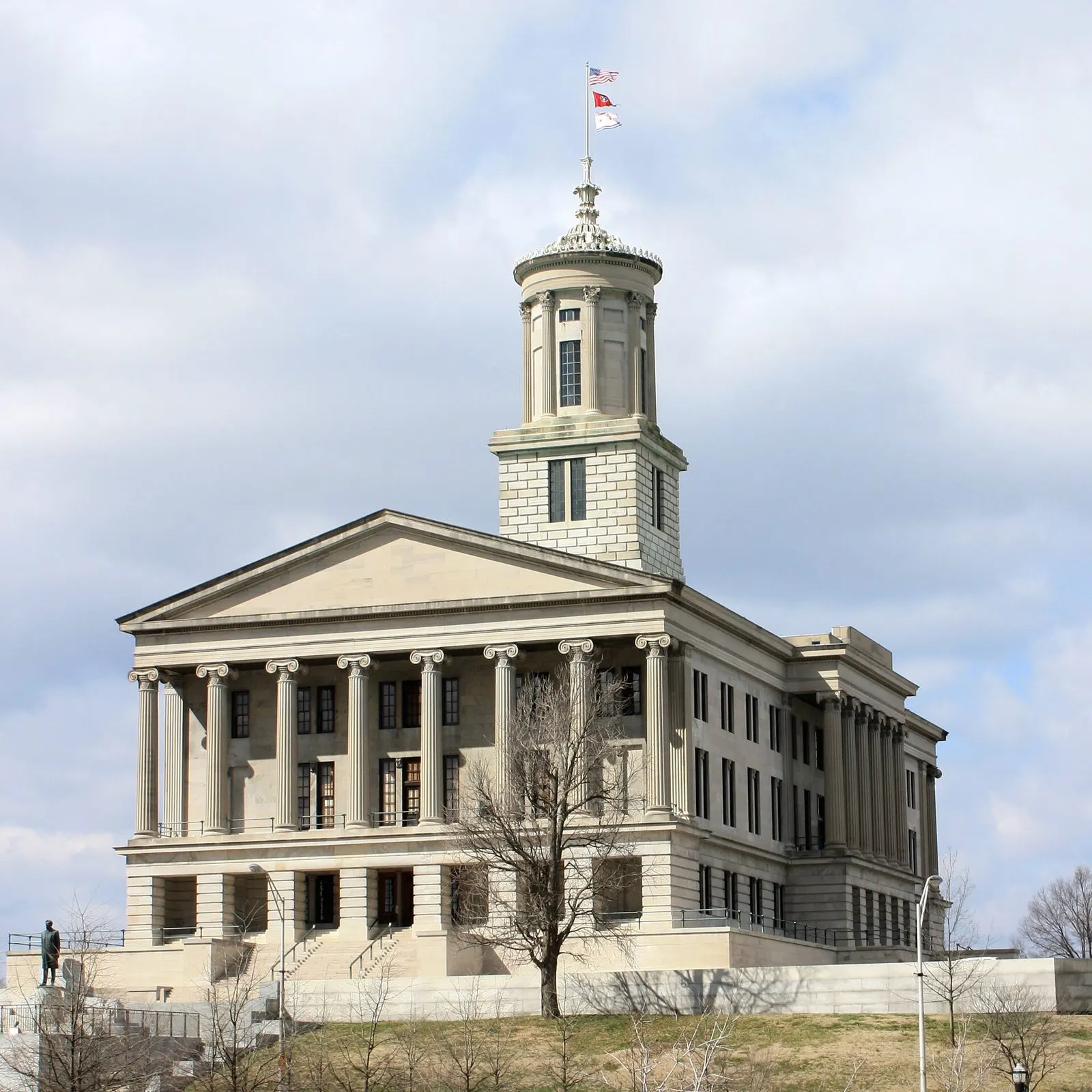
 The Tennessee State Capitol from Charlotte Avenue in Nashville
. Credit: w_lemay, via Wikimedia Commons, CC BY-SA 2.0.
Waking up in hospital
The heart of Pike's statement is the contrast between the peace she describes before the execution and the confusion that followed. She said she woke up several days later alone in a hospital, confused and in pain, and that the pain has not stopped since.
She described it plainly: her body hurts, her arms hurt, her hands hurt, her throat hurts, and she still struggles to speak. She added that the pain is not just physical, saying there is pain in her mind and in her soul. The statement does not go into graphic medical detail beyond that account, and this article does not add any.
Pike said she does not know why she survived that night, and does not know what comes next. Some days, she said, finding hope is harder than others. For now, she said, she is trying to heal, one day at a time, while adding that healing is not the same as being okay.
She also spoke about isolation. Since that night, she said, she has been largely isolated in the prison's medical ward, away from other people and the human connections that mean so much to her, and that isolation brings its own kind of pain. She said she spent 28 years in solitary confinement, and that much of what she is experiencing today is a repeat of that condition.
The investigation and what comes next
The aftermath of the failed execution has already changed Tennessee's death penalty landscape. Governor Bill Lee paused all executions in the state and ordered an investigation and a third party review into what went wrong. He also postponed another execution scheduled this year. Tennessee Department of Correction Commissioner Frank Strada resigned following the failed attempt.
Pike was hospitalised for about 10 days after 30 September. Since 10 October she has been back at the Debra K. Johnson Rehabilitation Center in Nashville, where she has been held for more than 30 years, and she continues to receive medical care in the prison's infirmary.
Her attorneys have urged Governor Lee to reduce Pike's sentence to life imprisonment. Whether that happens, and whether Pike will eventually face execution again, remains unclear while executions are paused and the investigation continues. The governor's review will need to answer difficult questions about drug administration, medical preparedness and the decision making on the night, and its findings are likely to be scrutinised far beyond Tennessee.
Why this case draws national attention
Pike's case has drawn attention far beyond Tennessee for two reasons. First, it is historically unusual: she is reported to be the only person ever to survive being injected with lethal chemicals in an execution, according to the Death Penalty Information Center. Second, it was the second failed execution in Tennessee this year, which raises questions not about a single incident but about the reliability of the state's procedures as a whole.
Those questions are why the governor's investigation matters beyond one prisoner's fate. Lethal injection depends on drugs, doses, venous access and medical judgment under extraordinary pressure. When it fails, the consequences fall on the prisoner, on the staff involved, on witnesses, and on the families on both sides of the case. A credible review must explain what went wrong in terms that can be checked, not merely reassure the public that it will not happen again.
For the family of Colleen Slemmer, the failed execution and its aftermath reopen a case that began more than 30 years ago. For Pike, the statement marks the first time she has spoken about an experience no other person in American history has survived in quite this way. She closed it with a line that sums up both its restraint and its uncertainty: she is deeply hurt by what she called the incompetence that put so many people in this terrible position, and she does not know what comes next.
Read more US coverage in our News section, including US convictions of a Rwandan man who hid his genocide role, Tennessee killer escaped prison fence manhunt, and Alaska governor orders probe into Democratic campaign same name candidate. You can also visit our About page or return to the homepage.
The BBC's report on this story is available here: US inmate Christa Pike says she woke up confused and in pain after failed execution. Other reporting includes CNN on Pike's first statement, USA Today on Pike speaking out, The Tennessean on her public statement, The Hindu on her constant pain, and the Death Penalty Information Center.