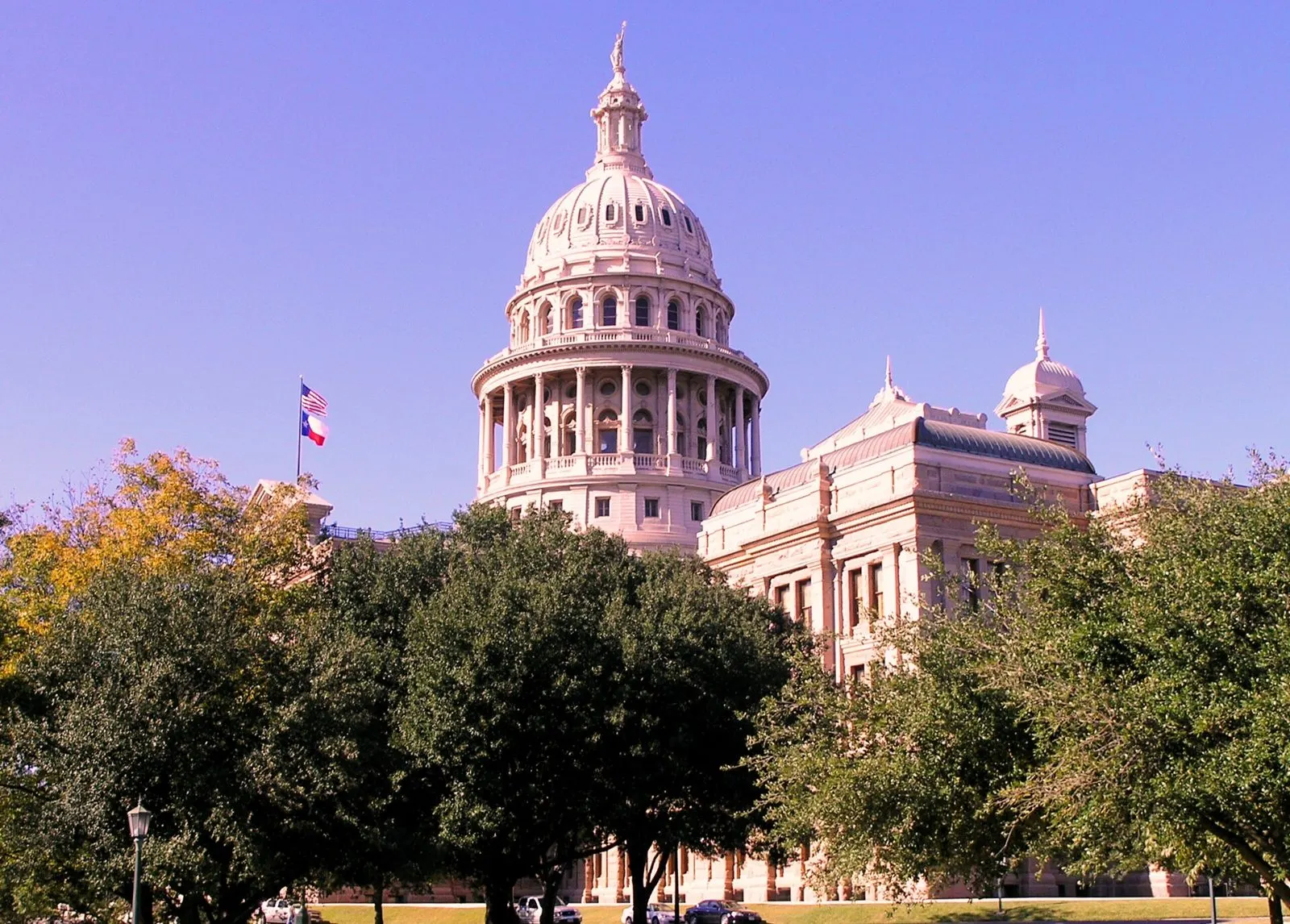
Two Dan Sullivans on one ballot
There are few stranger sights in American politics than a ballot paper that appears to offer voters the same candidate twice. In Alaska this year, that is effectively what voters face in the race for the United States Senate. The ballot is set to list two men as Dan S Sullivan, who will be described as the incumbent Republican senator, and Daniel J Sullivan Jr, a retired teacher from a remote fishing village who will appear without a party designation.
The incumbent, Dan S. Sullivan, is running for re-election. The challenger, Daniel J. Sullivan Jr, is a retired teacher from Petersburg, a fishing community in south east Alaska. Whether his presence on the ballot is an innocent coincidence of a shared name, or the product of a deliberate plan to confuse voters, is now the subject of a state investigation ordered days before Americans vote, and it has become one of the most bitterly contested stories of the midterm campaign.
The governor's intervention came late on Wednesday, when Republican Governor Mike Dunleavy announced on social media that he was directing Alaska's Department of Public Safety to investigate. His statement did not name the Democratic candidate's campaign, and it did not specify which laws he believed might have been broken. But its target was unmistakable, and its timing, five days before polling day, guarantees that the investigation itself will become part of the campaign.
What the New York Times alleged
The investigation follows a New York Times report published on Wednesday, covered by the BBC here, which alleged that people connected to the campaign of Democratic Senate candidate Mary Peltola worked with others to try to recruit spoiler candidates in the race. According to the newspaper, the effort involved senior aides at the Democratic Senatorial Campaign Committee and a lawyer, and formed part of a broader attempt to encourage candidates who could dilute the support of the sitting Republican senator.
The newspaper said it had seen text messages and interviewed 12 people who participated in or were told of the plan, or were would-be candidates whom the team tried to recruit. One of those recruits, the report alleged, was Daniel J. Sullivan Jr himself. The report also alleged that Peltola's former campaign manager had described the effort to the newspaper, while later attempting to retract her interviews.
It is essential to be precise about the status of these claims. They are allegations reported by one newspaper, based on its own sources. The BBC, in its own coverage, explicitly states that it has not independently verified the New York Times reporting. No court has found that Peltola, her campaign or the DSCC committed any offence. The investigation ordered by Dunleavy is an inquiry into whether any law was violated, not a finding that one was.
The denials, and what Dunleavy actually said
Peltola's campaign has denied any wrongdoing. In a statement issued before Dunleavy's announcement, a spokesperson for Alaskans for Mary said the candidate entered the race because Alaskans deserve a champion fighting to lower their costs and put Alaska first, and that no tweet or threat from any Washington politician would keep her away from that fight. The statement added plainly: the campaign has no involvement with either Sullivan campaign. In a statement given to US media, the DSCC likewise denied involvement in any such scheme. The second Sullivan has denied any links with the Peltola campaign, and has said he entered the race of his own volition.
Dunleavy's own statement was carefully worded, and it is worth quoting its operative part rather than paraphrasing it into something stronger. He said he was directing the Department of Public Safety to investigate whether this scheme violated Alaska's laws and whether criminal charges or civil action are warranted, adding that the evidence will determine what happens next. He said Alaskans have a fundamental right to vote for the candidate they actually intend to support, and that deliberately tricking voters into casting their ballots for someone else strikes at the integrity of elections. He also said the reporting substantially supported earlier findings by the state's Division of Elections, which investigated similar concerns in June.
That last point matters, because it suggests the governor is not acting on the newspaper report alone. But it also raises a question he did not answer: if the Division of Elections already examined these concerns, what new evidence justifies a criminal investigation now, days before an election, rather than after it?
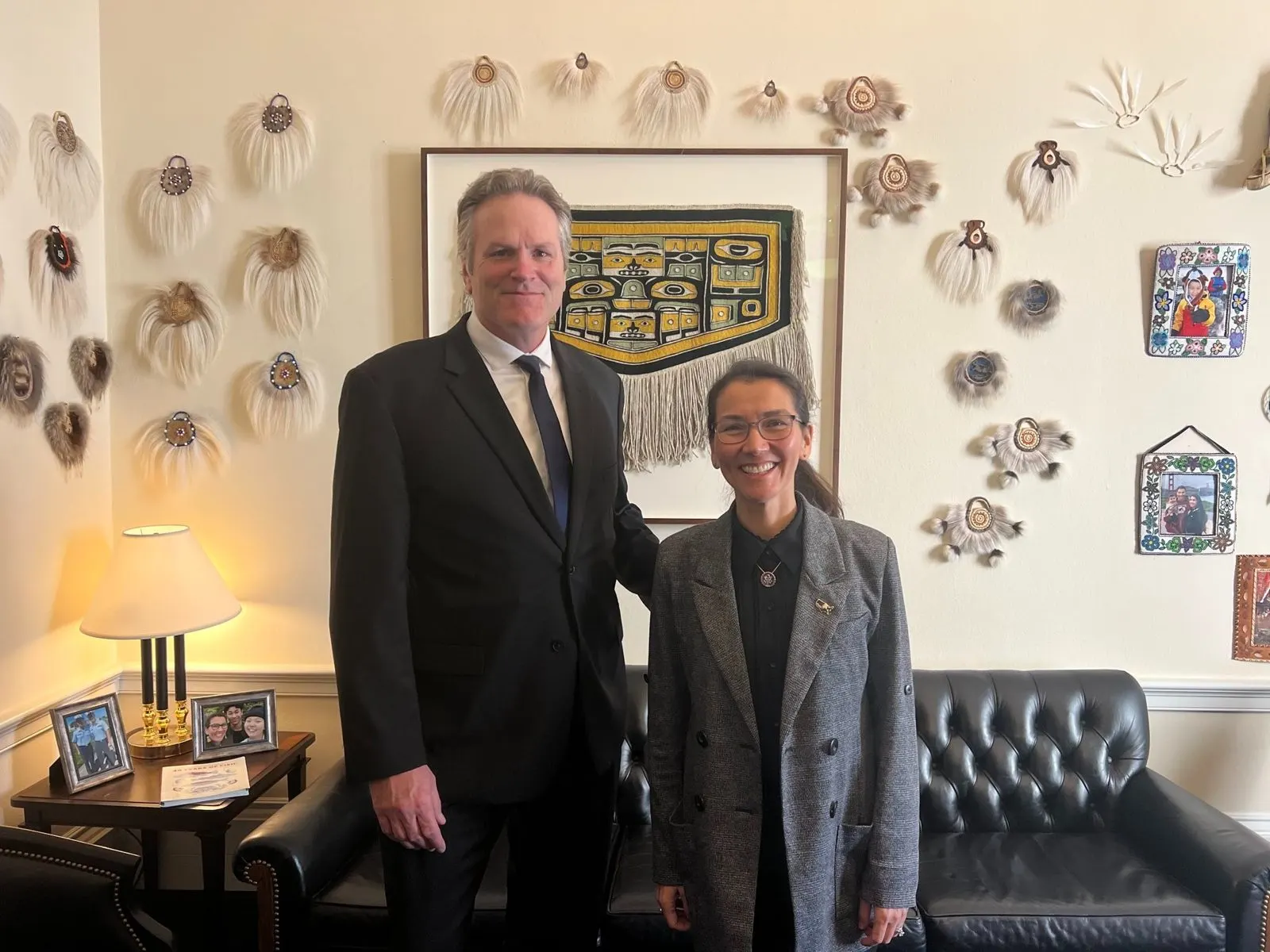 Mary Peltola and Mike Dunleavy together in October 2023
. Credit: Wikimedia Commons, public domain
Trump, the courts and the certification fight
President Donald Trump has gone much further than the governor. On Wednesday he demanded that Peltola and the man he called the fake Dan Sullivan be removed from the ballot and prosecuted, describing the affair as voter fraud at the highest level. In a series of social media posts he argued Peltola should not be allowed to run, repeated his endorsement of the incumbent, and wrote that the incumbent has always delivered for Alaska. Attorney General Todd Blanche, appearing on television, said of the alleged scheme that they are cheating, let's call it what it is.
The legal background complicates those demands considerably. Previous efforts by Republicans to remove the second Sullivan from the ballot have already been rejected by the Alaska Supreme Court, which found no state laws had been broken by him running in the race. Election law experts say it is unlikely the new investigation will dislodge him either, and unclear at this point whether any state law was violated at all. One expert, Justin Levitt of Loyola Law School, put it bluntly: convincing somebody to run for office is not a crime, even if their name happens to be the same as an incumbent's. Another, Ruth Greenwood of Harvard Law School, noted the second Sullivan had a constitutional right to run and have his name on the ballot.
Separately, the Trump administration filed a federal lawsuit last week aimed at preventing certification of the result if the Trump backed Sullivan loses, arguing that the presence of both Sullivans on the ballot could confuse voters. Some legal experts have expressed scepticism about that lawsuit, and Alaska election officials have asked a federal court to dismiss it on the grounds that the complaint has no legal basis. One expert, Rick Pildes of New York University, described the legal arguments as a frivolous theory, noting the lawsuit did not cite a specific provision the government wanted to enforce, merely a general preamble taken from a sweeping US voting law.
Why Alaska, and why now
The ferocity of this fight reflects what is at stake. The Alaska race is considered by analysts to be one of the tightest of the midterm elections, which will decide which party controls Congress. Americans head to the polls across the country on Tuesday 3 November, and the Senate majority is narrow enough that a single seat could matter enormously.
Alaska's voting system adds another layer of complexity. The state uses ranked choice voting, which means voters rank candidates in order of preference rather than choosing just one. That system is designed to handle exactly this kind of crowded field, and it means a voter who is unsure between two similarly named candidates can rank both. Critics of the investigation argue that ranked choice voting already protects against the confusion the governor warns about. Supporters of the investigation reply that no voting system can fully protect a voter who marks the wrong name by mistake.
There is also a human dimension that risks being lost in the legal argument. Peltola paused campaigning earlier this week to recover after she and her family sustained minor injuries in a car crash. Her fellow Republican senator from Alaska, Lisa Murkowski, has accused the Democratic campaign of engaging in a pattern of lies, while the incumbent senator has told television interviewers that Peltola should come clean. The language on all sides has become maximalist, and maximalist language rarely produces careful investigation.
What to watch
Three things will determine how this story ends. The first is whether the Department of Public Safety investigation produces any specific allegation of a violated statute, or whether it concludes, as the courts have so far, that recruiting candidates, even ones with confusingly similar names, is lawful political activity however unattractive it may seem. The second is whether the federal certification lawsuit survives judicial scrutiny, or whether it is dismissed as Alaska officials have requested. The third, and most important, is what Alaskan voters themselves do on Tuesday, in a race where the ballot itself has become a character in the campaign.
For now, the responsible way to describe this story is also the simplest: a newspaper has made serious allegations, the people accused deny them, a governor has ordered an investigation, and no finding of wrongdoing has been made. Anything stronger than that would be speculation, and speculation is the last thing a story about election integrity needs. Further reporting on the governor's order confirms the sequence of events, the Associated Press account records the governor's statement and the campaign's response, and additional coverage notes the legal uncertainty around what offences, if any, might have been committed. The Wall Street Journal's reporting and USA Today's account both stress the same central fact: the allegations remain allegations, and the investigation has only just begun.
For more on the midterms and American politics, see our politics coverage, news coverage and opinion coverage, our story on Peltola pausing her campaign after a car crash, the investigations facing Democrats if they win Congress, Texas Hispanic voters and the shifting tide and the data centre debate in the midterms. Visit the Verity homepage or learn more about us.