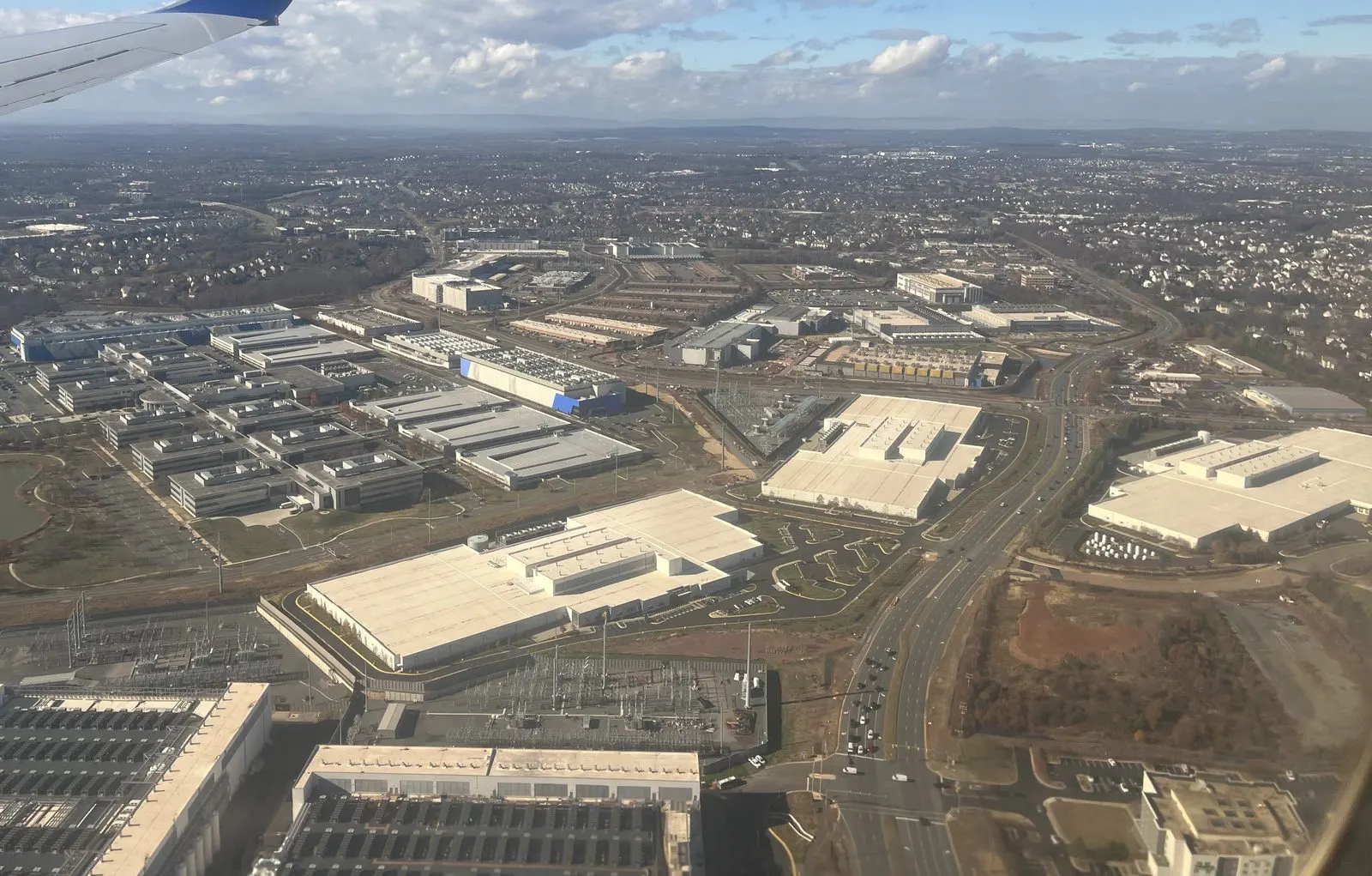
A year ago, the buildings going up on farmland and industrial estates across America were mostly a story for the business pages. Now they are turning up in campaign adverts, council meetings and doorstep arguments. Data centres, the vast halls of servers that power cloud computing and artificial intelligence, have become one of the defining local issues of the US midterm elections on 3 November, and the fight over them cuts across party lines in a way few technology stories ever do. Our business desk has followed the money into these projects for months. This autumn, the politics caught up.
The scale of the build out
Start with the numbers. According to Data Center Map figures reported by the BBC, there are now about 12,250 data centres operating worldwide, up from roughly 8,000 in 2021. The United States hosts 4,767 of them, the densest cluster of any country, with the heaviest concentration around places such as Ashburn in Virginia. Between them, the world's data centres are thought to use more electricity than the whole of France. The spending behind the boom is just as striking: the tech industry is expected to spend a combined 765 billion dollars on AI infrastructure in 2026, with the figure forecast to pass 1 trillion dollars the year after.
 The exterior of a large Google data centre in Council Bluffs, Iowa
Credit: Chad Davis via Wikimedia Commons (CC BY 2.0)
That pace explains why the debate has moved so fast. A single large facility can draw as much power as a mid sized city, and developers want to build many of them, quickly, close to the grids and fibre networks they need. Supporters see a once in a generation construction wave. Opponents see their landscape, their water supply and their electricity bills being rearranged around someone else's business model. Both descriptions can be true at once, which is why the argument has become so hard for politicians to dodge. Background on the technology itself sits on our technology pages.
Why neighbours are pushing back
The objections cluster around a few practical worries. The first is electricity: residents fear that huge new demand will strain local grids and push up prices for households that never asked for a data centre next door. The second is water, since many facilities use large volumes for cooling. The third is the carbon footprint of all that power, at a moment when utilities in some states are keeping older fossil fuel plants running to meet the new load. Noise, lost farmland and the sheer size of the buildings add to the list in specific places.
Polling suggests these are not fringe concerns. A survey by The Economist and YouGov of nearly 1,600 adults found that about two thirds of Americans opposed new data centre construction in their own communities, according to reporting on the midterm backlash. The opposition is also unusually bipartisan. Campaigns in states as different as Ohio, Texas and Pennsylvania have all found the issue useful, with Democrats accusing Republican opponents of being too close to the industry and Republican officials in some states moving to slow projects down. Few subjects in the politics coverage this cycle have united voters quite like this one.
The case for building anyway
The industry and its backers have an answer, and it starts with national security. Data centres, they argue, are the physical base of artificial intelligence, and falling behind China in AI would carry economic and military costs far larger than any local disruption. President Donald Trump has framed the build out in exactly those terms, warning in the past that communities which block facilities risk ending up backward and poor while rivals move ahead.
The local case rests on money. A big project brings construction work for a year or more, a larger tax base for the host county, and payments that some local governments say have funded services or kept residential taxes down. Developers also stress that modern facilities are far more efficient than the server halls of a decade ago, and that the largest tech firms have signed deals to bring new power generation with them rather than simply drawing on the existing grid. In places that have hosted data centres for years, some officials argue the feared effects never arrived and the revenue is very real.
The jobs dispute at the heart of it
The sharpest factual fight is about jobs. Developers arriving in a town often lead with employment, but research published by the Brookings Institution complicates the pitch. Economists Dany Bahar and Greg Wright found that a county's first data centre typically creates between 100 and 200 local jobs in telecommunications and data processing, fewer than industry advocates often claim, and they found no corresponding effect on local wages, as summarised in the Aspen Institute's workforce roundup. Construction can employ far larger numbers, but those roles end when the building opens, and a finished facility runs with a small permanent staff relative to its cost and size.
That gap between the brochure and the payroll is where much of the local anger lives. Communities say they are being asked to hand over land, power and tax breaks for a project whose lasting local footprint is a guarded building and a modest headcount. Industry groups respond that the direct jobs understate the benefit, pointing to supply chains, grid investment and the tax revenue a facility pays year after year. Voters will hear both versions, loudly, between now and polling day, and Verity's news team will keep testing the claims against the published research.
States reach for the brake
Lawmakers have started to act. The BBC reports that 16 US states have proposed laws to ban or temporarily block new facilities, and campaign group PIRG puts it similarly, saying bills imposing effective moratoria on large new data centres have been filed in 16 states. Reporting by the USA Today network lists states including Georgia, Maryland, Michigan, New Hampshire, New York, Oklahoma and Virginia among those where temporary bans have been introduced, with some bills pairing a pause with a formal study of the impact on grids, water and local economies. New York went furthest, imposing a one year moratorium on permits for the largest facilities while the state writes environmental standards. The resistance is not only American: opposition movements have also appeared in Mexico, France, Indonesia and the United Kingdom.
Washington, meanwhile, is trying to square the circle. Trump remains a supporter of the build out, but with the midterms close he has moved to blunt the strongest complaint. In a social media post reported by the Wall Street Journal, he said large new data centres are mandated by him to make their own electricity and to give or sell any excess back to the local community, and he urged developers to pay host communities a dividend. Experts quoted in response noted that the legal power to impose such conditions sits mostly with the states and grid operators, not the federal government, which limits how far a presidential instruction can reach.
What happens after 3 November
Whoever wins the midterms, the underlying tension will still be there on the morning after. The demand for computing power is not slowing down, the money committed to building it is measured in hundreds of billions, and the facilities have to stand somewhere. The question the campaign has forced into the open is who pays, who benefits, and who gets a say before the concrete is poured. Expect more state level rules on power and water, more community benefit deals written into planning approvals, and more candidates discovering that a warehouse full of servers can move votes. Follow the results and the policy fallout on Verity's homepage as the count comes in.