In Short (TL;DR)The US military says it struck three Iran-linked oil tankers after Iranian forces targeted American naval vessels in the region. US Central Command said two tankers were disabled and a third destroyed. Iran confirmed the strikes and said its forces retaliated against six vessels, escalating tensions around the strategically important Strait of Hormuz.
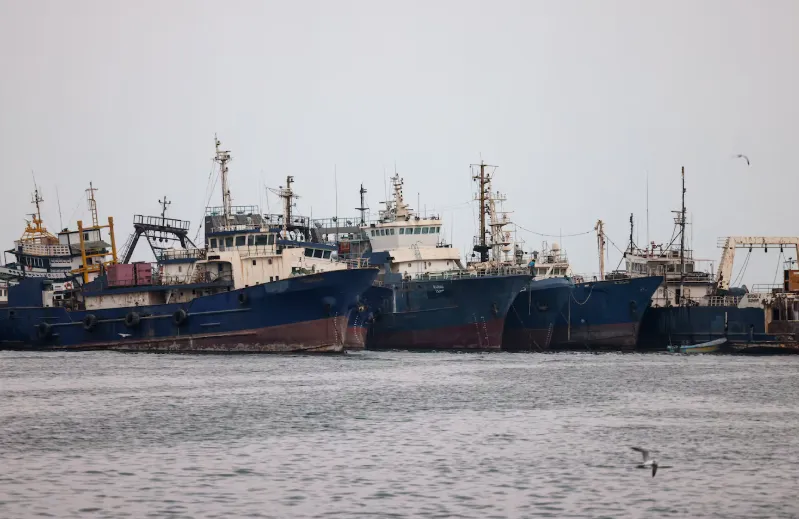
The United States military has carried out strikes against three Iran-linked oil tankers following what US Central Command says were attacks by Iranian forces against American naval vessels in the region.
US Central Command (Centcom) said on Saturday that two of the tankers had been “permanently disabled,” while a third vessel operating in the Gulf of Oman was “completely destroyed.” The strikes represent another escalation in the continuing US-Iran conflict, which has seen renewed fighting during the past week.
Iranian state media confirmed that the tankers had been attacked. It also reported that Iran's Islamic Revolutionary Guard Corps (IRGC) carried out retaliatory actions against six vessels, including three oil tankers travelling through the Strait of Hormuz on routes Tehran described as unauthorised.
US says warships came under attack
According to Centcom, Iranian forces launched multiple attacks earlier on Saturday against a US aircraft carrier and a guided-missile destroyer.
The US military said its forces successfully avoided the attacks and that no American personnel were injured.
US Defence Secretary Pete Hegseth also warned that Iran would face a direct response if American ships were targeted, saying that Iranian attacks on US vessels would result in strikes against oil tankers.
Centcom additionally claimed that the three tankers targeted by the US were connected to a multi-billion-dollar “shadow network” that it said provides funding to Iran's Islamic Revolutionary Guard Corps and its regional allies.
Iran reports retaliation against six vessels
Iranian state broadcaster Irib reported that the IRGC responded by targeting three oil tankers in the Strait of Hormuz and three other vessels it described as being affiliated with the United States.
Iranian authorities said the three oil tankers in the strait were travelling along routes that had not been authorised by Tehran. The IRGC reportedly warned other vessels against using those routes.
The Strait of Hormuz has become one of the central flashpoints in the conflict. The narrow waterway connects the Gulf with the Gulf of Oman and is a major route for international energy shipments.
Crews rescued after tanker strikes
Irib reported that crews from the two tankers attacked in the Gulf of Oman were taken to shore in lifeboats.
One of those vessels was reportedly empty, while the other was carrying oil.
Iranian state media also said there were no casualties in the strike near Kharg Island. The island contains Iran's main oil-export terminal, with most of the country's crude oil passing through the facility after being transported from the mainland by pipeline.
The reported absence of casualties could not independently establish the full extent of damage to the vessels.
Strait of Hormuz remains a major point of tension
The conflict has placed the Strait of Hormuz at the centre of an increasingly serious dispute between Washington and Tehran.
Iran has previously sought to maintain a degree of control over shipping routes through the strait and has targeted vessels using a southern route through Omani waters that avoids routes preferred by Tehran.
Despite those tensions, US President Donald Trump has said the strait is open. The US military has also been assisting ships travelling through the southern route.
The disruption around the waterway has broader international consequences because the strait is one of the world's most important energy-shipping corridors. Before the conflict, it carried roughly one-fifth of global oil and liquefied natural gas supplies.
Conflict enters another dangerous phase
The latest tanker strikes follow the resumption of direct US-Iran fighting after a period of relative calm.
The United States said it restarted attacks last Sunday by striking two rocket launchers that it believed could be used to place naval mines in the Strait of Hormuz. President Trump later described another US operation on Tuesday as a “very heavy attack” while saying he did not expect the renewed fighting to continue for too long.
Iran subsequently launched attacks against US-linked targets in several Gulf states, including the United Arab Emirates, Bahrain, Kuwait and Jordan.
The conflict has also generated disputes over reported civilian casualties. Iran's Red Crescent said missile shrapnel struck a wedding gathering in Sirik, southern Iran, earlier in the week. Iran described the incident as a war crime, while US Vice-President JD Vance expressed strong scepticism about claims that the US deliberately targeted the wedding and said the matter would be investigated.
Economic pressure grows
The military escalation is also affecting energy markets and consumers.
The prolonged disruption around the Strait of Hormuz has contributed to higher energy prices internationally. In the United States, the average price of diesel reached $5.85 per gallon on Friday, compared with $3.71 a year earlier.
A 60-day ceasefire between the US and Iran formally expired last month, with no clear diplomatic settlement emerging afterward. Trump has also announced tougher economic measures against Iran and countries that assist or conduct business with Tehran.
The latest exchange of attacks leaves the Strait of Hormuz, commercial shipping and the wider regional conflict at the centre of growing international concern. Based on the information currently available, both Washington and Tehran continue to signal that military pressure will continue rather than indicating an immediate return to a diplomatic settlement.