Two men have died after being struck by falling trees as Storm Boelo crossed the UK on Sunday, in the most serious update since the storm was first forecast. Police in London and Scotland confirmed the deaths on Sunday, while power companies reported that more than 90,000 properties were still without electricity by the evening. This report covers only the new facts confirmed on Sunday: the deaths, the injuries, the power cuts, the strongest gusts and the warnings that stayed in force. The full BBC account of Sunday's events is the primary source, and the latest verified updates are gathered in our News coverage.
The first death was in Scotland. Police Scotland said a 60 year old man died after being hit by a falling tree at Mid Kelton, near Castle Douglas in Dumfries and Galloway. Officers were called to the scene and the man was pronounced dead there. Police have not released his name, and no further details about the circumstances were given in the police statement reported on Sunday. Incidents of this kind are the reason forecasters and police repeatedly warn people to stay away from wooded areas and tree lined routes during amber warnings, a point we return to below.
The death in north London
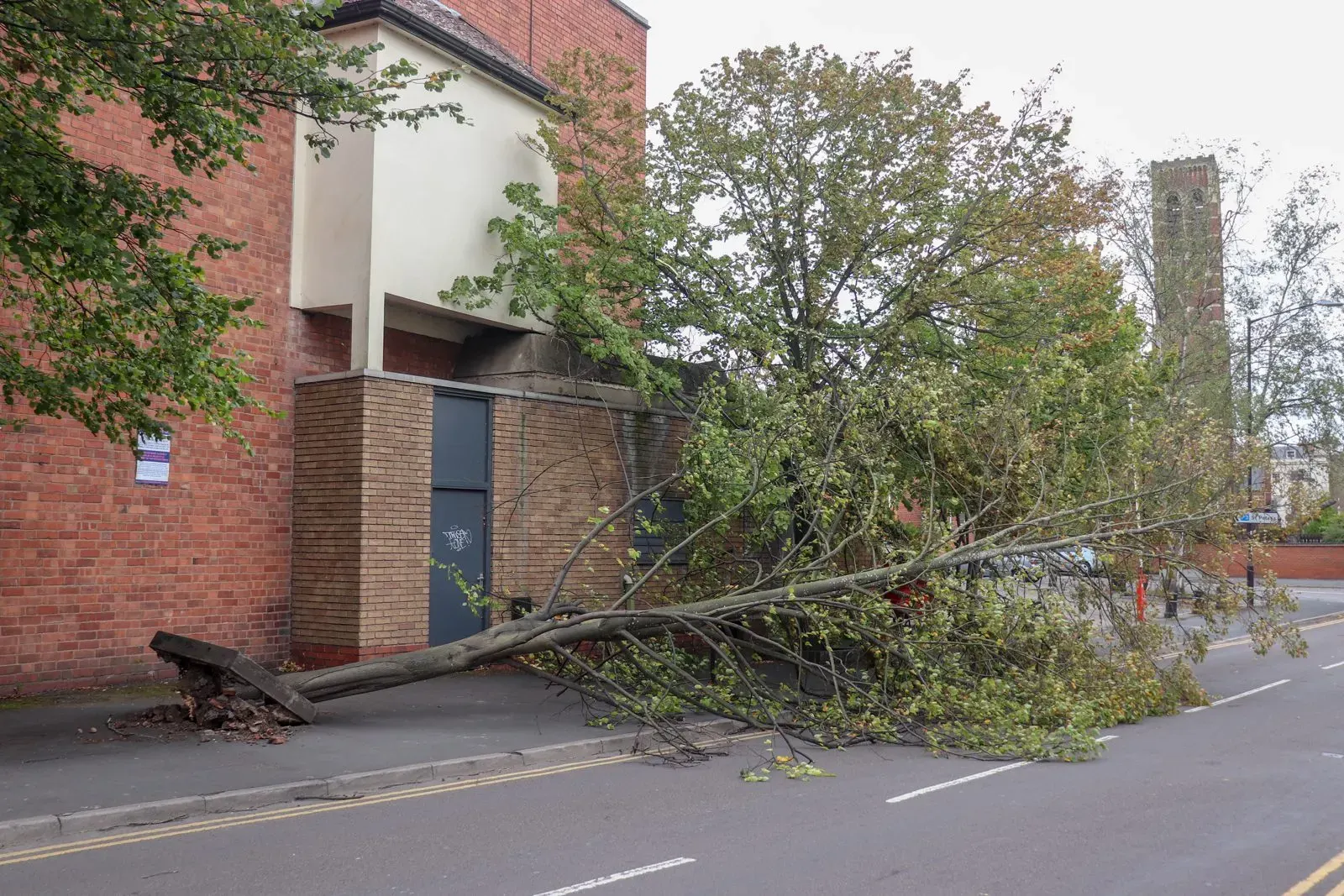
The second death was in north London. The Metropolitan Police said they were called to Dollis Road in Finchley at about 12:40 GMT on Sunday after reports that a tree had fallen on a moving car. The driver, a man in his 20s, was pronounced dead at the scene. The road was closed while emergency services worked there. A PA Media report carried by Q Radio gave the same core facts, naming Dollis Road and the time of the call, and reported that the London death and the Scottish death were the two confirmed fatalities from the storm on Sunday.
Neither police force released names on Sunday, which is normal practice while families are informed. Anyone who was in the Finchley area at the time and has information is usually asked to contact the police, although the statements reported on Sunday focused on confirming the deaths and the road closure rather than on appeals for witnesses. Updates, when police release them, tend to appear first through official channels such as those listed on the Met Office website weather warnings pages and through local force statements.
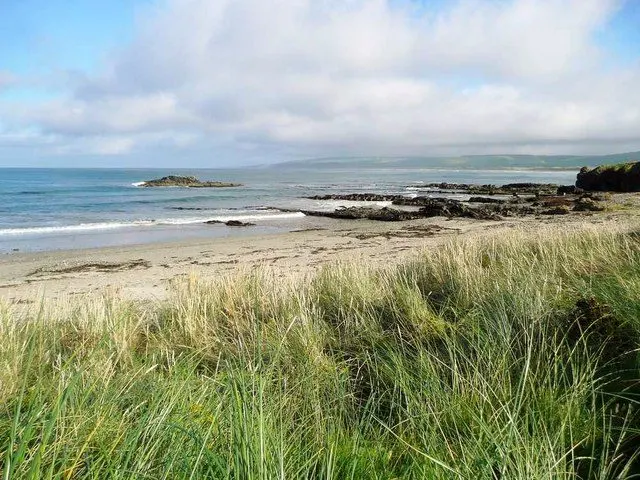 Machrihanish Bay in Argyll and Bute, near where the strongest gust of 85mph was recorded
Gordon Brown, Wikimedia Commons, CC BY-SA 2.0
Two women taken to hospital in Aberfeldy
There were also injuries in Scotland. Police Scotland said two women were taken to hospital after being hit by another falling tree in Aberfeldy, in Perth and Kinross, at about 12:50 GMT on Sunday. Their conditions were not described in the reporting on Sunday, and no ages were released. A PA Media version of the report carried by Radio X confirmed the Aberfeldy incident alongside the two deaths, and reported that Scotland, parts of Northern Ireland and the north of England took the worst of the wind and rain across the weekend.
The Aberfeldy incident underlines the pattern in all three cases on Sunday: the danger came from trees brought down by the wind, in places where people were travelling or on foot in the middle of the day. None of the three incidents happened at night or in remote countryside. They happened on roads and in a town, during the hours when the amber warning told people to stay indoors as much as possible. Safety advice during storms is published by official bodies and summarised in our reporting via the Science section, which covers weather and climate stories.
Power cuts pass 90,000 properties
By the evening, the clearest measure of the storm's impact was the power network. The Energy Networks Association, which represents the companies that run the electricity networks, said more than 90,000 properties were without power as of 19:00 GMT on Sunday. The association said dangerous conditions were limiting the chances for engineers to work safely, which slowed repairs in the worst hit areas. Crews cannot climb or work near damaged lines and fallen trees while winds stay at dangerous levels, so reconnection often has to wait until gusts drop, even where the fault itself is simple.
That figure is a snapshot at 19:00, not a final total for the storm. Numbers of this kind usually move through the night as some homes are reconnected and other faults are reported. What the 19:00 figure does show is scale: tens of thousands of households spent Sunday evening without electricity, in many cases for the second time in a weekend that had already brought an earlier storm on Friday, as the PA reporting noted. Households that lose power for long periods can find guidance through official network operator pages, and our homepage carries the latest headline updates as they are confirmed.
The strongest winds of the day
The wind speeds explain the damage. Gusts peaked at 85mph at Machrihanish in Argyll and Bute, with 84mph recorded at both Stornoway and Capel Curig. Those are the kind of speeds that uproot trees whose roots sit in wet ground, and Sunday's rain meant soils in many areas were already saturated before the strongest winds arrived. A further PA Media report carried by a local radio news site repeated the same peak figures and the same 19:00 power total, which gives a consistent picture across the reporting on Sunday night.
For context on how warnings are graded, the Met Office amber warning is its second highest level and means there is a potential risk to life and property. Sunday's amber wind warning covered Scotland and parts of northern England and ran until 21:00 on Sunday. It urged people to stay indoors as much as possible during the worst of the weather. Yellow warnings for wind and rain sat around it for other areas, and those also lapsed on Sunday night according to the PA reporting.
What happens next
The immediate questions for Monday are practical ones. Power companies will work through the remaining faults once conditions allow, and councils and road crews will be clearing fallen trees from routes across Scotland, northern England and parts of London. Police have confirmed the two deaths, and formal identification and family notification come before any names are released. There may also be further statements about the two women taken to hospital in Aberfeldy, whose conditions were not reported on Sunday.
Forecasters quoted in the PA coverage said conditions would improve on Monday before more wind and rain arrive later in the week, with a yellow warning already issued for Tuesday for parts of Scotland, northern England and Northern Ireland. That forecast is a forward look rather than a confirmed outcome, and readers should check live warnings rather than rely on Sunday's picture. We will update our coverage as official figures replace the Sunday evening snapshot. Information about how Verity handles developing stories is on our About page, and corrections can be sent through the Contact page.
The deaths of two men, in Finchley and near Castle Douglas, are the human centre of this story. Both were killed by the same hazard, falling trees, in the middle of a storm that had been forecast and warned about for days. That does not make the outcome simple or predictable for the people involved, who were going about an ordinary Sunday. It does explain why the warnings on Sunday were worded so strongly, and why officials keep repeating the same advice: during an amber wind warning, the safest place is indoors, away from trees and exposed routes. More coverage of severe weather in Britain and abroad is in our World section.