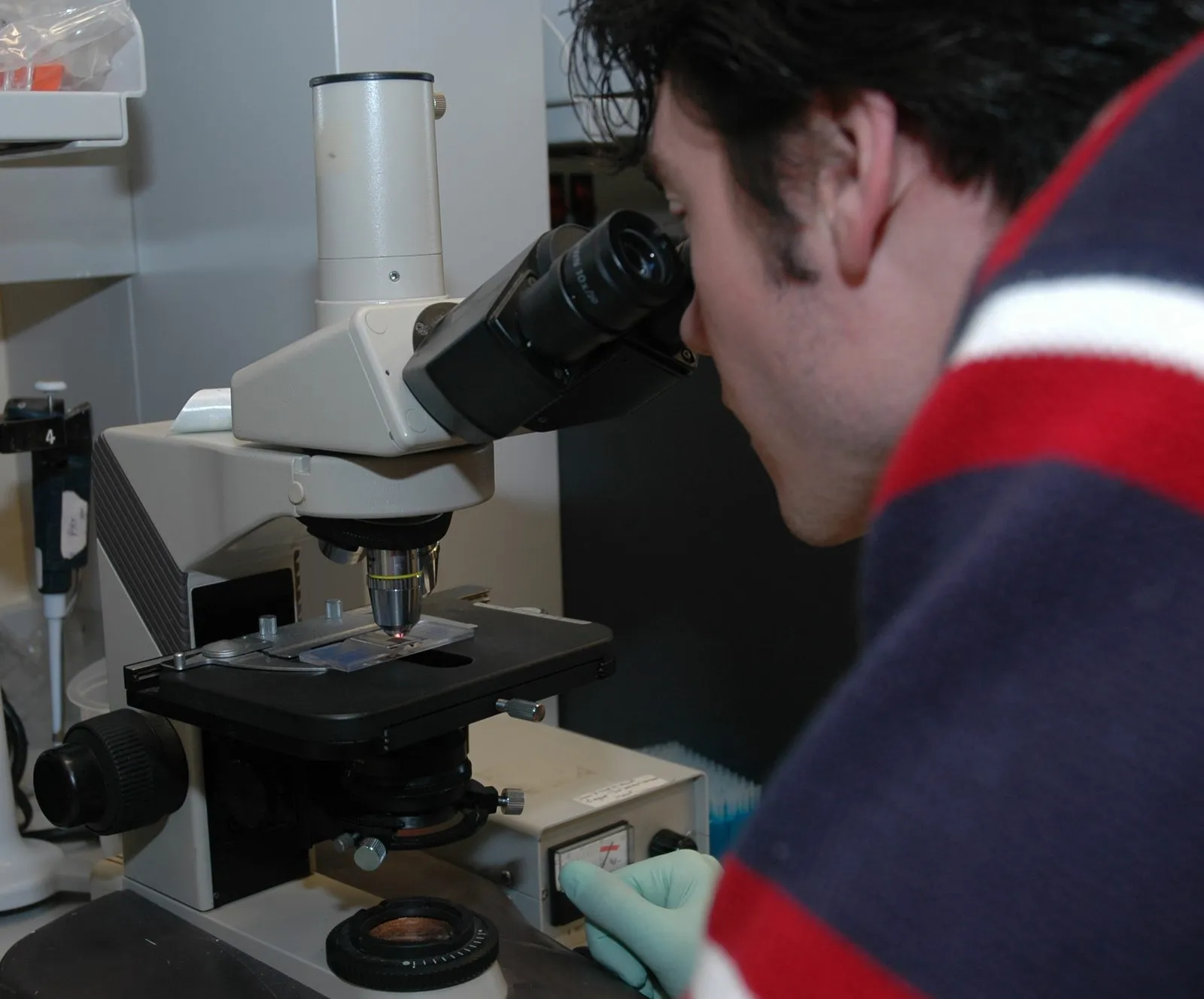
Cover photo by Diane A. Reid / National Cancer Institute, public domain, via Wikimedia Commons.
A first in six decades
French authorities have confirmed the first documented human case of the Shamonda virus, a disease previously seen only in livestock and long considered unable to infect people. The announcement was made on Thursday in a joint statement from the country's health and agriculture ministries, and it marks a scientific first: despite circulating in Africa and Asia for several decades, the virus had never previously been detected in a human being.
The case is drawing attention from public health agencies well beyond France. The World Health Organization said it was in contact with the French authorities about the development, while the Stockholm-based European Centre for Disease Prevention and Control said it was monitoring the situation and examining the potential public health implications. Both agencies, along with the French government, have stressed that there is no identified risk to the general population at this stage.
"Despite circulating in Africa and Asia for several decades, the Shamonda virus has never previously been detected in humans," the ministries said — a fact that makes the French patient the first confirmed human case anywhere in the world.
Readers following this developing area of public health may want to compare it with other recent zoonotic-disease stories, including the first Ebola death confirmed in Kenya's Bundibugyo outbreak.
The patient and the timeline
The patient died in early October at a hospital in Lyon, eastern France. He was a man in his 60s living in the Lyon area, according to local newspaper Le Progrès, as reported by Reuters. French officials described him as a severely immunocompromised patient who had been receiving treatment for a serious illness — a condition that made him more susceptible to infection than the general population.
Preliminary findings linked the infection to the neurological complications the man experienced before his death. "The neurological complications observed in the immunocompromised patient prior to his death are very likely linked to infection with the Shamonda virus," the ministries said. However, they were careful to qualify that assessment: investigators have not yet established whether the virus caused or contributed to the patient's death, and the ECDC confirmed that this question remains open.
"Investigations into whether the virus caused or contributed to the patient's death and how the infection was acquired are ongoing," the ECDC said in its statement, adding that it was in contact with the French authorities and European partners.
At this stage, the French government has declined to release further personal details about the patient. "Clinical, biological and epidemiological investigations are continuing in conjunction with expertise in human, animal and environmental health," the ministries said — an approach that brings together doctors, veterinary scientists and ecologists in what epidemiologists call a One Health investigation.
This sits alongside broader seasonal health precautions underway as immunocompromised and vulnerable people face a range of winter health risks.
The likely route of infection: a midge bite
The leading hypothesis in the French investigation is that the man was bitten by a midge carrying the virus in eastern France, where Shamonda had been circulating among animals throughout the spring and summer. That theory fits what scientists know about how the pathogen moves: it is transmitted to animals, mainly cattle, by biting midges of the genus Culicoides — tiny blood-sucking insects common across much of Europe.
Midnight-to-dusk biting midges are already a familiar vector for several livestock diseases on the continent, and entomologists have long tracked their role in transmitting bluetongue and Schmallenberg viruses between herds. In the French case, investigators suspect the patient encountered an infected midge in an area of eastern France where the virus was known to be active among livestock in the months before his death.
The ministries said the human infection appeared to be "an exceptional case involving a severely immunocompromised patient" hospitalised for a serious medical condition — a framing echoed by international agencies. The WHO said that, "[b]ased on current information and knowledge of the transmission of closely related viruses, this is an isolated human case and it is unlikely to lead to wider spread at this time."
 Cattle grazing in a pasture; cattle are the livestock species most commonly affected by the Shamonda virus
Y1997xf11, public domain, via Wikimedia Commons.
That context matters for anyone reading about insect-borne disease outbreaks. Verity's explainer on pneumonic plague and how it spreads covers how a different pathogen moved between animals and people, and why investigators focus so closely on the first suspected exposure.
What scientists know about the Shamonda virus
The Shamonda virus belongs to the orthobunyavirus group — a family of viruses primarily carried and spread by insects. Within the animal world, its main victims are cattle, though the World Organization for Animal Health (WOAH) notes it has also been found in horses, alpacas, sheep and goats. Until this month, it was considered non-transmissible to humans.
Its history stretches back to the mid-1960s, when it was first identified in Nigeria. Over the following decades it was reported sporadically in East and Southern Africa, as well as in Japan. For most of that time it remained an obscure veterinary curiosity — a virus of concern to farmers and animal-health researchers, but not one that featured in human medicine.
That changed at the end of July 2026, when genomic tests on sick cattle confirmed the virus's first appearance in Europe: in southern Germany, Switzerland and eastern France. Since then its footprint among European livestock has grown quickly. A report from France's weekly animal health surveillance bulletin said the virus had been detected in Austria, Belgium, Ireland, Italy, Liechtenstein, Luxembourg, the Netherlands, Portugal, Slovenia and Spain — as well as in the United Kingdom's Jersey, a Crown dependency.
It is worth noting that Shamonda is not classified as a disease under the EU Animal Health Law, which means it is not subject to official surveillance or control measures. That legal status may come under review as European veterinary authorities assess how far the virus has spread and whether the French human case warrants a reassessment.
The episode also comes amid heightened scrutiny of laboratory and animal-disease security in Europe — a subject Verity has covered in the context of the US urging Russia to share information after a plague-lab worker's death.
Why officials say there is no wider risk
Despite the scientific novelty of the case, the public health messaging has been consistent: no alarm is warranted. "There was no health risk to the general public identified at this time," the French health and agriculture ministries said, describing the human infection as an exceptional case involving a severely immunocompromised patient.
The WHO's assessment aligned with that view, noting that closely related viruses do not transmit easily between people and that current evidence points to an isolated event. The ECDC's position is one of active watchfulness rather than emergency response: "ECDC is in contact with the French authorities and European partners to investigate the potential public health implications."
Epidemiologists say several factors make a wider outbreak unlikely on current evidence. The virus's known transmission route is insect-to-animal rather than human-to-human; the only confirmed human infection occurred in a patient whose immune system was already severely compromised; and no further human cases have been reported. Still, scientists are careful to stress that knowledge is incomplete. The virus has surprised researchers once — by infecting a human at all — and the ongoing investigations are designed to make sure it does not surprise them again.
For broader context on how health systems handle emerging threats, readers can explore Verity's health coverage or start from the homepage for the latest updates as the investigation continues.
What happens next
The French investigation will now try to answer the questions that remain. Investigators need to determine how the infection was acquired with greater certainty, whether the virus caused or contributed to the patient's death, and whether any other human exposures have occurred unnoticed. That work involves clinical records, laboratory analysis of stored samples, and epidemiological mapping of where the virus was circulating in animals during the months before the fatal infection.
European veterinary authorities are also watching the livestock picture. With Shamonda now confirmed in animals across 14 western European countries, researchers will be tracking whether its range continues to expand, how it behaves through the winter when midge activity falls, and whether the human case was truly a one-off.
For now, France's message to the public is reassurance backed by investigation rather than alarm. The first human case of the Shamonda virus is a reminder that animal diseases can occasionally cross into people in unexpected ways — but also, on the evidence available, a case with no sign of spreading further.