In Short (TL;DR)- Dozens of masked Israeli settlers attacked Palestinian olive harvesters in farmland near Abu Falah in the occupied West Bank, setting fire to cars and olive trees.
- A local official said 12 Palestinians were injured, including four dual Palestinian-American citizens, and a foreign journalist was also hurt.
- American citizen Majdi Fheed was beaten with nail-studded sticks and needed treatment for deep head wounds; his elderly mother was also injured.
- A Washington Post journalist, Heidi Levine, was ambushed in a separate attack, describing being kicked for about 10 minutes despite wearing a helmet and flak jacket.
- The UN says the past two weeks alone saw more violent settler attacks than the entire harvest season last year, with one Palestinian killed and more than 120 injured across the West Bank this season.
Dozens of masked Israeli settlers descended on Palestinians harvesting olives in the occupied West Bank, setting fire to cars and olive trees and beating harvesters in an attack witnessed by a BBC team — the latest and one of the most violent incidents of this year's olive harvest season.
The attack took place in farmland near the village of Abu Falah, where families had gathered for the annual olive harvest, a cornerstone of rural Palestinian life and livelihood. According to a local official, 12 Palestinians were injured, including four dual Palestinian-American citizens. A foreign journalist was also hurt.
The olive harvest is normally a communal occasion — extended families working together through October, picking olives that will be pressed into oil for the year. But in recent years, harvest season has become one of the most dangerous times in the West Bank, as settler violence has intensified around Palestinian farmland.
This year's season has been the worst yet. The United Nations says that the past two weeks alone saw more violent settler attacks than the entire harvest season last year. UN figures record that settler attacks on the olive harvest this year have killed one Palestinian and injured more than 120 people across the West Bank.
The scale of the violence reflects a broader escalation documented by international observers. The West Bank has seen rising settler violence in recent years, and the olive harvest — when Palestinians must spend long hours in open farmland, often close to settlements and outposts — has become a flashpoint. For ongoing coverage of the region, see Verity's World section, including the recent report on Palestinian teenagers killed amid West Bank tensions.
Among those injured near Abu Falah was Majdi Fheed, an American citizen, who was attacked with nail-studded sticks and needed treatment for deep head wounds. His elderly mother was also injured in the assault.
Speaking to the BBC, 73-year-old Imm Khaldoun — one of the harvesters — said: "This is my land. It's my right [to be here]." Her words capture what is at stake for the families: the olive groves are not only an economic lifeline but a connection to land held for generations.
Landowner Amin Khalil told the BBC that his land is now surrounded by seven Jewish settlements and outposts. In response to the growing danger, three villages banded together to harvest as a group, hoping that numbers would offer protection. It was not enough.
All Israeli settlements in the occupied West Bank are considered illegal under international law. The outposts — smaller, often newer settlements established without formal government approval — are illegal under Israeli law as well. Yet both have continued to expand, and violence by some settlers against Palestinian farmers has grown alongside them.
In a separate attack, Washington Post journalist Heidi Levine was ambushed while covering the harvest. She described being set upon by attackers who kicked her for around 10 minutes, even though she was wearing a helmet and a flak jacket marked as press. "I got jumped… they were kicking me," she said.
Washington Post executive editor Matt Murray said he was "outraged" by the attack and urged a thorough investigation. The targeting of a clearly identified journalist — in protective gear, on assignment — has drawn particular condemnation from press-freedom advocates, who have long warned about the dangers facing reporters in the West Bank.
The Israeli military (IDF) said personnel were despatched to the scene and that "all circumstances" of the incident would be examined. A spokesperson for the US State Department condemned criminal violence and called for "investigations, arrests, and convictions".
The attack near Abu Falah is not an isolated incident but part of a pattern that has made this year's harvest the most violent on record. The UN's comparison — more violent attacks in the last two weeks than in all of last year's season — underlines the speed of the deterioration.
Humanitarian agencies have repeatedly warned that settler violence, combined with restrictions on Palestinian movement, is making it increasingly difficult for farmers to access their own land. Some groves now require coordination with Israeli authorities simply to reach; others have become effectively inaccessible. The UN human rights office has documented the trend and called for accountability.
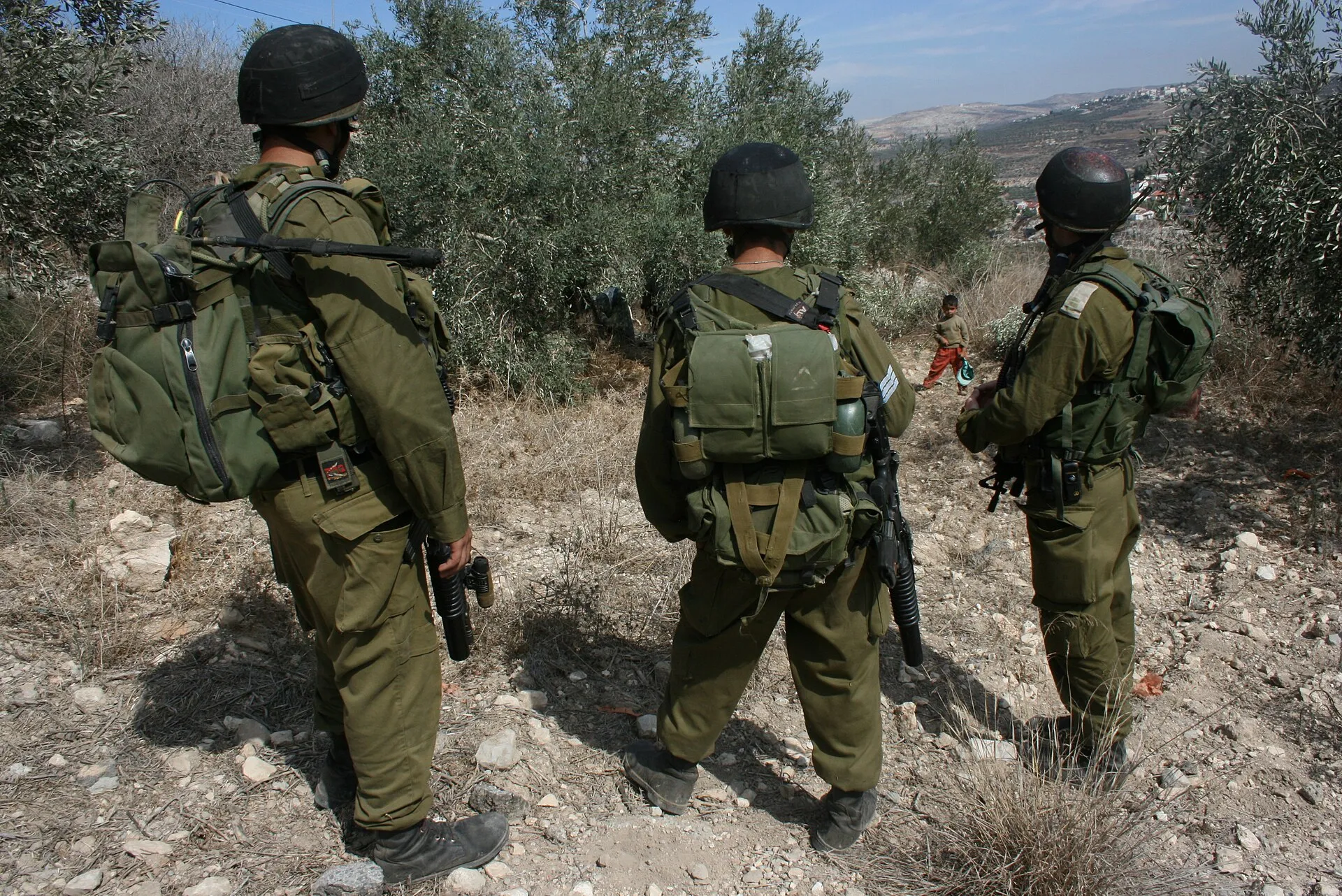
Olive groves in the West Bank, where the annual harvest is a vital source of income and cultural identity for Palestinian families — visible caption underneath: "Olive groves in the West Bank — a vital source of income and cultural identity for Palestinian families. Credit: Orrling, CC BY-SA 3.0, via Wikimedia Commons."
The olive tree holds deep cultural significance for Palestinians, symbolising rootedness, endurance and connection to the land. An attack on the harvest is therefore felt as more than an economic blow: the burning of olive trees — some of them decades or centuries old — destroys what families describe as their heritage.
The involvement of American citizens among the injured, and the attack on a US journalist, has raised the diplomatic stakes. Washington has in the past imposed sanctions on violent settlers and the organisations supporting them, and the State Department's call for "investigations, arrests, and convictions" signals that the incidents are being watched at the highest levels.
The Washington Post has said it expects a full investigation into the attack on its journalist. Press groups are likely to add the incident to a growing dossier of violence against media workers in the West Bank and Gaza.
For Israel, the incidents present a familiar dilemma: condemning settler violence while facing domestic political pressure from the settlement movement, a powerful force in Israeli politics. The IDF's statement that the circumstances would be examined is the standard initial response; whether it leads to arrests and prosecutions — as Washington is demanding — remains to be seen.
With the harvest season still under way, Palestinian farmers, Israeli activists and international observers will be watching whether the violence continues — and whether the condemnations from Washington and the UN translate into concrete pressure.
For the families of Abu Falah, the immediate concern is simpler: whether they can finish bringing in this year's crop safely. For 73-year-old Imm Khaldoun and her neighbours, the olive harvest is not a political statement. It is, as she put it, their land — and their right to be on it.
*Read the original BBC report here. For more on the region, see Verity's reporting on Red Sea shipping threats and Australia's response to the killing of aid worker Zomi Frankcom, or visit Verity's homepage.*