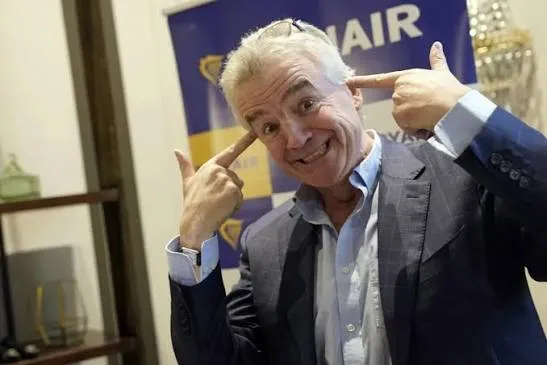
Ryanair CEO Michael O'Leary has once again ignited a firestorm within the European aviation sector, defending his recent characterization of certain competitors as "high-fare rapists" in remarks that underscore the intense pricing pressures and philosophical divides currently gripping the industry. This latest verbal broadside not only highlights O'Leary's long-standing penchant for provocative rhetoric but also brings into sharp focus the complex economic realities facing both airlines and passengers amidst a challenging post-pandemic recovery and inflationary environment.
The controversial comment, where O'Leary stated that airline passengers "can't afford to fly with the high-fare rapists around Europe," was made in the context of discussing escalating air travel costs. His subsequent defense of this stark language, rather than an apology or retraction, has propelled the contentious issue of airline pricing and consumer affordability to the forefront of public and industry discourse, forcing a renewed examination of market competition, operational expenses, and the very definition of accessible air travel in an era of rising living costs.
Michael O'Leary's recent descriptor for some European airlines, labeling them as "high-fare rapists," immediately drew widespread attention and criticism, yet the Ryanair chief executive has steadfastly defended his choice of words. The initial statement emerged amidst a broader discussion about the surging cost of air travel across the continent, a trend that has seen ticket prices climb significantly in the wake of the global pandemic. O'Leary's argument is rooted in the belief that certain carriers are exploiting post-pandemic demand and capacity constraints to levy exorbitant fares, thereby making air travel unaffordable for a significant portion of the European populace.
For O'Leary, the incendiary language is not merely an off-the-cuff remark but a deliberate rhetorical strategy aimed at highlighting what he perceives as predatory pricing practices by competitors. He posits that such aggressive terminology is necessary to cut through the noise and draw attention to the genuine financial burden placed upon consumers. This perspective aligns with Ryanair's historical positioning as the champion of low-cost travel, a brand identity meticulously cultivated over decades to appeal directly to price-sensitive passengers. The defense of the remark, therefore, can be interpreted as a reinforcement of Ryanair's core mission: to provide affordable air travel, contrasting its model sharply with those it accuses of price gouging.
The immediate reactions to O'Leary's comments were predictably bifurcated. While many within the industry, particularly representatives of legacy carriers and aviation trade bodies, condemned the language as inappropriate and damaging to the sector's reputation, a segment of the traveling public, grappling with increased living expenses and higher airfares, found a degree of resonance with O'Leary's sentiment. This division underscores the deep-seated frustrations among consumers regarding travel costs and the competitive tensions that continue to define the European aviation landscape.
The Ryanair Brand Identity
Ryanair's journey from a nascent Irish airline to Europe's largest carrier by passenger numbers is inextricably linked to its aggressive marketing tactics and an unwavering commitment to a no-frills, low-cost model. Central to this identity is Michael O'Leary himself, a figure renowned for his candid, often provocative, and sometimes offensive public statements. For decades, O'Leary has cultivated a personal brand as an industry disruptor, challenging established norms and directly confronting competitors and regulators alike. This approach has not only generated immense publicity for Ryanair, often at zero marketing cost, but has also reinforced the airline's image as an anti-establishment entity genuinely fighting for the consumer's wallet.
His history is replete with controversial pronouncements, from suggesting standing-room-only flights and coin-operated toilets to lambasting airport authorities and government policies. These statements, while frequently drawing criticism, have arguably served a strategic purpose: to keep Ryanair in the headlines, to differentiate it sharply from more staid competitors, and to solidify its reputation as the ultimate budget airline. The "high-fare rapists" comment, therefore, fits squarely within this established pattern of using shock value to underscore a business point, leveraging public outrage or agreement to further Ryanair's market position and narrative.
The Low-Cost Carrier Revolution
The rise of Ryanair, EasyJet, Wizz Air, and other low-cost carriers (LCCs) fundamentally reshaped European air travel. Before their advent, air travel was often considered a luxury, dominated by national flag carriers with higher operating costs and corresponding ticket prices. LCCs introduced a revolutionary model: unbundled fares, point-to-point routes, secondary airports, rapid turnarounds, and aggressive ancillary revenue generation. This model democratized air travel, making it accessible to millions who previously could not afford to fly. Ryanair, in particular, became synonymous with ultra-low fares, often advertising tickets for just a few euros, albeit with numerous add-on charges for services like baggage, seat selection, and priority boarding.
This fierce competition has long pitted LCCs against legacy airlines, forcing the latter to adapt by introducing their own budget subsidiaries or adopting LCC-like pricing strategies. The debate often centers on whether LCCs engage in a "race to the bottom," potentially compromising service quality or labor conditions, or if they simply offer a valuable choice for consumers prioritizing price. O'Leary's latest remarks can be seen as a continuation of this long-standing ideological and commercial battle, framed in his characteristically blunt style.
Post-Pandemic Recovery and Demand Surge
The European aviation sector has experienced a tumultuous period, emerging from the unprecedented disruption of the COVID-19 pandemic. The initial cessation of travel led to massive losses, fleet groundings, and widespread layoffs. However, the subsequent lifting of restrictions unleashed a wave of pent-up demand, with consumers eager to resume travel for leisure and business. This surge in demand, particularly in 2022 and 2023, coincided with persistent capacity constraints. Many airlines struggled to reactivate parked aircraft, rehire and train staff, and cope with a strained air traffic control infrastructure across Europe. This imbalance between robust demand and limited supply naturally pushed ticket prices upwards, a phenomenon observed across the industry.
Inflationary Pressures and Operational Costs
Beyond demand and supply dynamics, airlines are contending with significant inflationary pressures that are driving up their operational costs. Fuel, which typically represents one of the largest single expenses for an airline, has seen dramatic price volatility, exacerbated by geopolitical events like the conflict in Ukraine. Airlines hedge against these fluctuations, but sustained high prices inevitably translate into higher operating expenses. Furthermore, labor costs have been on the rise, driven by inflation and a competitive hiring environment as airlines seek to rebuild their workforces. Airport fees, navigation charges, maintenance costs, and regulatory compliance expenses have also escalated, squeezing profit margins. Balancing these mounting costs with consumer expectations for affordable travel is a perpetual challenge for airlines, influencing their pricing strategies and profitability. data frequently highlights these cost pressures.
Market Dynamics and Competitive Strategies
The European aviation market is characterized by intense competition. While LCCs like Ryanair dominate short-haul routes, legacy carriers such as Lufthansa, Air France-KLM, and British Airways continue to command significant market share, especially on long-haul and business-centric routes. However, the lines between these models are blurring, with many legacy airlines adopting hybrid strategies, offering basic economy fares and charging for services that were once included. Dynamic pricing, where ticket prices fluctuate based on real-time demand, booking patterns, and available capacity, is a sophisticated yield management technique employed by virtually all airlines. This algorithmic approach can lead to significant price variations for the same route, often frustrating consumers who perceive a lack of transparency or fairness. Additionally, the role of government subsidies for regional routes, environmental taxes, and varying national regulations further complicate the competitive landscape, creating an environment where pricing decisions are multifaceted and deeply strategic.
Condemnation from Competitors and Trade Bodies
The reaction from other airlines and aviation trade associations to O'Leary's "high-fare rapists" comment was swift and largely condemnatory. Many industry leaders expressed dismay at the use of such extreme and potentially offensive language, arguing that it undermines the collective efforts to rebuild public trust in air travel post-pandemic and tarnishes the reputation of the entire sector. Trade bodies, often tasked with advocating for the industry's interests, typically promote a narrative of collaboration and mutual respect among competitors, even amidst fierce commercial rivalry. O'Leary's remarks are seen by some as counterproductive to this goal, creating an adversarial atmosphere that could alienate stakeholders and obscure the legitimate challenges facing airlines. Calls for more measured and professional discourse are common responses to such outbursts, emphasizing the need for constructive dialogue over inflammatory rhetoric.
Consumer Advocacy and Affordability Concerns
While industry insiders largely disapproved of the language, O'Leary's comments resonated with a significant segment of the traveling public, particularly those struggling with the rising cost of living across Europe. For many consumers, the increasing price of air tickets has transformed what was once an accessible mode of transport into an unaffordable luxury. Consumer advocacy groups have consistently highlighted concerns about transparency in pricing, hidden fees, and the overall affordability of travel. O'Leary's blunt assessment, though controversial, tapped into a vein of genuine frustration among travelers who feel that airlines are indeed taking advantage of their desire to travel. This sentiment fuels a broader debate about whether air travel should be considered a fundamental right or a discretionary expenditure, especially in a continent where cross-border mobility is crucial for both personal and economic reasons. Data from often shows the impact of inflation on household budgets, making such price increases particularly salient.
Potential for Regulatory Implications
O'Leary's remarks, by drawing sharp attention to pricing practices, could inadvertently invite increased scrutiny from regulatory bodies across Europe. The European Union, with its robust consumer protection framework and competition laws, maintains a watchful eye on airline behavior. Accusations of "high-fare rapists," even if rhetorical, could prompt regulators to examine whether pricing strategies are fair, transparent, and compliant with existing anti-competitive regulations. Authorities might investigate issues such as price collusion, algorithmic pricing fairness, or misleading advertising, especially if consumer complaints escalate. While O'Leary's intent may be to criticize competitors, the effect could be a broader regulatory spotlight on the entire industry, potentially leading to new guidelines or enforcement actions aimed at ensuring fair competition and protecting consumer interests in the dynamic aviation market. European Union aviation regulations are complex and constantly evolving.
Influencing Global Aviation Discourse
While O'Leary's comments were specifically aimed at the European market, the interconnected nature of the global aviation industry means that such high-profile controversies rarely remain confined to a single region. The debate sparked by his remarks—centering on airline affordability, competitive ethics, and the role of low-cost carriers versus legacy airlines—resonates universally. Aviation leaders and policy makers in other parts of the world often observe European trends as indicators of broader industry challenges and potential solutions. The underlying tension between airline profitability and consumer access is a global one, making O'Leary's provocative stance a flashpoint that can influence how these issues are discussed and framed in diverse markets, from North America to Asia and beyond. The rhetoric, even if extreme, brings a global focus to the perennial challenge of balancing economic viability with social accessibility in air transport.
Lessons for Other Markets
The low-cost carrier model, pioneered and perfected in Europe and the United States, has since spread globally, transforming air travel markets in regions like Southeast Asia, Latin America, and Africa. Airlines in these emerging markets often look to the successes and failures of their European counterparts for guidance. O'Leary's unapologetic defense of aggressive pricing rhetoric, and the subsequent public and industry reaction, offers a case study in how such strategies play out in a mature, highly competitive market. It prompts questions for other jurisdictions: How do LCCs maintain their cost advantage? What are the limits of aggressive marketing? How do regulatory bodies respond to accusations of unfair pricing? These are lessons that can inform competitive strategies and regulatory approaches worldwide, influencing the development of aviation policy and consumer protection in diverse economic contexts. low-cost carrier model remains a key subject of study.
Looking Ahead: Sustainability and Future Fares
The long-term trajectory of airline fares is increasingly intertwined with the industry's imperative to address climate change and achieve sustainability goals. As airlines invest in more fuel-efficient aircraft, sustainable aviation fuels (SAFs), and carbon offset programs, these costs are likely to be passed on to consumers, potentially driving up ticket prices further. The environmental cost of flying, once largely externalized, is becoming an internal cost that must be managed. This creates a new layer of complexity in the affordability debate: can air travel remain widely accessible if its true environmental cost is reflected in ticket prices? Technological advancements, such as hydrogen-powered aircraft or more efficient air traffic management systems, offer some hope for reducing future costs and emissions, but their widespread adoption is still years away. Meanwhile, the tension between cheap flights and sustainable operations will continue to be a defining challenge for the global aviation industry, ensuring that debates about pricing, like the one sparked by O'Leary, will remain highly relevant for the foreseeable future.
Michael O'Leary's unwavering defense of his "high-fare rapists" comment serves as more than just another controversial headline; it is a vivid reflection of the deep-seated economic pressures, competitive dynamics, and consumer frustrations currently shaping the European—and by extension, global—aviation landscape. His remarks have once again forced a critical examination of airline pricing, the role of low-cost carriers, and the delicate balance between profitability, accessibility, and ethical discourse in a vital global industry.