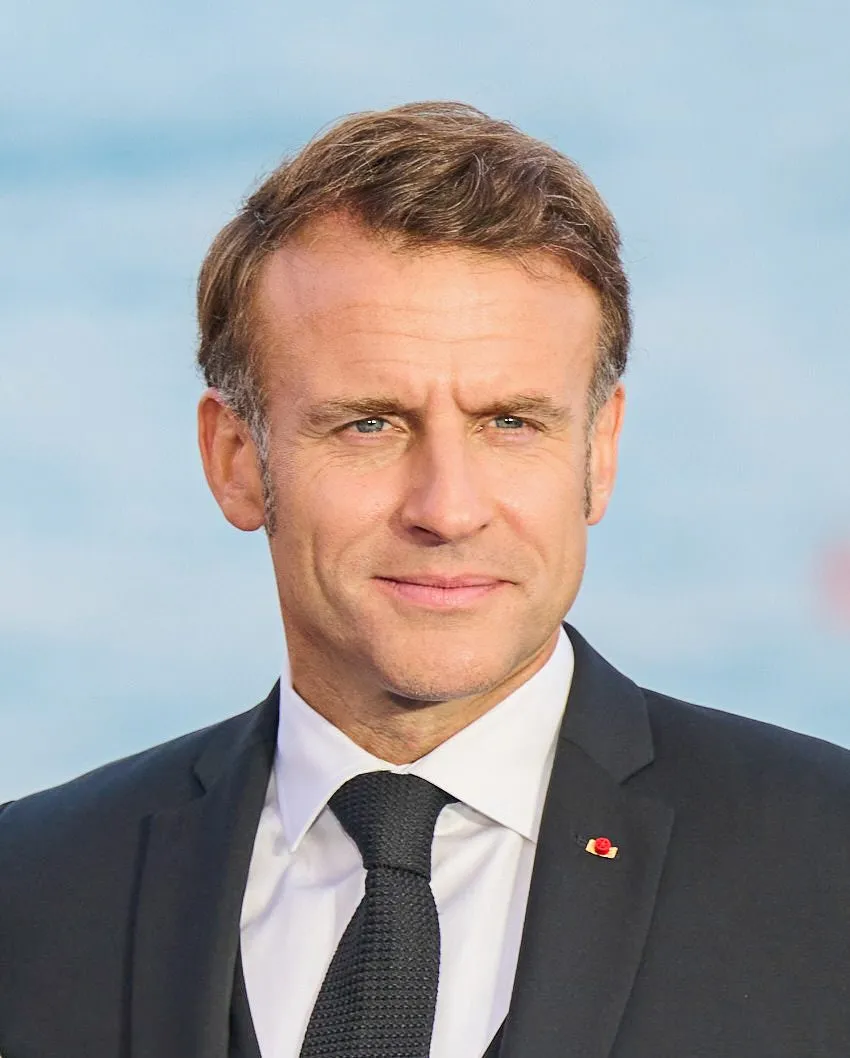
Cover image: French President Emmanuel Macron — European Commission, Wikimedia Commons, CC BY 4.0.
Macron's announcement: unions only
Only authorised union protests will be allowed in French towns and cities on Saturday, President Emmanuel Macron has said, as his government moves to prevent a repeat of the rioting and looting that engulfed demonstrations last weekend.
Speaking on Thursday after meeting intelligence chiefs and ministers, Macron said "illegitimate" protests would not be allowed, but trade unions would be offered alternative routes so that shops and businesses could be protected. "This is to protect our city centres," the president said.
"The general recommendation is that there should be no demonstrations. Those who want to continue to demonstrate, when they are trade union organisations, will have alternative routes proposed by the prefects," Macron announced. "When they're not union organisations, wherever possible, they'll be banned."
He blamed what he called "seditious" ultra-left groups and vandals for the riots and looting, accusing them of "political and even seditious acts organised by far-left groups that aim to bring down the Republic". The announcement marks the sharpest escalation yet in the government's response to a wave of unrest driven by anger over the cost of living and conditions in schools — the school protests we covered earlier this week.
 Protesters march in Paris (file photo from an earlier demonstration).
Protesters in Paris at an earlier demonstration. Only union-organised marches will be authorised this Saturday, Macron said. (kellybdc / Wikimedia Commons, CC BY 2.0)
The riots that triggered the crackdown
Big demonstrations against the high cost of living and school conditions last Saturday were overshadowed by violence that saw businesses and historic buildings destroyed across the country. In Lyon, France's third-biggest city, the tourist office was set on fire amid widespread disorder.
The government was accused of being blindsided by the scale of the unrest. The Times reported that curfews were imposed in several cities in the aftermath, and Macron said the priority now was a return to calm.
The human and judicial toll has been heavy. France's justice minister, Gérald Darmanin, said on Thursday that 217 people had been jailed over last weekend's disorder after being convicted in fast-track trials, with that number expected to rise. Some 2,700 people have been arrested across France and more than 1,000 have appeared in court. Half of those detained had no prior criminal record, he said, according to Le Figaro.
The fallout has even reached the markets: reports noted France's 10-year bond yield climbing above 5 per cent, a signal of investor unease about political and budgetary stability.
A massive security operation for Saturday
The interior ministry said police deployments would be increased by 20 per cent compared with last weekend, after Prime Minister Sébastien Lecornu had promised a large-scale deployment. Elite tactical police units and a military unit normally deployed on French soil for counterterrorism operations will be mobilised, with helicopters and armoured vehicles on standby, according to reports citing French officials.
Local authorities have gone further still. In Lyon, regional authorities imposed a blanket ban on all demonstrations on Saturday. Similar bans or route restrictions were announced in Nice, Toulon, central Rouen and Grenoble, according to European press summaries of the Politico reporting on Macron's instructions to prefects. In Paris, authorities banned protests in parts of the city on Thursday, including tourist sites such as the Louvre and the Champs-Élysées, and government buildings such as the Élysée Palace, the prime minister's office and the Senate.
Partial curfews and restrictions on youth movement and gatherings were also in force this week in several cities, including Marseille, Bordeaux, Nice, Lyon and Lille — a continuation of the emergency measures imposed after the first wave of disorder.
Macron is also convening a defence council on Friday ahead of the weekend, after which he promised "new decisions" would be announced — a step Ukrainian wire coverage of the BBC's reporting also highlighted, alongside the main student union UNEF's call for Saturday rallies.
Unions dig in — and yellow vests join them
The crackdown has not deterred the protest movement's organisers. Yellow-vest protesters said they would join the CGT trade union demonstration on Saturday after the authorities rejected their application to hold their own protest but gave the union the green light. One of the leaders of the yellow-vest movement, which erupted over fuel price rises in 2018 and was reignited in last week's violent protests, has called for more unrest.
The unions, meanwhile, are threatening to escalate. Sophie Binet, general secretary of the hard-left General Confederation of Labour (CGT), said the one-day general strike called for 5 November should continue until the government gave in to its demands. Her intervention echoes the rolling strikes of May 1968, when workers downed tools to join student protesters. Unions are threatening a rolling general strike next month in what would be a fresh blow to Macron's beleaguered government.
France's main student union, UNEF, has also called for rallies on Saturday. Earlier in the week, Paris authorities said they would stop a student protest on Thursday — but the government then relented and allowed students to demonstrate in the capital. Thousands gathered in an orderly protest focused on demands for reform of the university admissions system. In Lyon, students gathered in defiance of the local ban on street demonstrations.
What happens next
Saturday's mobilisation will be a decisive test for Macron's strategy. By channelling all authorised protest through the unions — organisations that typically discuss planned demonstrations with local authorities in advance — the government hopes to separate legitimate demonstration from the looting and vandalism that marred last weekend. French media reporting on the BBC's coverage noted that prefects have been instructed to refuse requests to "protest" or "regroup" from people with "no legitimacy to do so".
But the approach carries risks. Restricting the right to demonstrate is politically explosive in France, and the yellow vests' decision to march under the CGT banner shows how easily the government's categories can be circumvented. With a rolling general strike threatened for November and presidential elections six months away, the Élysée's gamble is that order on the streets will outweigh the anger its methods provoke.
For continuing coverage of French politics, see our Politics section and European news, or return to the homepage. More background is in our earlier pieces on the Paris curfews and the school protests, plus our European politics analysis.