In Short (TL;DR)The High Court was told Thames Valley Police accept the search warrants used in Andrew Mountbatten-Windsor's February arrest were unlawful. The warrants were granted under the wrong part of the Police and Criminal Evidence Act 1984, a legal technicality the force conceded before Mr Justice Hilliard. Documents and electronic devices seized in the raids will stay in police custody until a 2027 hearing on whether they can lawfully be retained. The criminal investigation into alleged misconduct in public office continues; quashing the warrants does not end it.
Andrew Mountbatten-Windsor has secured a significant legal victory in his challenge against Thames Valley Police, after the force conceded in the High Court that the search warrants used to raid his homes at the time of his arrest in February were unlawful — as first reported by BBC News. The admission, made before Mr Justice Hilliard on Thursday, centred on a technical error: the warrants were applied for under the wrong part of the Police and Criminal Evidence Act 1984.
The ruling means the warrants will be quashed — but it does not bring the criminal investigation into the King's younger brother to an end.
At a hearing at the Royal Courts of Justice on Thursday, which Andrew did not attend, the judge said: "Agreement was reached between the claimant and Thames Valley Police that the search warrants were unlawful." The force accepted that the initial court's decision to issue the warrants under the specific piece of legislation used was incorrect.
The warrants had been granted by a judge at the Old Bailey on February 18, the day before Andrew's arrest, allowing detectives to search his residence on the Sandringham estate and his former home, Royal Lodge in Windsor. Andrew's lawyers launched a judicial review questioning both the background to the granting of the warrants and their legal basis.
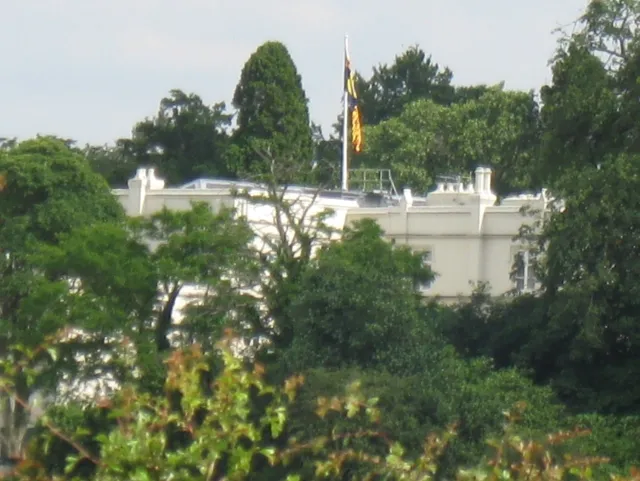
!Sandringham House in Norfolk, where a second property was raided
Sandringham House in Norfolk, where a second property was raided. Credit: Balon Greyjoy / Wikimedia Commons (CC BY-SA 4.0)
The heart of the case was a question of statutory mechanics. The warrants were issued under the Police and Criminal Evidence Act 1984 — the cornerstone legislation governing police powers in England and Wales — but the wrong section of the Act was invoked, a question of section 8 versus section 9. Different sections of PACE impose different thresholds and safeguards for searches, and the force accepted that the section relied upon did not properly fit the circumstances.
Legal experts note that such errors, while embarrassing for the police, are not unheard of in complex investigations. The significance here lies less in the technicality itself than in who it affects: the subject of the searches is the second son of the late Queen Elizabeth II, and the judicial review marked the first time a member of the royal family had challenged the lawfulness of criminal proceedings against them since the trial of Charles I in 1649.
Officers spent days searching the two properties in February, removing documents and electronic devices. That material will remain in police custody while the legal argument over its future plays out.
Thames Valley Police said legal proceedings are currently ongoing to decide how the seized material will be managed and whether it can lawfully be retained in support of the ongoing investigation under a different legislative route. In effect, the force is seeking to have the warrants effectively reissued under the correct provision — with a hearing on the question expected in 2027.
For Andrew's legal team, keeping the material out of the investigation would be a major prize. For the police, retaining it may be critical to the misconduct inquiry, which has been described as wide-ranging.
The judge was explicit that the quashing of the warrants changes nothing about the underlying criminal case: "The fact that the search warrants were quashed does not bring an investigation to an end, or mean that the whole of the investigation was unlawful."
Thames Valley Police confirmed that its investigation into alleged misconduct in public office by a man in his 60s from Norfolk remains ongoing, and that it continues to pursue all reasonable lines of enquiry. Andrew was interviewed under caution following his arrest and released under investigation. He has not been formally charged and denies wrongdoing in relation to Epstein.
The investigation began after the release of millions of documents by the US Department of Justice relating to the late sex offender Jeffrey Epstein. The material suggested that Andrew, during his time as the UK's trade envoy in 2010, had forwarded confidential information to Epstein — an allegation that, if proven, could amount to misconduct in public office.
Andrew was arrested on his 66th birthday on February 19, 2026. He has consistently denied wrongdoing in his associations with Epstein and has said he regrets their friendship. The case has drawn intense international attention, adding to the scrutiny of high-profile investigations already in the public eye and the wider political fallout of the Epstein files, including related parliamentary pressure.
Beyond its immediate legal consequences, the case will be remembered for its constitutional novelty. No member of the royal family had challenged the lawfulness of criminal proceedings against them in more than 375 years — a measure of how extraordinary the current moment is for the monarchy.
Andrew was stripped of his royal titles last year amid renewed scrutiny of his links to Epstein, and now styles himself Andrew Mountbatten-Windsor. The former Duke of York has kept a low public profile since his arrest, and his absence from Thursday's hearing was in keeping with that approach.
Two legal tracks now run in parallel. The first is the retention fight: whether the documents and devices seized in February can lawfully remain in police hands, to be decided at a hearing next year. The second is the criminal investigation itself, which the force insists is unaffected by the warrants ruling.
For Thames Valley Police, the concession is an uncomfortable admission in one of the most high-profile investigations in its history. For Andrew, it is a genuine victory — but a limited one. As Reuters noted, the quashed warrants throw into doubt some of the evidence gathered, yet the investigation grinds on. Verity will continue to cover developments on our homepage and in line with our editorial standards, alongside other major UK legal stories.