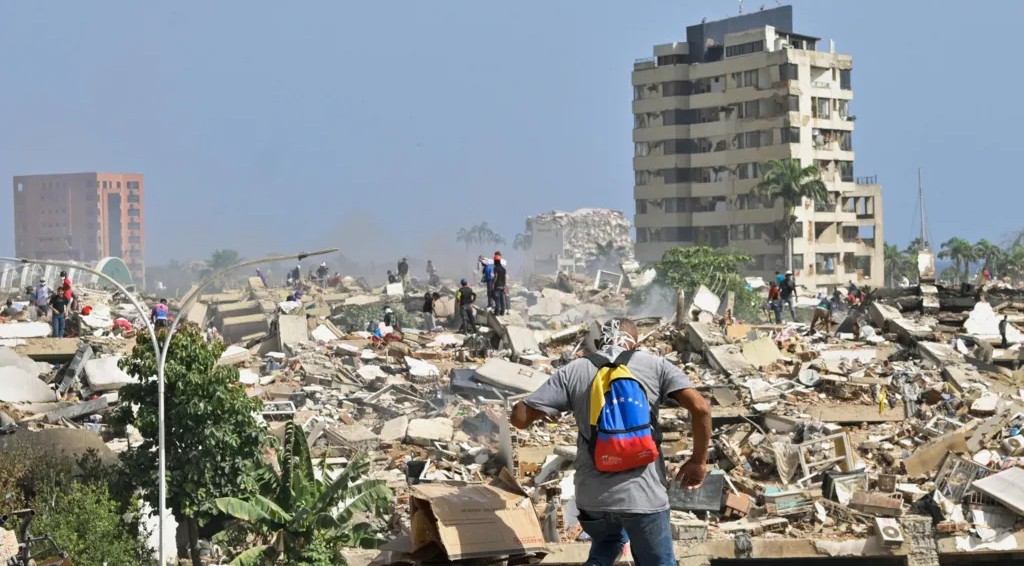
Venezuela is facing one of the most devastating natural disasters in its modern history after two powerful earthquakes struck the country's northern region within moments of each other. The twin tremors caused widespread destruction across several cities, with coastal communities suffering the greatest damage.
Authorities have confirmed that more than 900 people have lost their lives, while thousands have been injured. Rescue operations continue around the clock as emergency crews race against time to locate survivors trapped beneath collapsed buildings.
The scale of destruction has prompted an international humanitarian response, with search-and-rescue specialists, medical personnel, and relief organizations arriving from around the world to assist Venezuelan authorities.
The earthquakes struck on Wednesday, with the second tremor measuring 7.5 on the Richter scale, making it one of the strongest earthquakes recorded in Venezuela in more than a century.
The back-to-back earthquakes sent powerful shockwaves across northern Venezuela, damaging residential neighborhoods, hospitals, shopping centers, schools, government buildings, and transportation infrastructure.
Entire apartment blocks partially collapsed, while roads cracked open and communication networks experienced major disruptions. Electricity outages affected several regions immediately after the disaster, making rescue coordination even more difficult during the critical first hours.
Emergency officials reported hundreds of aftershocks in the days following the main earthquakes, forcing many residents to remain outdoors because of fears that weakened buildings could collapse.
Among all affected areas, La Guaira has suffered the greatest devastation.
The coastal state, which hosts one of Venezuela's busiest ports and the country's primary international airport, experienced widespread structural failures. Entire neighborhoods were reduced to piles of concrete and twisted steel.
Local officials estimate that hundreds of homes, commercial buildings, and public facilities have either collapsed or become unsafe for occupancy.
Heavy construction equipment has now arrived in several districts to remove debris, although many rescue operations continue to rely on hand tools to avoid causing further harm to people believed to be trapped beneath the rubble.
Families continue gathering near destroyed buildings, hoping for news about missing relatives.
Search-and-rescue teams have entered what experts describe as the most critical phase following a major earthquake.
During the first 72 hours after a building collapse, survival rates are generally highest for victims trapped beneath debris. This has led emergency responders to work continuously despite difficult conditions.
International rescue specialists are using advanced technologies, including thermal imaging devices, listening equipment, drones, and specially trained search dogs to locate survivors.
Emergency responders carefully remove layers of concrete while monitoring for signs of life beneath collapsed structures.
Several successful rescues have provided moments of hope amid the tragedy, with survivors being pulled from damaged buildings days after the earthquakes struck.
The humanitarian crisis has prompted countries across the world to offer emergency assistance.
Search-and-rescue personnel, medical experts, engineers, and disaster response specialists have arrived from several nations to support Venezuelan emergency services.
International humanitarian organizations are coordinating relief efforts that include:
- Emergency medical treatment
- Search-and-rescue operations
- Emergency communications equipment
The United Nations has also deployed humanitarian teams to coordinate relief efforts alongside local authorities and international partners.
Aid agencies warn that the coming weeks will remain extremely challenging as thousands of displaced residents require food, shelter, healthcare, and psychological support.
Healthcare facilities are struggling to manage the sudden surge of injured patients.
Several hospitals sustained structural damage during the earthquakes, forcing doctors to establish temporary treatment centers in parking lots, tents, and open public spaces.
Medical workers continue treating patients suffering from fractures, crush injuries, severe bleeding, dehydration, and trauma-related complications.
Healthcare professionals have also expressed concern about shortages of medicines, surgical equipment, blood supplies, and emergency medical resources.
Public health experts warn that overcrowded shelters and damaged sanitation systems could increase the risk of infectious disease outbreaks if humanitarian assistance does not reach affected communities quickly.
Although the official death toll continues to rise, authorities believe many people are still unaccounted for.
Emergency hotlines remain active as families search for missing loved ones who were inside office buildings, shopping centers, residential towers, and workplaces when the earthquakes occurred.
Outside many collapsed buildings, relatives wait anxiously as rescue teams continue carefully removing debris.
Some families have received hopeful news after survivors were discovered alive beneath the rubble, while others continue facing painful uncertainty.
Community volunteers have joined professional rescue crews, delivering food, water, blankets, and first aid supplies to emergency workers and displaced residents alike.
The earthquakes have caused widespread damage beyond residential buildings.
Roads connecting affected communities have been partially destroyed, slowing the delivery of emergency aid and heavy machinery.
Several bridges have been closed pending structural inspections, while power outages and communication failures have complicated rescue coordination.
Airports and ports continue operating under emergency conditions to facilitate the arrival of international humanitarian assistance, although transportation remains limited in several disaster zones.
Engineers are now conducting structural assessments to determine which buildings can be repaired and which must be demolished for public safety.