In Short (TL;DR)A superseding indictment unsealed Thursday in Manhattan federal court charges Nicolás Maduro and Cilia Flores with conspiracy to commit torture. Prosecutors allege the couple authorised and oversaw the torture of political opponents and detainees, including three US citizens, to retain power in Venezuela. Alleged methods include electric shocks, beatings, asphyxiation, forced nudity, prolonged isolation and starvation. Maduro and Flores were captured in a pre-dawn US raid in Caracas in January 2026 and deny the charges; their trial is set for June 2027.
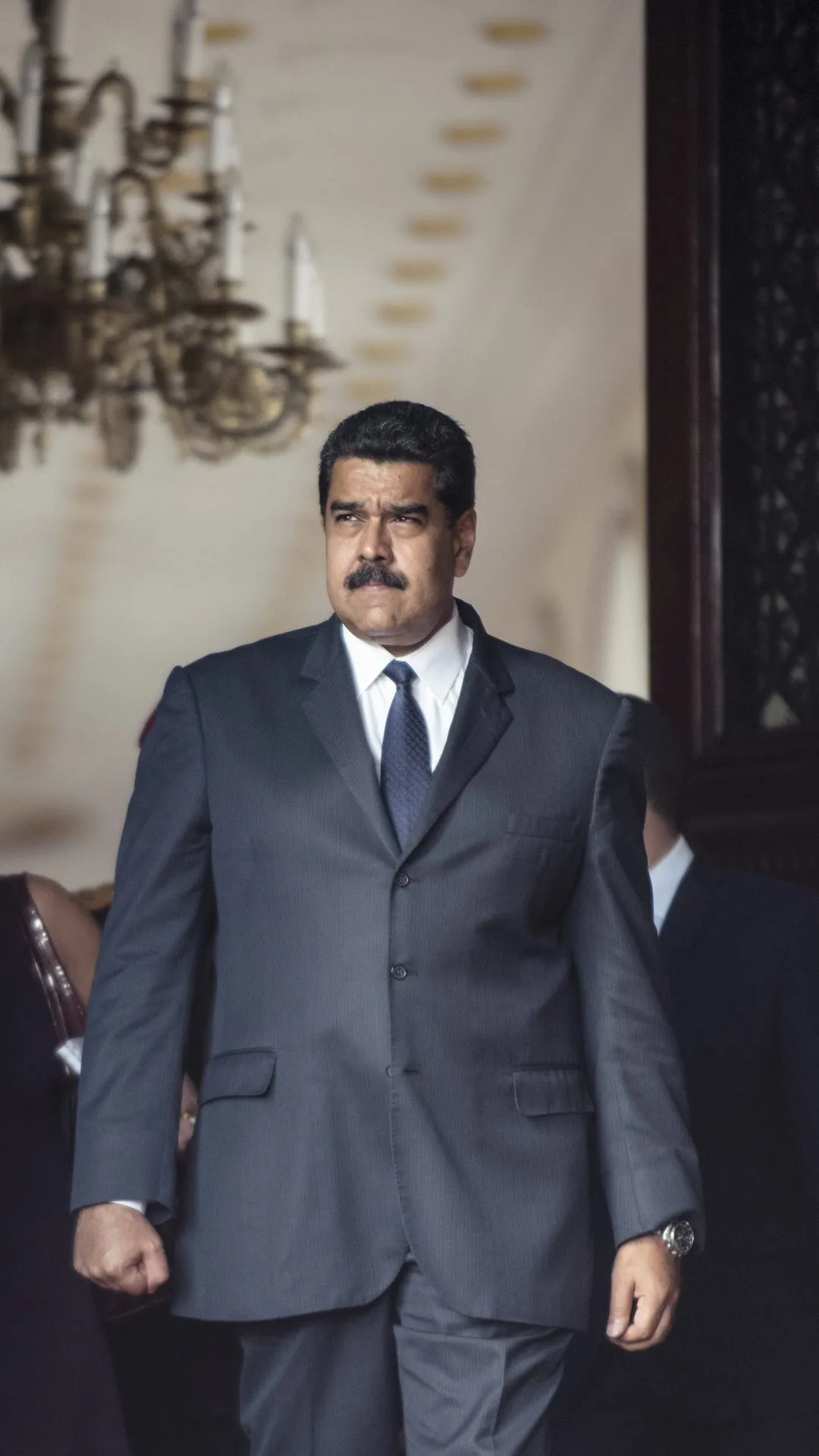
!Cover: Nicolás Maduro photographed in 2016, during his presidency of Venezuela
Credit: Eneas de Troya / Wikimedia Commons (CC BY 2.0).
The US criminal case against Venezuela's ousted former president took a darker turn on Thursday, as federal prosecutors unveiled a superseding indictment charging Nicolás Maduro and his wife, Cilia Flores, with conspiracy to commit torture. The new count, filed in Manhattan federal court, accuses the couple of authorising and overseeing the systematic torture of political opponents and detainees — including American citizens — to cling to power during Maduro's rule.
The charge is layered on top of the narcotics and weapons case the couple already face: allegations that Maduro worked with cartel groups to move cocaine through Venezuela toward the United States, and conspired to possess machine guns and destructive devices. It marks the first time Maduro has faced criminal charges over torture allegations, though US officials and human rights groups have accused Venezuelan officials of torturing detainees for years.
The revised indictment paints a picture of state violence directed from the top. Prosecutors allege that Maduro authorised torture against specific individuals and oversaw a system built to deploy torture, arbitrary detention and violence as instruments of repression against the opposition.
The methods listed are brutal: electric shocks, beatings and asphyxiation at Maduro's behest, alongside accounts of rape, forced nudity, prolonged isolation, starvation and confinement in punishment cells. Psychological torment was part of the arsenal too — including threats to kill the families of victims. In one instance detailed by prosecutors, Maduro allegedly signed off on specific torture techniques, sought and received updates on how particular prisoners were being treated, watched a video of a forced confession, and personally threatened the killing of one prisoner's child as a form of psychological pressure.
Flores, a 69-year-old former legislator and attorney general, is accused of playing a central role: prosecutors say she helped develop the repressive apparatus, ordered the torture of specific detainees and received updates on prisoners held under the regime.
The indictment reaches back more than a decade. In one case, prosecutors say that in 2013 Maduro ordered the arrest of a Venezuelan military officer he suspected of plotting a coup. Members of Venezuela's military counterintelligence directorate then interrogated the officer while shocking him with a live electric wire around 20 times and hanging him by his hands and feet for several minutes at a time.
Among the alleged victims were three US citizens detained in Venezuela. Prosecutors said one American was subjected to beatings and electric shocks during months of imprisonment, another suffered injuries so severe they required hospitalisation, and a third sustained a permanent eye injury after being repeatedly beaten while in detention — details laid out in the charging documents. In another case from 2022, an American detained after entering Venezuela was allegedly beaten and shocked with electricity after being accused of plotting to assassinate Maduro.
Cases of Americans entangled in foreign detention and justice systems have repeatedly become diplomatic flashpoints; in a separate recent case, a US Marine was arrested in Okinawa over the murder of a woman found in a Naha hotel.
More broadly, the indictment asserts that thousands of Venezuelans were "harassed, threatened, arrested, prosecuted, assaulted, tortured, or killed" by people acting at the behest of the government Maduro controlled — language that frames the detentions not as isolated excesses but as a deliberate machinery of rule.
!In-body: The Caracas skyline, capital of Venezuela, where Maduro and Flores were seized in a January 2026 US raid
Credit: City Vzla / Wikimedia Commons (CC BY-SA 4.0).
Maduro, 63, led Venezuela for roughly 13 years before his dramatic fall. In the early hours of 3 January 2026, US forces seized him and Flores from their home in Caracas in a middle-of-the-night raid and flew them to New York — an operation that stunned the region and reshaped US-Venezuelan relations.
Since then the couple have been held at the Metropolitan Detention Center in Brooklyn. Both have pleaded not guilty to the drug charges first brought against them years ago and deny the new allegations. A message seeking comment was sent to Maduro's lawyer; Flores was in court for a previously scheduled hearing on Thursday, where her attorney said he had not yet had time to review the new allegations.
Venezuela, meanwhile, has moved on without its former strongman: the country has increased cooperation with the United States under the leadership of Maduro's former vice president, Delcy Rodríguez, as reported by Reuters — a shift summarised in international coverage of the case.
Torture conspiracy is a different kind of accusation from drug trafficking — and a potentially more consequential one. While the narcotics case targeted how Maduro allegedly financed and enriched his regime, the new count goes to the heart of how he allegedly governed: through fear. Human-rights advocates have long documented abuse in Venezuelan detention centres; a criminal indictment naming the former head of state personally could set a precedent for how US courts treat state-sponsored torture by deposed leaders.
The charge also complicates the couple's legal position. They already faced potential life sentences if convicted on the earlier charges. The torture allegation adds moral and political weight to the prosecution's case and could influence everything from bail considerations to sentencing — and to how the trial is perceived across Latin America, where the US operation to seize a sitting head of state remains deeply controversial.
The trial is scheduled to begin on 1 June 2027, giving both sides the better part of a year to prepare — a timeline the new charge may yet disturb. For now, Maduro and Flores remain behind bars in New York, and the case continues to unfold as one of the most extraordinary intersections of criminal justice and geopolitics in recent memory — alongside other high-profile US federal justice stories such as the Fort Hood shooter case. Verity's world desk will follow the proceedings; further international reporting appears on the Verity homepage.
*Read more about our newsroom.*