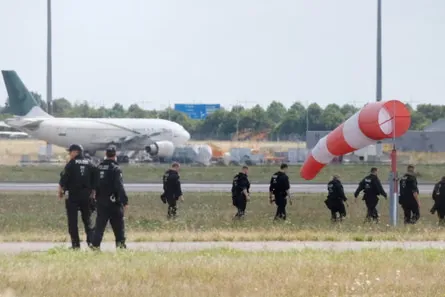
Germany has officially linked Russia to a drone incident at Leipzig/Halle Airport on August 4, where an explosive-laden drone was found near Ukrainian cargo aircraft, marking a significant and concerning escalation in the ongoing geopolitical tensions and a direct challenge to European security.
The revelation by German authorities underscores a deepening concern within NATO member states regarding the covert tactics employed by foreign actors on European soil, particularly in the context of the ongoing [[topic: Russia-Ukraine War]]. This incident, occurring at a critical logistical hub, not only highlights vulnerabilities in civilian infrastructure but also intensifies the debate around the nature and scope of hybrid warfare targeting Western nations.
On August 4, a routine security check or an alert based on intelligence led to the discovery of a drone at Leipzig/Halle Airport. What made this discovery particularly alarming was the device's payload: an explosive charge. Even more critically, the drone was found in close proximity to Ukrainian cargo planes, aircraft that are widely understood to be vital conduits for military and humanitarian aid flowing into Ukraine, or for exporting Ukrainian goods. The precision of the alleged target, coupled with the nature of the device, points to a deliberate and calculated act rather than a random occurrence.
Leipzig/Halle Airport is not merely a regional travel hub; it is one of Germany's busiest cargo airports and a significant logistical nexus in Central Europe. Its strategic importance has only grown since the full-scale invasion of Ukraine, serving as a potential gateway for supplies essential to Ukraine's defense and resilience. The targeting of such an airport, and specifically aircraft linked to Ukraine, suggests an intent to disrupt critical supply lines, sow discord, or send a potent message about the reach of hostile operations. The discovery of an explosive device, even if it did not detonate, signifies an intent to cause damage or create a security crisis, raising the specter of state-sponsored sabotage on German territory.
The German government's direct accusation of Russia in connection with the Leipzig drone incident represents a significant diplomatic and security development. Such an unequivocal statement from a major European power is rarely made without substantial intelligence backing. While the specific evidence leading to this conclusion has not been publicly detailed, it likely stems from a meticulous forensic analysis of the drone and its components, examination of its flight path, potential command and control signals, and broader intelligence gathering on Russian activities in the region. German intelligence agencies, alongside law enforcement, would have undertaken a comprehensive investigation to ascertain the drone's origin, its operational capabilities, and the network behind its deployment.
For Germany to publicly attribute this act to Russia signifies a profound level of confidence in their findings. It moves the incident beyond mere suspicion into the realm of state-level accusation, demanding attention and a response from the international community. This is not the first time Germany has pointed fingers at Russia for hostile acts; however, an alleged physical attack involving explosives on critical infrastructure within German borders marks a notable escalation. The decision to go public with this accusation reflects a strategic choice to expose and deter such 'gray zone' tactics, rather than allowing them to fester in the shadows.
The alleged drone incident at Leipzig/Halle fits a disturbing pattern of behavior attributed to Russia in recent years, often categorized as 'hybrid warfare.' This doctrine involves a blend of conventional and unconventional tactics, including cyberattacks, disinformation campaigns, economic coercion, political interference, espionage, and covert sabotage, all designed to destabilize adversaries without crossing the threshold of overt military conflict. The objective is often to create ambiguity, sow confusion, and deny responsibility, making it difficult for targeted nations to respond decisively.
Europe has repeatedly been a theater for these operations. Past incidents range from widespread cyberattacks on critical infrastructure in Estonia and Ukraine, to sophisticated disinformation campaigns aimed at influencing elections in various Western democracies, and even alleged assassinations on foreign soil, such as the . More recently, there have been ongoing investigations into the , which, while not definitively attributed, bear hallmarks of state-sponsored disruption. The deployment of an explosive-laden drone near a sensitive facility aligns perfectly with this 'gray zone' strategy: a potentially disruptive or destructive act that could be plausibly denied, yet sends a clear, intimidating message.
The motives behind such an act could be multi-faceted. It could be an attempt to disrupt the flow of aid to Ukraine, thereby weakening its defense capabilities. It might serve as a warning to Germany and other European nations about the potential consequences of their support for Kyiv. Alternatively, it could be a test of Western security responses, probing vulnerabilities and assessing reaction times. Regardless of the specific intent, the overarching goal appears to be to exert pressure, create fear, and undermine the collective resolve of countries supporting Ukraine.
Critical Infrastructure Vulnerability
The incident at Leipzig/Halle starkly highlights the vulnerability of critical civilian infrastructure to unconventional threats. Airports, railway networks, energy grids, and communication systems are the lifeblood of modern societies and economies. An attack, or even the credible threat of one, can cause widespread disruption, economic damage, and public fear. This incident will undoubtedly prompt a reassessment of security protocols at airports and other vital facilities across Germany and potentially wider Europe, leading to increased investment in counter-drone technologies, advanced surveillance, and enhanced intelligence sharing.
Escalation of Tensions
A direct accusation against Russia for an act of sabotage on German soil represents a significant escalation in the already fraught relations between Moscow and the West. While diplomatic ties have been severely strained since the invasion of Ukraine, incidents involving physical threats to infrastructure within NATO territory push the boundaries further. It compels Germany and its allies to consider stronger responses, which could range from further diplomatic expulsions and sanctions to enhanced military posture and intelligence operations.
NATO's Response and Collective Defense
As a founding member of NATO, Germany's security is inextricably linked to the collective defense of the alliance. An alleged attack on German soil, even if covert, raises questions about the scope of Article 5 – NATO's collective defense clause. While hybrid attacks often fall below the threshold of an armed attack, they nevertheless pose a serious threat to national security. The incident will likely reinforce NATO's focus on bolstering its resilience against hybrid threats, improving intelligence sharing among members, and developing robust counter-drone capabilities. It underscores the urgency of adapting to a security landscape where the lines between war and peace are increasingly blurred.
Diplomatic Fallout and Public Trust
The German accusation will inevitably lead to further diplomatic fallout with Russia, which is likely to deny any involvement, consistent with its 'plausible deniability' strategy. This ongoing diplomatic friction further isolates Russia on the international stage. Domestically, the incident could impact public trust in government's ability to protect critical infrastructure, potentially leading to calls for greater transparency regarding security threats and responses. Maintaining public confidence and demonstrating strong protective measures will be crucial for the German government.
The Leipzig drone incident serves as a stark reminder that the [[topic: Russia-Ukraine War]] is not confined to Ukraine's borders. Its ripple effects are felt across Europe and beyond, manifesting in energy crises, economic instability, and increasingly, direct security threats to NATO members. Germany, as a leading economic power and a strong supporter of Ukraine, finds itself at the forefront of this geopolitical struggle. The alleged targeting of Ukrainian cargo planes at a German airport symbolizes the interconnectedness of the conflict and the lengths to which state actors may go to undermine perceived adversaries.
This event contributes to a broader understanding of modern warfare, where technology like drones can be weaponized for asymmetric attacks, making traditional border defenses less effective. It calls for a re-evaluation of international norms regarding state-sponsored covert operations and the potential for these actions to escalate into more overt conflicts. The international community faces the challenge of developing effective mechanisms to deter and respond to such ambiguous yet dangerous threats, ensuring that civilian infrastructure and international logistics remain secure from state-sponsored aggression. The Leipzig incident is a critical data point in this evolving and dangerous landscape, pushing Europe further into an era of heightened vigilance and strategic reorientation.