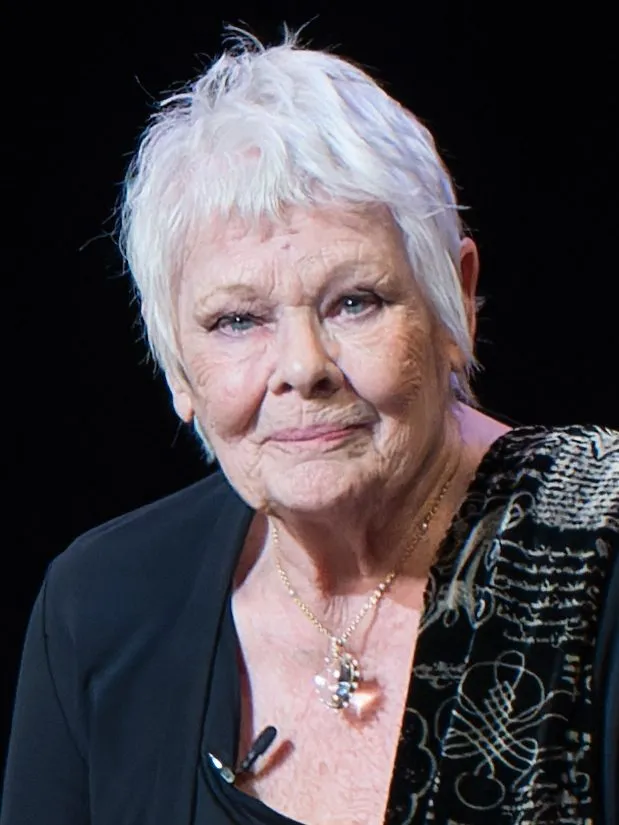
 Dame Judi Dench photographed in 2023.
Photo by Raph_PH, via Wikimedia Commons, licensed CC BY 2.0.
Dame Judi Dench has revealed that her deteriorating eyesight has closed off the work that defined her life, telling the BBC that she can no longer perform on stage or screen — or even read.
The 91-year-old Oscar winner spoke candidly about her age-related macular degeneration during an appearance on BBC Radio 4's Today programme on Thursday, where she gave her most direct account yet of what the progressive eye condition has taken from her. "I can't be on stage. I can't do a play any more. I can't do a film any more. I can't read any more," she told presenter Emma Barnett, in what the BBC described as her most direct account yet of living with the condition.
For audiences who have watched Dench move between Shakespeare, blockbuster franchises and finely drawn character roles across a career of more than seven decades, the plainspoken statement marks a watershed. For Dench herself, the losses are practical and cumulative: reading a script, once the first step of every job, is no longer possible; learning lines, the basic labour of a stage actor, has gone with it.
A decade-long diagnosis
Dench was first diagnosed with age-related macular degeneration in 2012, and she has discussed its slow advance in interviews for years. AMD damages the macula, the part of the retina responsible for sharp central vision, making fine detail, faces and text progressively harder to see. The condition is incurable, though peripheral vision typically remains intact. NHS guidance notes that the disease mostly affects older people and can make everyday tasks such as reading and recognising faces increasingly difficult.
She described the social cost of sight loss as well as the professional one. She said she sometimes struggles to recognise people, approaching the wrong person and coming close to embracing a stranger before realising the mistake — the kind of small, daily embarrassment that people with AMD often describe but rarely discuss in public. Dench delivered the detail without a trace of self-pity.
Asked how she felt about ageing more generally, she was characteristically unsentimental, saying there was little to say about it and that she tried not to dwell on it too much. The only way forward, she said, was to adjust, make allowances, and simply get on with things.
An unmatched career
Dench is one of Britain's most celebrated actors, with a body of work spanning theatre, television and film. She won the Academy Award for best supporting actress for her eight-minute turn as Queen Elizabeth I in 'Shakespeare in Love' in 1999, and became internationally recognised as M, James Bond's boss — the first woman to play the role, which she took on in 'GoldenEye' in 1995 and carried through seven films.
On stage, she has been the definitive interpreter of Shakespearean heroines for generations, from Lady Macbeth to Cleopatra, and a mainstay of the National Theatre and the Royal Shakespeare Company. Her television work — including 'As Time Goes By' and her acclaimed performance in 'Cranford' — made her a household name far beyond the theatre.
Her sight loss has increasingly shaped her ability to work in recent years, with the actress previously describing difficulty seeing on film sets and trouble learning scripts. In a Radio Times interview last year she described her declining eyesight as devastating, adding that while she could no longer see Clive Myrie presenting Mastermind, she could still hear the questions.
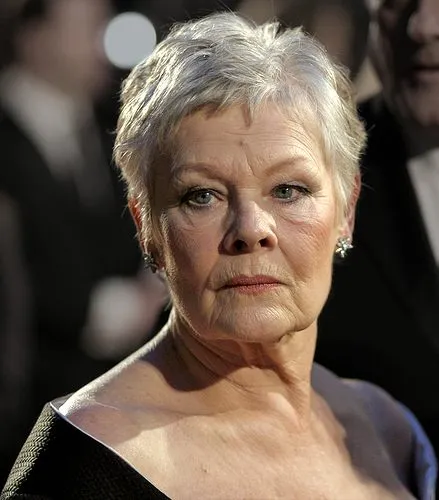 Dame Judi Dench at the BAFTA awards in 2007.
Photo by Caroline Bonarde Ucci, via Wikimedia Commons, licensed CC BY 3.0.
The memoir and the work that continues
Dench was speaking on the Today programme to promote her new memoir, 'Is It Too Late to Make a Run for It?', written with theatre director Brendan O'Hea. The book draws on her gift for storytelling to revisit her upbringing in York, the parents and brother who shaped her, the teachers who inspired her, her greatest screen roles, and her marriage to the actor Michael Williams, who died in 2001.
The memoir also touches on her passion for nature and animals — and, fittingly for an actress whose career was built on the written word, on her love of Shakespeare's sonnets, whose rhythm she said felt like the rhythm of the heart itself.
Her last major film role was in the 2022 Alan Bennett adaptation 'Allelujah', though she voiced a part in 'The Magic Faraway Tree' earlier this year and has continued to appear in television documentaries, including 'Tea With Judi Dench' and last year's 'Judi Dench: Shakespeare, My Family and Me'. Parade noted that despite everything, she has continued making public appearances.
Why her honesty matters
Public figures rarely speak about disability with this kind of plainness. Dench did not frame her account as a tragedy, nor did she offer false optimism — she simply described what has changed and what she does about it. That tone is part of why the interview has resonated: it treats sight loss as a fact of life to be managed, not a secret to be hidden, and it gives millions living with similar conditions a voice they seldom hear in public.
It also lands differently because of who is speaking. Dench's career was built on precision — the exact stress of a line of verse, the flicker of expression a camera catches in close-up. To hear her say she can no longer read is to understand, more vividly than any statistic, what AMD takes. As the British Bulletin observed, her career has spanned more than seven decades — and her candour about its limits may prove as memorable as any role.
A wider spotlight on AMD
Dench's openness has given rare public visibility to a condition that affects millions. In the UK, AMD is a leading cause of sight loss in older adults, and sight-loss charities say high-profile accounts like hers help others recognise symptoms early and seek support. The RNIB provides guidance and helplines for people adjusting to vision loss.
There is no cure for AMD, but treatments can slow its progression in some forms, and low-vision aids — from magnifiers to text-to-speech technology — help many people continue reading and working. Dench's account is a reminder that the heaviest cost of the condition is often not medical but human: the loss of independence, the narrowing of daily life, and the quiet adjustments it demands.
The entertainment world has rallied around her before, and will again. Tributes have poured in from across the industry whenever she has spoken about her condition — much as they did when Verity covered the passing of fellow screen legend Eva Marie Saint at 102. For an actress who once commanded the largest stages in the world, the bravest performance may now be the honesty with which she describes what she can no longer do.


