A private letter becomes public
The dispute over Brigitte Bardot's estate has taken a painful new turn with the publication of a private letter the French film legend wrote to her partner years before her death. The letter, dated 17 November 2022, was published by the French newspaper Le Figaro and has since been reported around the world, including by The Times, laying bare a marriage that Bardot herself described as a failure.
Bardot died on 28 December 2025, aged 91, at La Madrague, the Saint-Tropez home she had owned since 1958. Her death closed one of the most famous lives in French cinema. What has followed, however, has been anything but quiet: a bitter row between her partner of more than three decades, Bernard d'Ormale, 85, and the animal welfare foundation to which she devoted the second half of her life.
For readers of entertainment news, the story is a reminder that even the most glamorous lives can end in ordinary human sadness. The letter does not read like a celebrity statement. It reads like a private cry for help that was never meant to be published, and its appearance in print has distressed everyone involved.
What the letter says
The note opens without softening. Bardot addressed d'Ormale directly and told him their marriage had been a failure, then described the depth of her distress. In the letter's most quoted passage, she wrote: "For 30 years, you have patiently destroyed me, day after day." NewsWave's report carries the same passage and the wider account of the row. She went on to say that she desperately needed a shoulder to lean on, along with support, tenderness and a presence, and that he was simply incapable of giving her those things. One report of the letter says she closed with a single bleak word: checkmate.
The letter matters because it offers a possible explanation for the will that followed. Bardot left d'Ormale nothing. Instead, her estate was divided between her foundation and her only son, Nicolas-Jacques Charrier, 66. Friends of Bardot are reported to have received copies of the letter, which suggests she wanted her feelings known to at least some of those close to her, even if she never sent it to d'Ormale himself.
The publication has also revived questions about the couple's legal status. Bardot and d'Ormale married in Norway in 1992, but their marriage was never legally recognised in France. That detail matters for inheritance law, and it helps explain why the estate plan treated d'Ormale differently from a legally recognised spouse. The foundation has consistently argued that the house was never his: Bardot donated La Madrague to the foundation in 1992, the same year as the Norway ceremony.
Eviction, removal and a council flat
After Bardot's death, d'Ormale continued to live at La Madrague and stepped in as president of her foundation. That position lasted less than a year. Last month, reports emerged that he had been evicted from the property and ousted as chairman, replaced in September by sports and broadcasting executive Max Guazzini. D'Ormale told the Nice Matin newspaper that the treatment was sickening, saying he had lived at the house for 35 years and was being kicked out, an account also carried by The Sun. He is now reported to be living in a council home in Saint-Tropez.
The foundation rejects d'Ormale's account of events. A spokesman has said he was well supported at the time of Bardot's death and in the months that followed, and that the real dispute is over property he refuses to accept he must leave. In the foundation's words, he simply refuses to accept having to leave La Madrague, even though it is not his home, since Bardot donated it to the foundation in 1992, and his departure is a matter of legal obligation.
D'Ormale, for his part, has said he was the one who told Bardot he wanted nothing and refused gifts, precisely so that no one could claim he took advantage of her. His lawyer has said he was treated deplorably. The two accounts cannot both be fully true, and the leaked letter has now added a deeply personal dimension to a dispute that was already about property, control of a charity and legacy.
Questions over authenticity
D'Ormale's lawyer, Aurelie-Caroline Vieugue, has questioned whether the letter is genuine. She said her client is devastated by its publication and was never aware of it. She pointed to a telling detail: Bardot traditionally signed her letters with a daisy, but there is no daisy on this one. She asked whether Bardot really wrote it, but stopped short of declaring it a forgery, saying that for now no position could be taken and that the only certainty was her client's distress.
That caution matters. The letter was reported to have been verified by close family members in some coverage, including American Almanac's account, but the lawyer's challenge means its authorship is not settled beyond doubt.
The row has unfolded alongside renewed attention to Bardot's private life in other ways. On 3 November 2026, a collection of 19 intimate letters Bardot wrote to her second husband, actor Jacques Charrier, between about 1959 and 1963, failed to sell at auction at Christie's in Paris, despite an estimated value of between 100,000 and 150,000 euros, according to Riviera Radio. The letters had been offered by a private collector who acquired them from Charrier. Their failure to find a buyer, on the very day the d'Ormale letter row intensified, underlined how complicated the market for Bardot's memory has become.
A complicated legacy
Bardot's legacy has always been complicated. She was one of the defining screen presences of her generation, a star whose image travelled the world, before she walked away from cinema and poured her energy into animal protection. In later years she also drew sustained criticism for racist and offensive statements, and her name became as associated with controversy as with stardom. D'Ormale's own past as an adviser to the ultra right wing National Front leader Jean-Marie Le Pen added a further political charge to the foundation's internal rows, with reports that his background caused discontent among some of the foundation's 300 staff.
None of that diminishes the human core of this story. A woman who felt unheard in her own home wrote down her distress. A man who shared her life for 35 years says he never saw the letter and now finds himself without a home, a role or an inheritance. A foundation says it is simply carrying out its founder's wishes. Those three truths sit uneasily together, and the publication of a private letter has made them harder, not easier, to reconcile.
What happens next will likely be decided by lawyers rather than by letters. D'Ormale is contesting the will that shut him out, and the foundation is holding firm on its ownership of La Madrague. The letter may or may not play a formal role in any proceedings, but it has already shaped public understanding of the dispute. For a star who spent her life in the public eye, it is a final, painful irony that her most private words have become her most public.
Readers can follow more entertainment stories on Verity, return to the Verity homepage for the latest headlines, or learn more about us on our about page. For other recent cultural coverage, see our report on the David Bowie Scottish links exhibition and our explainer on the Collins word of the year.
Sources: BBC News, The Times, The Sun, NewsWave, Riviera Radio, American Almanac
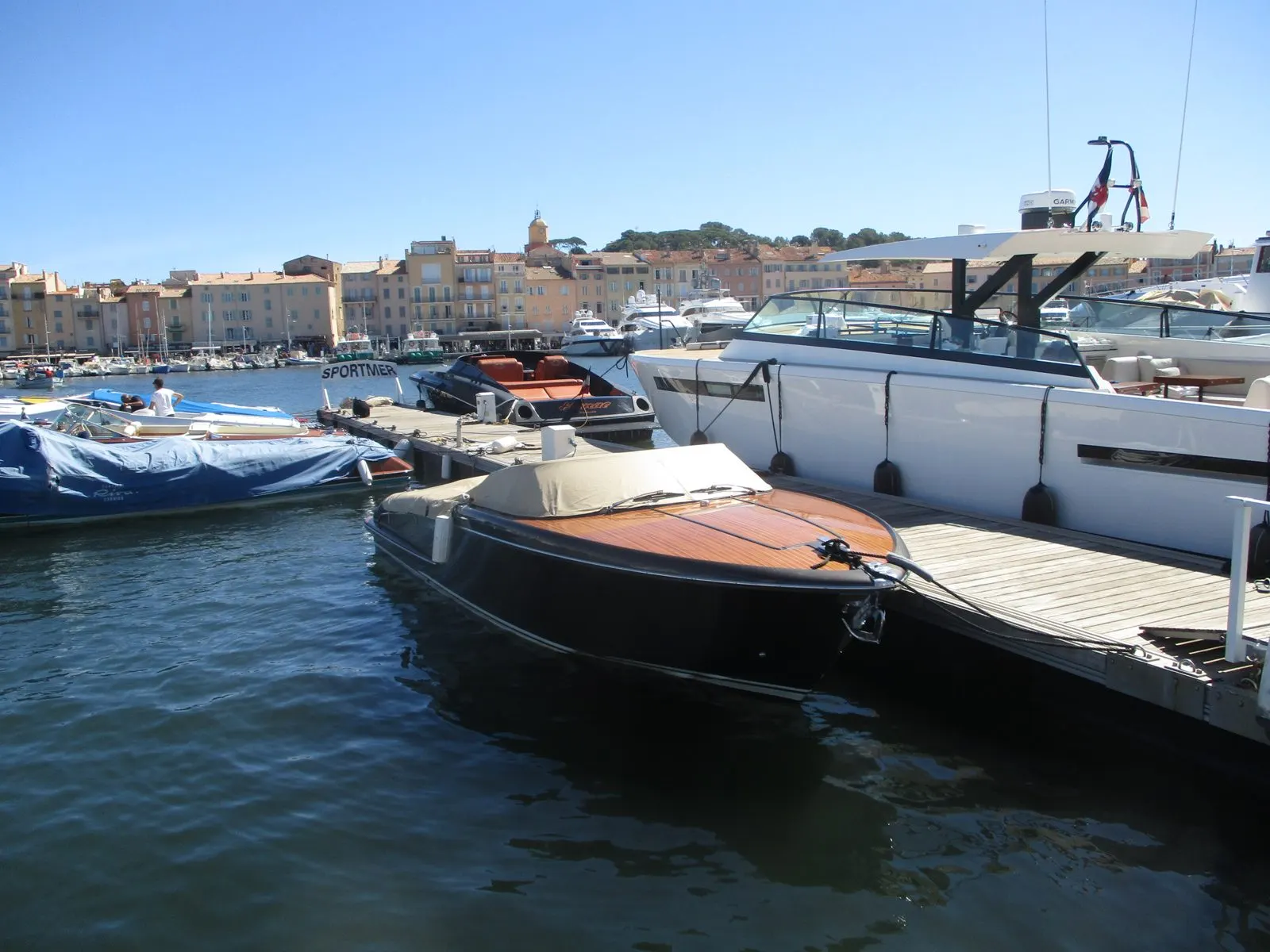 The harbour at Saint-Tropez with colourful buildings along the waterfront
Saint-Tropez harbour. Credit: Arnaud 25, Wikimedia Commons, CC BY-SA 4.0 (generic location image).