South Korea Shortens Joint Military Exercises
South Korea has announced that its annual military exercises with the United States will end six days earlier than originally scheduled.
The 2026 Ulchi Freedom Shield exercise will now conclude on 21 August rather than 27 August, according to South Korea’s defence ministry.
Seoul said the adjustment to the exercise’s duration and scale followed a proposal from the US side.
The decision comes at a sensitive moment for relations between Washington, Seoul and Pyongyang, with President Donald Trump again expressing interest in improving his relationship with North Korean leader Kim Jong Un.
South Korean officials said the change was made following a request from Washington.
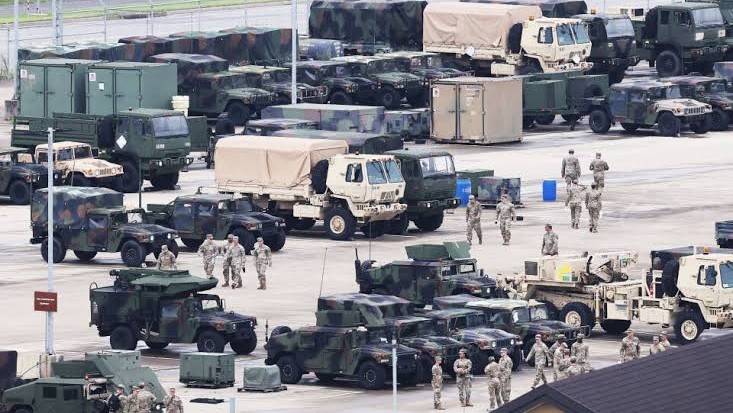
The defence ministry also confirmed that the field-training component of the exercise would be partially scaled back. Officials said discussions were continuing over the precise details of the reduction.
South Korean Foreign Minister Cho Hyun) told lawmakers that officials in both Seoul and Washington had not known in advance about Trump’s plans to reduce the military exercises.
The announcement therefore appears to reflect a change in Washington’s approach to military exercises on the Korean Peninsula.
Trump has criticised the cost and political implications of large-scale military exercises with South Korea.
In recent comments, the US president argued that the drills are expensive for Washington and described them as sending an inappropriate and hostile signal.
Trump has also connected the issue to South Korea’s decision not to participate in a US operation involving Iran.
He pointed to the large number of US troops stationed in South Korea and questioned why Seoul would not assist Washington with what he described as a relatively easy military operation.
The comments add another layer to the debate over the future of the US-South Korea security relationship.
The reduction in military exercises also comes amid reports that Trump is considering another meeting with North Korean leader Kim Jong Un.
US officials have reportedly indicated that Trump is pushing his administration to explore an in-person meeting with Kim during a future trip to Asia.
Such a meeting could potentially revive diplomatic engagement between Washington and Pyongyang.
Trump and Kim previously held high-profile meetings during Trump's first presidency, but negotiations over North Korea's nuclear programme ultimately failed to produce a lasting agreement.
The latest signals from Washington suggest that Trump may again favour direct engagement with the North Korean leader.
Ulchi Freedom Shield is an annual joint military exercise involving the United States and South Korea.
The drills are designed to improve the two countries’ ability to operate together during a potential crisis on the Korean Peninsula.
The exercises include computer-based command-post training as well as field activities involving military personnel.
The 2026 exercise had initially been expected to maintain a scale similar to previous years, with approximately 18,000 South Korean troops participating.
The United States maintains roughly 28,500 military personnel in South Korea as part of its longstanding security commitment to Seoul.
North Korea has consistently opposed joint military exercises between the United States and South Korea.
Pyongyang views the drills as preparation for a possible military attack and has repeatedly called for them to be cancelled.
Following the announcement of this year's exercise, North Korea's foreign ministry condemned the drills as a rehearsal for what it described as an aggressive war.
The reduction in the exercise's duration and field-training component could therefore be closely watched by Pyongyang.
However, the drills remain an important part of the military partnership between Washington and Seoul.
Another issue shaping the security environment is North Korea’s growing military cooperation with Russia.
US and South Korean military officials have raised concerns about North Korean troops being deployed to support Russia during its war against Ukraine.
US military representatives have said their training takes this evolving threat into account.
North Korea's military involvement with Russia has added a new dimension to security calculations in East Asia.
It also means that South Korean and US planners are increasingly monitoring developments beyond the Korean Peninsula when assessing potential threats.
South Korea faces a difficult balancing act.
The country remains heavily dependent on its military alliance with the United States for deterrence against North Korea, while also having an interest in reducing tensions and avoiding unnecessary escalation.
Any reduction in joint exercises could potentially support diplomatic efforts with Pyongyang.
At the same time, Seoul must ensure that changes to military training do not weaken its ability to respond to a potential North Korean attack.
The six-day reduction is therefore unlikely to be viewed simply as a scheduling decision. It could become part of a broader discussion about the future direction of US policy toward North Korea.
The next major development could come from renewed diplomatic contact between Trump and Kim Jong Un.
If Washington and Pyongyang resume direct talks, military exercises could become an important bargaining issue.
North Korea has long demanded an end to US-South Korean military drills, while Washington and Seoul have traditionally argued that the exercises are defensive and necessary for maintaining military readiness.
South Korea will likely continue monitoring any changes in US policy closely.
For Seoul, the challenge will be maintaining its defence capabilities while supporting diplomatic efforts that could reduce tensions on the Korean Peninsula.
The shortened Ulchi Freedom Shield exercise does not by itself indicate a fundamental change in the US-South Korea alliance.
However, it comes alongside Trump's renewed criticism of military drills and his apparent interest in engaging Kim Jong Un.
Together, these developments could signal a different approach to managing tensions with North Korea.
For now, South Korea and the United States remain military allies, and the joint exercise will still take place. But the reduction in its duration and field-training component is likely to attract close attention from North Korea and regional governments. For More