Serbia woke up on Monday to a political order turned upside down. Late on Sunday night, President Aleksandar Vucic stood before his supporters in Belgrade and accepted what the early numbers had been pointing to for hours. The Student List, a movement born in lecture halls and on blocked university campuses less than two years ago, had beaten the machine that has run Serbia since 2014. Readers following the story on our world news desk have watched the protests grow for months. Sunday was the night they turned into votes.
A concession that ended an era
Vucic was careful to note that the count was not finished, but he did not hide behind it. "We still do not have final results, but it is clear that we have lost these elections, the Student List has won," he said, in remarks reported by Reuters and carried by outlets including The Straits Times. On his own side's projections, the students would take between 135 and 140 seats in the 250 seat National Assembly, with his Serbian Progressive Party, known as the SNS, on about 105. No other list crossed into parliament on those figures, which would hand the movement a working majority on its own.
The speech closed more than a decade of dominance. Vucic first became prime minister in 2014 and moved to the presidency in 2017, and through both offices he kept a firm grip on the state, the ruling party and much of the media landscape. The BBC's report of the night set out how he called the snap vote in September after almost two years of street pressure, gambling that an election would drain the protests of their energy. Instead, the ballot box gave the protesters the one thing demonstrations alone could not: power.
Turnout that broke records
One reason the gamble failed sits in the turnout figures. Preliminary numbers from the election commission suggested a record level of participation, with 64.9 percent of voters having cast a ballot by 18:00 local time, two hours before the polls closed. Queues formed outside polling stations in Belgrade and in smaller towns through the day, and the movement's get out the vote operation, built by students who had spent months walking between villages to explain their case, appears to have delivered younger voters in numbers Serbian elections rarely see.
High turnout has long been the opposition's hope and the government's fear in Serbia, where the SNS could usually rely on a disciplined base and a fragmented field against it. This time the field was not fragmented. The Student List put up a single slate of 250 candidates drawn from across society, among them doctors, actors, academics and well known sports figures, alongside the students themselves. That breadth made it harder for the government to paint the list as a narrow or foreign project, a charge Vucic had levelled at the protests throughout their existence. Analysis on our politics pages has tracked how that single list strategy took shape during the spring.
What the movement promised
The Student List did not campaign as a conventional party, and its manifesto read more like a repair job on the state than a left or right programme. It promised to remove officials who broke the rules during crackdowns on protesters, to end the practice of party loyalists running public enterprises, and to free the public broadcaster from political control. Those pledges grew directly out of the movement's origins. The protests began after the collapse of a canopy at the railway station in Novi Sad, which killed 16 people and was widely blamed on corruption and sloppy oversight in a state backed construction project.
That disaster, and the anger it released, hangs over everything that happened on Sunday. For many voters the election was less about ideology than about accountability: whether anyone in authority would ever answer for failures that cost lives. Ilija Srdanovic, the lead candidate on the Student List, told BBC Serbian that "this will be a free state", saying the movement hopes to free the country from tyranny. At the movement headquarters, Belgrade University professor Radomir Sajcic struck a note of celebration mixed with warning, telling supporters that tonight they celebrate victory and tomorrow they build the future.
Celebrations in Belgrade and Novi Sad
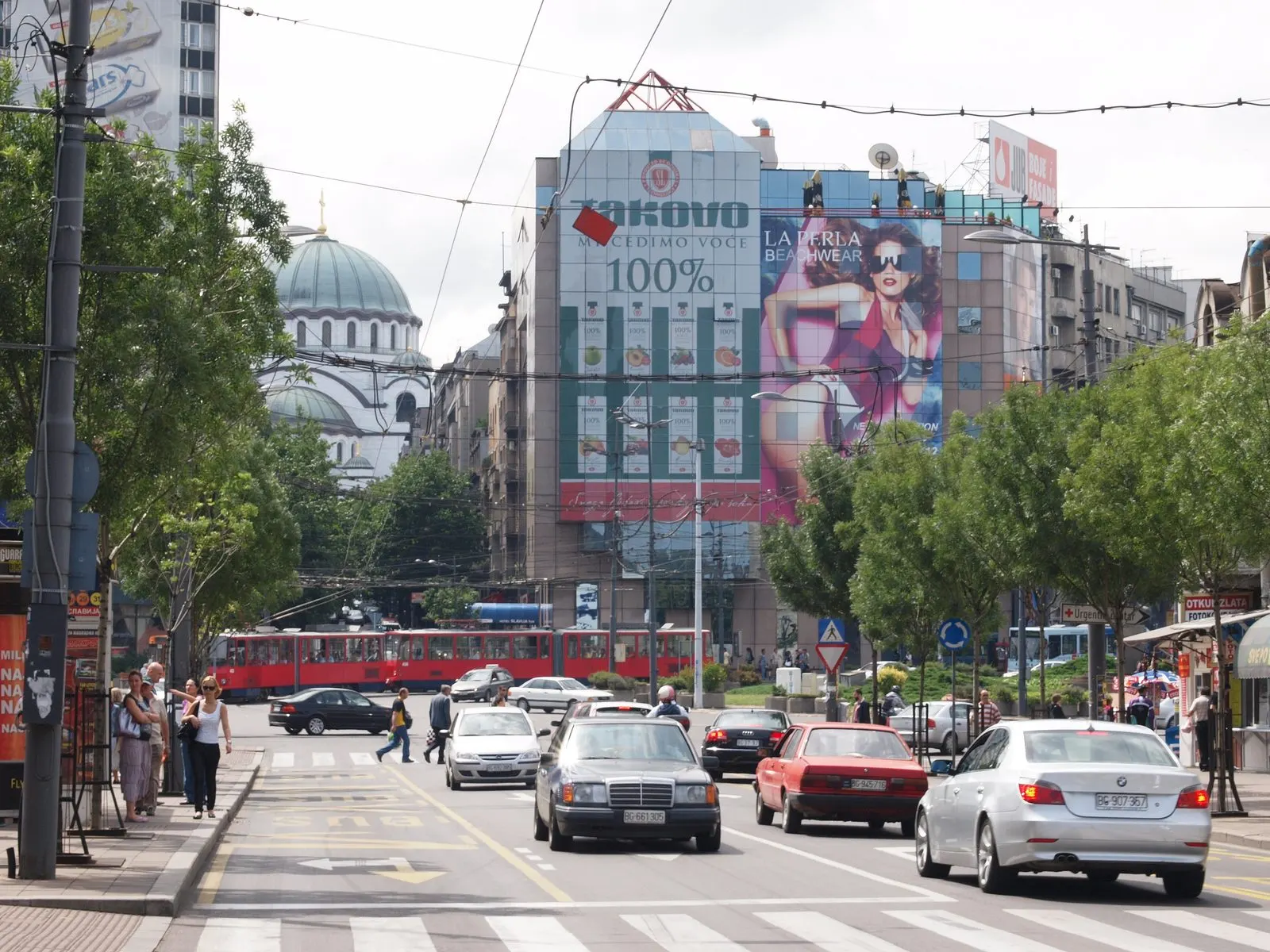
Within moments of the concession, crowds poured into the streets. In Belgrade, tens of thousands of people filled the main boulevards and gathered at Slavija square, a regular meeting point during the protest months, with car horns sounding and chants of "victory" and "he's done" reported by CNN's coverage of the night. There were celebrations in Novi Sad too, the city where the canopy collapse happened and where the movement's moral claim was forged. Students who had slept in occupied faculty buildings and marched hundreds of kilometres between protests suddenly found themselves on the winning side of a national count.
European officials were quick to respond. European Commission President Ursula von der Leyen and Enlargement Commissioner Marta Kos were among those who congratulated the Student List, a signal that Brussels sees the result as an opening for a country whose European Union path had stalled amid concerns about democratic standards. Serbia's next steps, and how the new majority handles relations with the EU, Russia and the United States, will be covered as they develop on Verity's homepage and in the latest news section.
What happens next
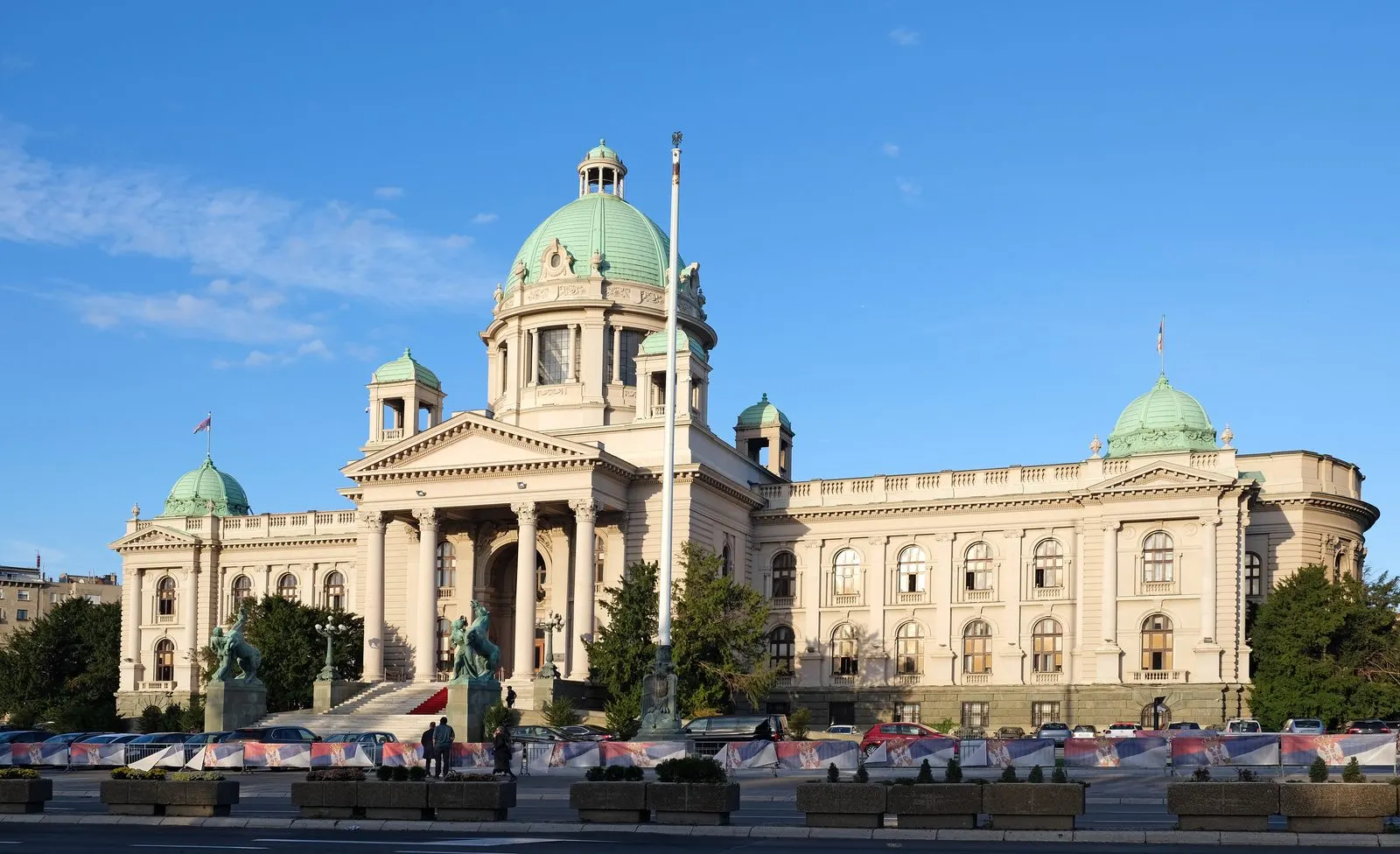 The House of the National Assembly of Serbia in Belgrade, home to the 250 seat parliament
Credit: kallerna via Wikimedia Commons (CC BY-SA 4.0)
A majority on paper is not the same as a government in place. The final results still have to be confirmed by the election commission, after which the new assembly must sit, elect its officers and give a mandate to a prime ministerial candidate. The Student List has big names and public trust, but little experience of running ministries, budgets or a state administration staffed for years by the outgoing party's appointees. Its promise to clean up public enterprises and the broadcaster will test that inexperience early, because both jobs mean confronting entrenched networks rather than simply announcing new rules.
Vucic, for his part, does not disappear. The SNS remains a large parliamentary force on about 105 seats, and he blamed independent media, unnamed European interference and what he called an American deep state for the loss, claims for which he offered no evidence on the night. How he plays the role of opposition leader, and whether the presidency changes hands in due course, are open questions that Serbian commentators were already debating before dawn. Our opinion section will carry the argument as it unfolds.
For now, the fact at the centre of the story is simple and startling. A movement that began with students demanding answers about a collapsed canopy has beaten one of Europe's most entrenched leaders at the ballot box, as The National's report put it, ending a grip on power that lasted more than a decade. Serbia's voters have spoken with unusual clarity. The hard part, turning that verdict into a functioning government, starts this week.