The breakthrough
Doctors have successfully trialled a same-day test that can detect hidden infections in critically ill children by scanning all the genetic material in a single patient sample — a breakthrough that changed antibiotic treatment in around a quarter of cases and, in at least one instance, appears to have saved a child's life.
The "metagenomic" test was trialled on respiratory samples from 122 children in paediatric intensive care at Great Ormond Street Hospital (GOSH) in London between 2024 and 2025, with the results now published in the journal The Lancet Microbe. Researchers found the test detected around nine in ten bacteria and viruses, and every fungal infection, picking up 50 organisms that routine hospital diagnostics had completely missed.
For the families of children fighting for life in intensive care, where every hour counts and the wrong antibiotic can be as dangerous as none at all, the speed and completeness of the new approach could prove transformative — BBC News has the full account of the trial and Willow's story.
Reading everything at once
The principle behind metagenomic testing is disarmingly simple: instead of trying to grow individual bugs from a sample — a process that is slow, selective and sometimes fruitless — the test sequences all the DNA and RNA present and matches it against vast databases of known pathogens. Whatever is making the patient ill, if it has genetic material, the test can in principle find it.
That completeness is the crucial advance. Conventional diagnostics force clinicians to choose which organisms to look for, or to wait days while cultures incubate. The metagenomic approach removes the guesswork: one sample, one test, a full inventory of the microbial suspects.
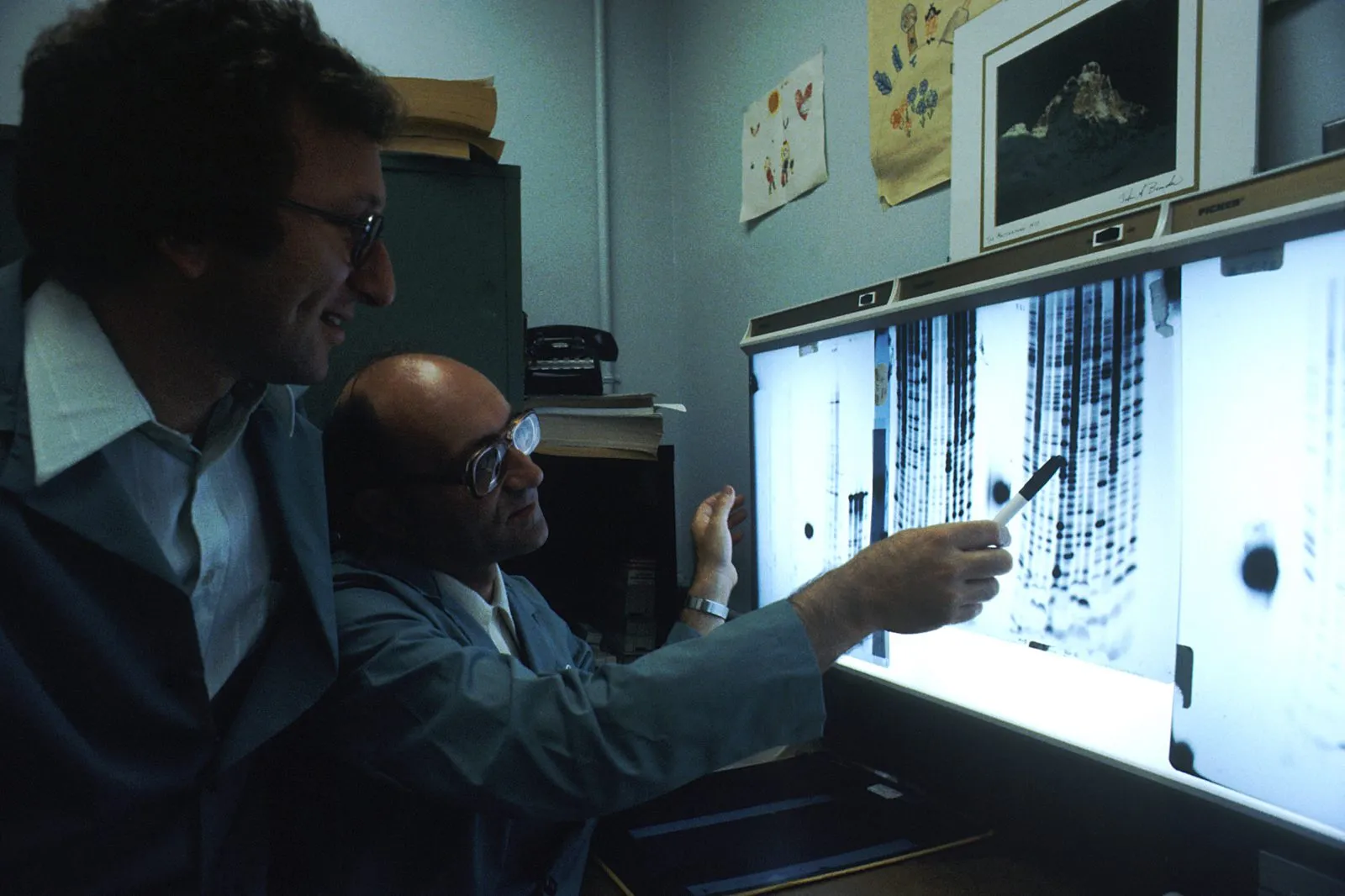
DNA sequencing — the technology behind the same-day metagenomic test
DNA sequencing technology underpins the same-day test trialled at Great Ormond Street. Credit: Linda Bartlett, Wikimedia Commons (public domain)
In the GOSH trial, that inventory proved its worth repeatedly. Fifty organisms slipped past standard testing were caught by the new method — infections that would otherwise have remained invisible while children deteriorated. And in roughly one case in four, the clearer picture directly altered clinical decisions: antibiotics started, stopped or switched as the true culprit came into view.
Willow's story: the infection standard tests missed
Behind the statistics is ten-year-old Willow Crowther, from Kent, whose case illustrates what the numbers mean in human terms. Admitted in March with severe pneumonia, Willow's condition collapsed with terrifying speed: a seizure followed, then multiple cardiac arrests. Doctors gave her around a 50 per cent chance of survival, and her family were told to prepare for her death.
Standard tests could not explain what was happening. But the metagenomic test identified a drug-resistant bacterial infection that routine diagnostics had missed entirely. Armed with that knowledge, doctors switched her antibiotic — and Willow turned the corner. She recovered, and in August she celebrated her tenth birthday, a milestone her family once feared she would never reach.
Her mother, Stacey Moore, is in no doubt about what made the difference: "It saved her life."
Stories like Willow's are why intensive care doctors speak about the trial with unusual emotion. In paediatric intensive care, infections are a leading threat, and the inability to identify the responsible organism quickly forces clinicians into broad, educated guesswork — blasting sick children with wide-spectrum antibiotics while hoping the real pathogen is among the casualties.
Replacing a Victorian method
It surprises many to learn that the backbone of hospital bacterial diagnosis — growing cultures in Petri dishes — is essentially a Victorian technique. Effective in its day, it is now hopelessly outpaced by the demands of modern critical care: some organisms refuse to grow in culture at all, others take days to declare themselves, and the delay can be fatal.
Faster PCR-based alternatives exist, but they come with a built-in blind spot: they only detect the specific targets they are designed to find. A clinician must already suspect the culprit to order the right test — precisely the assumption that fails when the infection is unusual, novel or drug-resistant.
Bacteria growing on an agar plate — the traditional culture method
Traditional bacterial culture on agar plates — a mainstay of diagnostics since the Victorian era. Credit: HansN., Wikimedia Commons (CC BY-SA 3.0)
The metagenomic test sidesteps both problems. It needs no prior hypothesis and no days of incubation; the same-day turnaround means results can guide treatment while the clinical window is still open. For more on the microbial world inside us, see our report on the good bacteria in your mouth, and browse our wider news coverage. Our science section has more on how genomic technologies are reshaping medicine, and our health pages cover the latest NHS developments.
A weapon against antimicrobial resistance
The trial's implications extend beyond individual diagnoses into one of the great public-health battles of our time: antimicrobial resistance. Every unnecessary course of antibiotics accelerates the evolution of drug-resistant superbugs, and intensive care units — where broad-spectrum antibiotics are used most aggressively — are on the front line.
By identifying the true pathogen quickly, the test allows doctors to stop antibiotics they now know will not work, and to narrow treatment to the drugs that will. Dr Sam Ray, a GOSH consultant and co-author of the study, said the research had helped the team spot infections they would otherwise have missed, get children onto the right treatment, and halt antibiotics known to be ineffective.
"Removing unnecessary treatment is incredibly important for the fight against growing antimicrobial resistance," he said — a reminder that precision diagnostics protect not only the patient in the bed but every future patient who will need antibiotics to keep working. The UK's national action plan on antimicrobial resistance is published on gov.uk, and the NHS has more on how resistance threatens modern medicine.
Thirty ICUs — and a shield against the next pandemic
The children's trial builds on earlier work in adults at Guy's and St Thomas' NHS Trust, and the momentum is now unmistakable: the test is being rolled out to around 30 intensive care units across the UK, treating adults as well as children.
But Dr Julianne Brown, head of the GOSH Metagenomics Service and co-senior author of the study, sees an even wider horizon. Because the test reads all genetic material rather than hunting for familiar suspects, it could serve as an early-warning system for emerging infections — a tripwire for the next pandemic.
If a mystery pathogen were to emerge, she said, the technology would detect it very quickly: no need to know what you are looking for, no weeks of confusion while a novel organism evades every targeted assay. In a world still marked by the memory of Covid-19 — and with winter pressures on the NHS a perennial concern — that capability has obvious strategic value.
For now, though, the most powerful testimony comes not from strategic planners but from a mother in Kent, whose daughter's tenth birthday was made possible by a test that found what every other test had missed. As the rollout gathers pace across the country's intensive care units, thousands of families may yet have their own Willow story to tell. The full study appears in The Lancet Microbe, and Great Ormond Street Hospital publishes updates on its pioneering diagnostics work.